

Author: JD

This Chicago teen invented the phrase ‘on fleek’
You’ve heard it. If you’re over the age of 19, you’ve probably looked it up on Urban Dictionary (it means ‘on point’ btw). You may have even said it yourself, or worn a hat with it emblazoned across the front. Yep, there’s no denying that ‘on fleek’ is the phrase of the moment. But do you know where it came from? Nope, it’s not Nicki Minaj or Christina Milian, both of whom have tried to claim the term, and even had a public spat over it. No, ‘on fleek’ was actually invented by a 17-year-old Chicago teen named Kayla Newman. So, how did this happen? Well, it all started when Kayla, who goes by the name Peaches Monroee online, posted a Vine. She’d just had her eyebrows done for the first time, and posted a video saying: ‘We in this bitch, finna get crunk. Eyebrows on fleek, da fuq.’ Talking to Max Kutner for Newsweek, Kayla explained: ‘It just came to me out of the blue,’ She went on: ‘I never heard of the word, and nobody else had heard of the word. I just said it, and I guess that’s what came out. That’s about it.’ Both Rihanna and Cara Delevingne have been spotted in ‘On Fleek’ beanie hats (Picture: Dorici.com) Next thing, her six second video had gone viral (to date it’s had 28 million ‘loops’ and counting), and ‘on fleek’ was being used by everyone from Lil’ Wayne and Kim Kardashian,to American brands such as IHOP (International House of Pancakes) and Taco Bell, keen to prove they were down with the kids and in-touch with their customer base. So what’s next? Well, Kayla’s working on that. She told Newsweek: ‘I’m trying to think of some, but it’s like, with me, it’s just gonna flow.’

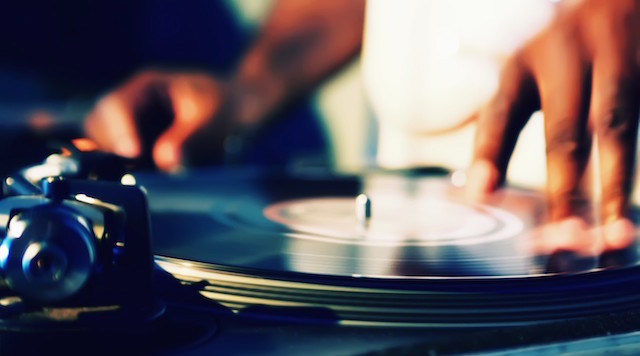
Why New DJs Should Start on Vinyl
Since the industry has shifted from traditional beatmatching to an ensemble of MIDI controllers and synced devices, the art of mixing by ear seems to be a thing of the past and thats not ok. In this article, Markos Polydorou will explain some of the benefits of learning how to DJ the traditional way. By no means is it an article to bash computer based mixing, but more so an idea to learning the art of DJing properly and evolving from the basic foundations that our forefathers laid out for us. I believe that even if you are already mixing with a laptop and a few controllers, you should spend sometime learning your way around a turntable or two. You never know when it will come in handy! Technology in the DJ market has evolved a lot over the last decade. Back in 2005, Pioneer CDJ 1000′s were the industry standard and scratching CD’s like vinyl was the biggest technological advancement in the world of DJ products. DJs were still carrying around crates but instead of records, they were CDs, and computers were never seen in the booth unless it was recording a set or being used by the lighting tech. Now it’s very hard to find a DJ booth that doesn’t have a laptop, midi controllers, or CDJs. For new DJs that rarely see a turntable in the booth it can be hard to understand why anyone would continue to use what appears to be very outdated technology. Here are 6 reasons why new DJs should start on vinyl: Unhook The Computer, Focus On Your Ears The moment you begin to play a track on a computer, there is a robotic feel you get that just doesn’t seem to happen on turntables. Turntables have two types of motors in them: Belt Driven and Direct Drive. The motor on a Belt Driven turntable is offset from the platter and is connected to the platter by a belt loop. Direct Drive has the motor placed directly below the turntables platter which gives it a torquier feel and more consistent speed. Because the turntables motor is spinning the platter and the music is coming from a digitized processor or program, there is a sense of fluctuation in terms of BPM and overall feel of the music. Depending on the wear and tear of the record as well, you may notice that some records will need to be sped up to reach their actual known BPM or slowed down if the pitch control is slightly faster than the other table. This fluctuation is essential when it comes to understanding the benefits of mixing traditionally. Being able to hear and feel these differences keeps you agile, and always in tune with your mix. A computer will never give you that type of feel since it will always play back at a constant BPM. You Spend More Time Listening To Music With the abundance of music available online, it doesn’t take a whole lot of skill for a DJ to create a playlist. With the top tracks being presented to you and blogs posting the newest underground music, it’s quite easy to just hit download and have your crowd jumping up and down. Truth is anyone can head over to Beatport, download the top 10 Deep House tracks and play like a superstar DJ in a packed club. Where the real challenge lies is searching for those tunes that no one else has. Many labels which focus on electronic dance music genres still release vinyl. Many of them may only release on vinyl, or only allow certain releases to be pressed to vinyl with no digital distribution. If you want to stand out from the rest, then stepping away from the technology and digging through the crates of your local record shop (or garage sale) will give you a chance to clear your mind and focus on pieces of music that really speak to you. You can even shop for records online if you don’t feel like heading out to buy records. Digging for records is also a great source for production sounds. Sampling old records is a tried and tested method and many successful records have samples from old disco and jazz tunes you can’t find online. Further Reading: Famous Samples in Electronic Music You’ll Learn How To Scratch Even if turntablism and scratching isn’t your forte, you’ll have a sudden urge to turn your decks battle style, and try a few “baby scratches” just to play around. It’s inevitable and even if you say you won’t, you will. Scratching is actually a very good skill set to have as a DJ when you are first starting out. It teaches you to properly cue up mixes and with practice add some flair to your DJing when you need it most. It even helps you understand what certain waveforms sound like when they are being scratch and could be good for recording unique sounds in your productions. Sure there are all in one systems out there that give you the ability to scratch music from your laptop but no matter what they say, it’s just not the same. Scratching a record cannot be compared to pushing a 6 inch plastic jog wheel with your index finger. Further Reading: Take Your Scratch Technique Into Orbit Respect For DJs That Came Before You Before CDJs, Traktor, Rekordbox and USB players, DJs had to pre-select records from a massive library. They had to sort, play the record through to understand the structure, figure out the key by ear using a piano or guitar, label moods with coloured stickers, mark cue points with tape, and organize by genre which they defined on their own. On top of all this, if you were booked to play a 4 hour set, or even 2 hours, you had to bring enough records to last which usually meant if you bring an hour of music, you should probably bring two just incase. Carrying records and bringing the right ones for each club was a lot of work. Something I feel younger DJs take for granted these days. Other than the weight of each crate, the time spent planning out which records you were going to bring was enough of a hassle. Especially if you love each record equally! You know how hard it is to pick 20 records out of 500? That’s more deciding then anyone would ever want to do and enough to make someone go made with indecisiveness. Further Reading: Genre Tagging for DJ Music Libraries It Shows Your Dedication To The Art As the younger generation coming in to take the hot residency spots of the veteran guys, speaking to them about how they played back in the day and being able to relate to them is a great networking tool. Sure it’s cool to talk about the new technology but there is a certain breed of people who understand the true feel of spinning vinyl. Being able to discuss the experiences that vinyl DJs share will immediately show how passionate you are about the art. Show up with 2 crates of records and a mono stick and you’ll gain their respect even more. It Will Focus Your Musical Taste I see it over and over again. DJs who come to clubs with all the latest tracks, then try to spin techno the next week, and deep house the next (insert link to multi genre DJ). While diversity is key, it’s almost culture shock to your dance floor to switch up your sound like that. The reality of it is this: If you are spinning Hardwell style progressive house, chances are you are not going to mix in minimal techno by Stefano Noferini. No matter what anyone says, some music just doesn’t mix well with other genres. By spinning vinyl, you’ll be forced to really question each and every purchase. With vinyl, you spend more money for music, so even if there is one solid track you absolutely love and the B-side is completely left field of what you are going for, you either dive into the purchase for that one song or keep digging for the next gem. Buying records gets expensive so being picky will help you narrow down who you are as a DJ, and keep you on the right path. To conclude why new DJs should start on vinyl, I think it’s safe to say that these tips are probably impractical for most new DJs entering the craft. Space is obviously a factor, and records may be hard to come by in some cities. What I will say though is this: If you want to feel good about what you are doing, take your time and really think about how you can get your hands on some turntables. Even if you don’t purchase them and stick to computer based DJing, find a way to practice on vinyl at least once or twice a week for an hour or two. If you can’t afford turntables, pick up a cheap portable one and at least start digging for some cool records to build a collection. Lately I’ve been noticing that this part of the art form is being lost and as a young DJ who started out on vinyl myself, I believe that it is the BEST way to starting out mixing music for others.

DJ AM Documentary to have World Premiere at Tribeca Film Festival in April 2015
The upcoming DJ AM documentary entitled “As I AM: The Life & Times of DJ AM” is set to have it’s World Premiere at the Tribeca Film Festival in New York in April, 2015. The film is directed & written by music video & documentary veteran Kevin Kerslake. Our very own #teamDMS chief Kevin Scott is a co-producer on the film and worked with the film makers closely on many aspects of the documentary in addition to appearing in the film. He will be attending the event in New York to assist the rest of the film crew. Stay tuned to the DMS blog for the latest on the DJ AM documentary as we will carry the exclusive news first for all things related to it’s release & premiere! The official press release from Tribeca is below: “As I AM: the Life and Times of DJ AM, directed and written by Kevin Kerslake. (USA) – World Premiere, Documentary. Adam Goldstein, better known as DJ AM, was a man with deep passions and aggressive demons. As I AM is an insider’s look into the life of the late, famed mash-up pioneer: his professional successes that made him the first million-dollar deejay in the United States and his incredibly complex personal life that was lived under the specter of drug addiction.” DJ AM DOCUMENTARY WEBSITE

Kevin Hart Is On Track for the Biggest Comedy Tour of All Time
Kevin Hart is an enormously popular comedian, with hit movies, albums and television appearances, a huge fan base and global name recognition. Yet it may come as a surprise to learn that his upcoming What Now? tour, which begins April 9 in Texas, is on track to become the highest grossing comedy tour ever reported to Billboard Boxscore, selling more than 600,000 tickets and grossing $35 million to date — and it’s only March. In New York alone, Hart quickly sold out two shows at Madison Square Garden, along with Barclays Center in Brooklyn and the Prudential Center in Newark, N.J. — a trio of metro-area plays that only the most confident pop or rock stars would even attempt (and he’s already booked a fourth area venue in Wantagh, N.Y. for August 28). To top it off, Hart, 35, will wrap the tour at Lincoln Financial Field in his hometown of Philadelphia on Aug. 30 — making him the first comedian ever to headline a stadium. Arcade Fire’s Win Butler Shines in NBA Celebrity Game, Kevin Hart Wins MVP By every metric — ticket sales, festival appearances, venue size and the sheer volume of comics doing strong business — live comedy is at its highest-ever level, pulling in annual revenues of more than $300 million, Billboard estimates. But even by that standard, Hart is in a league of his own. “The tour is truly remarkable,” says Geof Wills, president of Live Nation Comedy (promoter of 60 of the nearly 70 shows on Hart’s tour), citing the $70 average ticket price and the multiple shows in arenas — often two sellouts in one night. While other comics often focus films and television at the expense of full-scale tours, Hart “wants to do the films, the specials and the concerts,” says Wills. “Kevin is really going for it all.” Hart, who is booked by Mike Berkowitz at APA, has been touring nationally since 2009, and began adding arenas to his route a few years ago when doubles at performing arts centers and theaters were selling out quickly. On his last tour in 2012, Hart stepped up to arenas in “quite a few markets,” Wills says. Numerous film roles, an active social media presence, and the non-polarizing nature of Hart’s comedy continue to boost the comic’s popularity. ‘SNL’ Slams Justin Bieber’s Calvin Klein Ads in Kevin Hart-Hosted Episode Still, the “biggest-ever comedy tour” is a relative term. Jeff Dunham owns the Guinness world record for ticket sales, with nearly 2 million for his 2007-2010 Spark of Insanity tour. In 2009, Dane Cook grossed $26,570,000with attendance of 436,000 from 45 shows — a feat already trounced by Hart projections. (Decades ago, Steve Martin and Eddie Murphy put up big numbers, but abandoned concert tours relatively early.) And while Wills says What Now? is “without question” the biggest comedy tour he’s seen in more than 20 years of concert promotion, he notes that other elite comedians could meet Hart’s numbers “if they really wanted to — they just don’t.” Dave Chappelle can crush the box office but usually opts for a residency model. He sold out 10 Radio City Music Hall shows — 60,000 tickets — in 2014 “in his sleep,” Wills says, for a gross of $5 million, according to Boxscore. Still, Hart’s success makes a statement about the overall health of live comedy. Acts such as Louis CK, Daniel Tosh, Amy Schumer, Brian Regan, Hannibal Buress, Patton Oswalt, Bill Burr and Aziz Ansari are “making real waves,” Wills says. “And that’s just tip-of-the-iceberg-ing it.” An edited version of this article first appeared in the March 14 issue of Billboard.

WILLOW AND JADEN SMITH GO BOHO
The early-’70s music and fashion of California’s Laurel Canyon is embodied by spring’s haute hippie trend, as modeled here by Willow, 14, and Jaden, 16, a certain pair of Hollywood progeny whose parents you just may have heard of. During the mid-’60s and early ’70s, California’s Laurel Canyon became both the geographical and metaphorical space where artists like Joni Mitchell, Neil Young, David Crosby and the Mamas & the Papas hung their hats, got stoned and made music together — all while cultivating a style that embodied their free-spirited approach to songwriting. See more Paris Fashion Week’s Front Row From Joni Mitchell in Saint Laurent’s most recent ad campaign to the bohemian silhouettes that hit the runway this season — the Canyon’s re-awakening is undeniable. In this week’s issue of Billboard, creative wunderkinds (and Hollywood royalty) Willow, 14, and Jaden Smith, 16, bring their own twist to the haute hippie trend. After posing in an array of fringe-heavy, flowy ensembles the duo dished on their pen-less approach to songwriting, their relationship with parents Will and Jada Pinkett Smith, sacred geometry and how they make their “inner light grow and shine even more.” Oh, and it just so happens that they arrived to the set in — what else? — a vintage Volkswagon Camper. Check out an excerpt from our chat below. Listen Runway Rock: Paris Fashion Week, Part Un Billboard: How are music and fashion connected for you? Jaden Smith: “Everything that I talk about in my music is pretty much trying to evolve consciousness in the world and help everything become better and brighter. I pretty much do the same thing with my fashion; just try to innovate and do things that people have never seen before and say things that people have never heard before. They definitely influence each other — If I speak about sacred geometry or geometry or math in my music then I’m going to put sacred geometry and math on my clothes.” Burberry Prorsum light copper caban jacket, $1,595; burberry.com. Mr. Completely white clay denim, $280; mrcompletelystore.com. Giuseppe Zanotti Design blue calf tumbled leather sneaker, $795; giuseppezanottidesign.com. What Goes Around Comes Around vintage printed scarf, $58; 323-933-0250. “If somebody is just wearing something for the blogs, that’s really sad because they’re not living for themselves, versus someone wearing a kimono who’s having an awesome time. I really look to see: Do you have fun with your life? Do you make the best out of it or do you live it for other people?” Valentino shirt, $980; 212-355-5811. Mr. Completely bleach denim, $280; mrcompletelystore.com. Cannonball and Tilly Vintage felt hat, $185. What Goes Around Comes Around vintage beaded necklace (yellow), $78; 323-933-0250. Etro tan leather necklace with shark’s tooth, $289, and suede beaded pouch necklace, $149; etro.com. How do you decide what to wear on a given day? “The crazier that something looks, the more we’ll like it,” says Jaden. “I love Willow’s fashion [sense], she’s awesome. But she doesn’t really take notes from me because I wear the same thing every single day. I have an ‘Einstein uniform.’ He didn’t really like to change clothes because he had too much other stuff to worry about, and I’m the same. All black is pretty much my go-to look.” On Willow: RED Valentino cut-out daisies embroidery silk organza dress, $1,195; redvalentino.com. Hilfiger Collection pant, $290; 212-223-1824. Clover Canyon floral void oxford, $396; clovercanyon.com. On Jaden: Burberry Prorsum The Campaign Hat in aqua green, $375; burberry.com. AMI denim shirt, $255, and denim pants, $237; amrag.com. Minnetonka classic fringe boots, $45.95; minnetonkamoccasin.com. 3.1 Phillip Lim By Linda Farrow frosted hyacinth frames, $275; lindafarrow.com. What’s your everyday makeup routine? Willow Smith: “When I do my makeup, I usually go for the no makeup at all [look] except for a real pop of color. That’s what I’m into right now. I’ll wear no foundation and no mascara and just put on a neon pink lip and that’ll just be it. Or I’ll put on foundation and mascara and a little bit of lip balm and that’s it.” Hilfiger Collection dress, $690; 212-223-1824. What Goes Around Comes Around vintage white T-shirt, $58; 323-933-0250. Do you borrow clothes from your brother? “I take [Jaden’s] clothes all the time! When my mom is giving away stuff, sometimes I go in [her closet] and I’m like, ‘Hey mom, will you ever wear this in your whole entire existence?’ and she’s like, ‘Nope! You can have it.’ That’s how I got the boots that I wore to the VMAs in 2013.” Etro pink suede poncho with fringe, $4,976, and lavender suede fringe boots, $2,000; etro.com. Denim & Supply Ralph Lauren Ella high-rise short, $79.50; denimandsupply.com. Willow and Jaden were styled by Billboard fashion editor Tasha Green and photographed by Olivia Malone. A version of this story first appeared in the Mar. 14 issue of Billboard magazine.
