

Author: JD
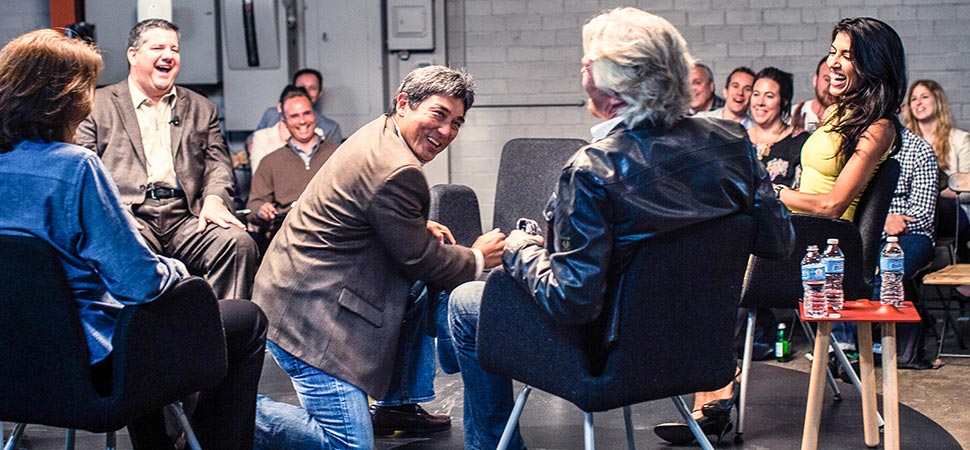
6 New Tips From Guy Kawasaki on Startup Funding
In case you haven’t heard, one of the most famous entrepreneurs and investment insiders of the past 20 years has updated his classic business book. The Art of the Start 2.0 by Guy Kawasaki came out on March 3, and I had a chance to catch up with him. He shared a few more tips for those trying to raise funds for a new startup and might be off to a rocky start. “A long time ago I majored in psychology at Stanford, and this degree has served me well as an entrepreneur and venture capitalist. One of the main tasks of an entrepreneur is raising money, and here are five ways you can apply psychology to make this process faster and shorter.” 1. Familiarity breeds consent. “In order to prepare for meetings with potential investors, you should study their LinkedIn profile and social media accounts. Your goal is to find a connection or shared interest. For example, that you attended the same school, play the same sports, or traveled to the same place. Use anything truthful you can to build a bridge and familiarity.” 2. Show traction. “‘Traction’ in this context means that your company is making progress. Your ‘tires’ are on the pavement, and you are making forward progress. Evidence of traction ranges from actual sales to free registration to website traffic. Investors want to see any kind of external validation of the usefulness/coolness of your product or service. The more traction you can show, the less you’ll require investors to take a leap of faith.” 3. Catalyze fantasy. “Many entrepreneurs try to ‘prove’ the size of their market by citing consulting studies. A better way to attract investors is to enable them to do their own calculation and end up with a fantasy. For example, there are 300 million Americans, and one in four owns a dog. That’s 75 million dogs that need two cans of dog food per day. That’s a market of 150 million cans of dog food per day–the kind of fantasy that got Pets.com funded.” 4. Bag one cat. “This is the last pet analogy. Investors want social proof that your company is a good investment. The best form of social proof is that other people have already invested, so you need to get investors to get investors. The hardest investor to get is the first one. Rather than trying to bag a herd of cats, focus on a few in order to bag one. Conceptually, it’s better to have one cat in the bag than 10 cats 10 percent of the way into the bag.” 5. Create the illusion of scarcity. “In order to bag your first cat–and every subsequent cat, it’s useful to create the illusion of scarcity. Scarcity in this case is that you’re going to raise a finite amount of capital so investors must move fast. This will only work in the kind of ‘bubbly’ market we’re in now. I’m not advocating that you lie. I am advocating that you consider hardcore bootstrapping and other ways to finance your company such as crowdfunding until you bag the first cat.” 6. Capital is precious. “My last recommendation is a reality check more than psychology. No matter how much you raise, always spend your capital like it’s the last round of financing you’ll ever raise–because it could be the last round you ever raise. The assumption that you can always raise more money is insanity–you don’t need a psychologist to understand that.”

“Inquiring minds want to know”
YES!!! IM IN VEGAS EVERY MONTH, GET FAMILIAR
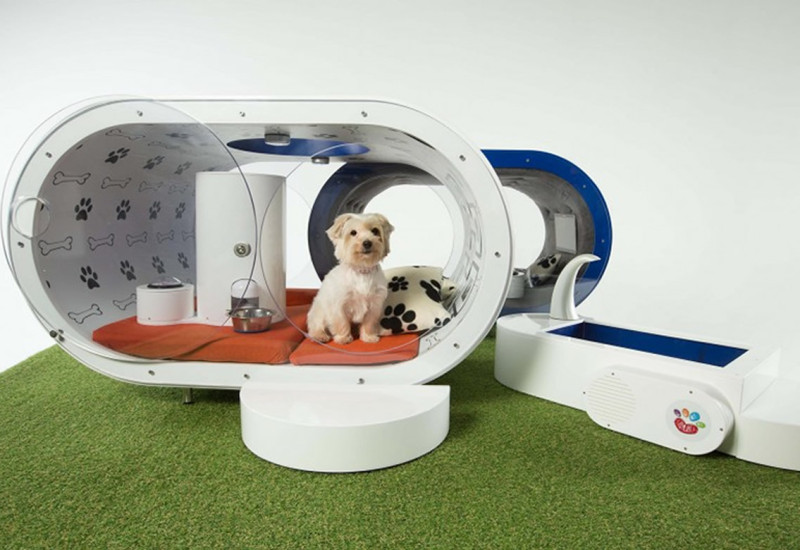
Samsung’s $30,000 Dream Doghouse Comes With A Treadmill, Tablet And More
This avant-garde kennel comes with over-the-top features like AstroTurf-covered treadmill, hydrotherapy pool, bespoke wallpaper and framed portraits as well as a paw-controlled snack dispenser. A team of twelve designers, including an architect, have compartmentalized it in to three areas, two indoor dens for rest, entertainment, and dining as well as an open-air rejuvenation section. To keep up with the tech-addict owner’s expectations, Samsung has also placed a Galaxy Tab S on the wall. Hopefully the owners will keep a watch for signs of their dog’s addiction to the tablet! The hi-tech dog house was conceived after the South Korean multinational company surveyed 1,500 dog owners and it was understood that most of them would like a treadmill, a TV or tablet device a hot-tub or spa for their dog. Samsung certainly didn’t let them down! Andy Griffiths, president of Samsung Electronics U.K. and Ireland, announced, “The Samsung Dream Doghouse looks sleek and modern, featuring the kind of tech the discerning dog of the future will need. From dogs who have social media profiles, to owners who use video calling to check on their pet while away, technology is fast becoming an integral part of everyday life.” This one-off Dream Doghouse was conceptualized to promote Samsung’s sponsorship of this year’s Crufts dog show in the UK. The company gave it to one fortunate black-and-white pup, the winner of the brand’s social-media contest. The palace-for-pooches is on display at the ongoing Crufts show until March 8 in Birmingham, England before it delivered to its new owner.

Anouchka Alsif by Terry Richardson for ‘Lui’ Magazine (NSFW)
Lui enlists Terry Richardson for another editorial, this time starring a scantily-clad Anouchka Alsif. The French native poses in a crisp pair of white sneakers, cheerleader-style high socks and not much else, shot in Richardson’s trademark candid style. For more from Lui, check out its stellar lineup of editorials – which includes Rihanna, Gisele Bundchen and Georgia May Jagger, among others. Look for the editorial in Lui‘s upcoming issue, soon available for order here.
Travis Porter’s “Faster” Flash Mob At Lenox Mall In ATL
Travis Porter took over the Lenox Mall food court with a flash mob for their new single “Faster.”

The Apple Watch Has Already Killed the Smartwatch Competition
The Apple Watch is coming. The buzz has been building since last September, and the impending release of the Apple Watch (the introductory news conference is Monday with the product in stores next month) will rock not only the smartwatch community, but the entire mobile market. Before the impending wave of hype and press (both positive and negative) crosses our news feeds, you should know one thing already: The Apple Watch has already won the smartwatch war—and it’s not even out yet. It’s worth noting that we’re comparing the upcoming Apple Watch to the Samsung Gear S (Samsung’s latest, on-the-market smartwatch) and the Pebble Time. These two are currently the easiest to purchase, and most publicized of Apple’s competitors in this field. If you’re still unconvinced, take a minute to look at what Apple has already done to establish the Apple Watch as the smartwatch to own. Smart marketing, hype building, and a pre-existing, robust iOS community are just a few of the things that beat out Apple’s competitors—battery life be damned. Yes, the Samsung and Pebble smartwatches have shown their power in this rapidly growing niche of the tech market, but as with anything Apple has produced, the Apple Watch will, from the moment it drops, set the bar for technical features, and, more importantly, consumer expectation. Considering this wouldn’t be the first time Apple has changed the tech game (*cough*…iPod, iPhone, iPad…*cough*), Apple knows how to take its products’ successes—and shortcomings—and turn them into the industry standard. Apple iOS is bigger and better. Image via bleedingcool.com The Samsung Gear S is Apple Watch’s main competitor, and the differences in the two gadgets’ operating systems give the Apple Watch a lead right out of the gate. Samsung’s current Gear S runs on Tizen, an operating system that is designed by Samsung specifically for its wearable tech. Granted, it has seen a steady uptick in apps and outside cooperation (most notably from Nike and its Nike+ platform), but it pales in comparison to the iOS system that Apple has. Inevitably, technical performance on either OS goes right out the window when you realize that Tizen is working in the thousands, and iOS is working in the millions when it comes to app support. A lack of relevant apps with large communities and/or social cachet makes any portable device practically useless—especially if it’s meant to either replace, or collaborate with your phone. Samsung’s Milk music provides users with music, and Internet streaming, but it’s drastically underdeveloped when compared to Spotify or Pandora—especially when contrasted against the community using those two apps on iOS. All things being equal, if you could choose between the name brand product or the generic brand, the choice is obvious. By having its smartwatch utilize the same iOS as its phones, the Apple Watch easily becomes a sidecar to a phone’s metaphorical motorcycle. While not independent of an iPhone, it allows users to work with the same interfaces and apps that make the iPhones so accessible and user friendly. This is absolutely vital if you’re convincing people to buy a completely new product that hasn’t existed before. Don’t forget, Apple isn’t just convincing people to cop a new type of product like they did with tablets via the iPad; they’re looking to replace an item that’s had prior cultural usage that spans centuries, not decades. Enticing consumers with familiar interfaces is the easiest way to simultaneously drop in new features and ideas. There are more iPhone users. Image via scmp.com It’s not just that an iPhone is marketed brilliantly; it’s that it’s in the hands of more people—shortages and sell-out release days be damned. Look at the numbers: At the end of the fourth financial quarter of 2014, Apple rose above Samsung, capturing 20.4 percent of worldwide smartphone sales, thanks in part to the iPhone 6 series. Samsung dropped dramatically, from 29.5 percent to 19.9 percent. It’s a tight race to be sure, but Apple is clearly winning. While smartphone sales indicate the demand for a particular brand’s portable devices, they also have a major effect on each brand’s wearable tech. Smartwatches need phones to pair with them in order to function. We acknowledge Samsung fanboys who argue that the Gear S can operate without being in range of a paired Samsung phone (to put it simply, you can walk out of the house with a Gear S and have it function independently as a phone). We also know that the Apple Watch will require a nearby iPhone (via wifi or bluetooth reception) to work. The Apple Watch in its current form works as an extension of your iPhone, rather than a straight-up replacement (for now). But before we call this a win for Samsung, let’s acknowledge that the Gear also relies heavily on a paired smartphone. You needs a supported Android phone to add and manage apps on your Gear watch. Basically, you need a smartphone, and most likely one from Samsung, to get the most out of your Gear. Take into account that more consumers are toting iPhones than Samsung phones, and you’ve already cut down Samsung’s potential audience for the Gear watches. If that doesn’t convince you, consider the consumers who would rather stick to the iOS they know, rather than switch to a new operating system. There are Apple-based mobile users, so more people are also acclimated with the iOS design and way of doing things. Thus, Apple has already established a bigger market of people who would cop the Apple Watch over the Gear S (or another competitor like the Pebble Watch). The Android OS dwarfs iOS as the most widely used OS in the world at roughly 70.7% of the market, but considering that the Apple Watch’s main competitor forces people to require an Android phone and learn the unfamiliar Tizen OS, having the Apple Watch utilize the same iOS as its iPhones will play to the strength of growing Apple smartphone sales. The Apple Watch is more stylish, and has fashion industry co-signs. Image via Business of Fashion It’s important to remember that this isn’t entirely a new piece of tech. The smartwatch is based on a timelessly stylish accessory. While Samsung’s Gear S has clearly thought about design, Apple Watch has embedded it throughout. Apple’s first win in terms of aesthetics is its sheer amount of customizations. While other competitors offer replacement bands, or may feature a choice between two watch faces of uniform size, Apple Watch offers the following (inhales deeply): two separate face sizes, six different watch face materials, and three separate types of bands (stainless steel, sport fluoroelastomer, and leather) in multiple iterations and designs. While all of the smartwatch industry’s players are focused on providing power, it seems only Apple has truly embraced the concept that its smartwatch needs to win on aesthetics too. With an incredibly expensive Apple Watch that will feature 18-karat gold faces, the Apple Watch proves it’s not just competing with Samsung or Pebble, it’s also going toe-to-toe with classic luxury watch manufacturers for valuable wrist-space. Noting all this when Samsung’s Gear S looks like small Galaxy phone on your wrist, it seems like the Gear S is more suited for Derek Zoolander, than those who want to buy a smart looking watch smartwatch. Don’t underestimate Apple’s push in Vogue either. This move demonstrates yet another attempt to court the fashion crowd. Apple is not the first major tech company to buy an ad in Vogue (Google pulled a similar move to promote Google Glass). However, Apple simply benefits by putting the product in the line of sight of those who actually care about fashion. Establishing the product’s connection to fashion’s elite is easier when you see it street styled at the latest fashion week or on the cover a of a magazine. If that wasn’t enough, the poaching of several luxury fashion heavyweights, including Angela Ahrendts from Burberry, the former CEO of Yves Saint Laurent, and the former VP for Sales at Tag Heuer, suggests Apple’s intentions for the watch. It wasn’t just the tech world that was involved in the design and production of its smartwatch—Apple made sure the fashion crowd was invited to the party as well. Apple has a long history of successful innovations. Image via techspot.com Impact is measured in legacy. Apple’s iPod was not the first mp3 player to hit the market. What it did do, however, was change the way mp3 players were made ever since. The design, especially the revolutionary Click Wheel, was so extraordinary that it makes one wonder how mp3 players operated before. Apple didn’t have to be first, it just had to be the best. What the iPod Click Wheel for the mp3 player, the new touch screen design and “Digital Crown” will do for the smartwatch. While smartphones are placing a greater emphasis on making the smartwatch just a smaller version of your phone, Apple has instead opted for a dual approach: innovate a new touchscreen that’s still familiar to a smartphone, while introducing the digital crown to make interaction easier on such a small screen. The tactile Digital Crown makes scrolling and zooming new, but organic. The user doesn’t need to learn how to move the crown, it already knows how to work it based on past interactions. Even if you say that Apple isn’t the first to incorporate physical inputs or buttons (as is the case with the Pebble watch) you can certainly applaud the team at Cupertino for minimizing the process to a single button that looks just like the crown on a traditional watch. It’s not the fact that the Digital Crown is there, but rather that it is a completely new experience masked as a traditional detail. While the digital crown adds new innovations, the touchscreen on the face of the watch changes how we use the now-common technology. A watch face is obviously smaller than a phone screen, so your hand needs double the power if it’s going to work with (or replace) the ease and familiarity your smartphone. By focusing on finger pressure, where a poke is different than a press, this innovation adds a new dimension to the former binary of yesterday’s touchscreen. It’s no longer about if you’re pressing the screen, it’s how. The newly-familiar Digital Crown coupled with the new twist on the touchscreen technology delivers two new innovations via actions the user is already comfortable with. The learning curve for an Apple Watch will be minimal, and like previous Apple innovations, this is because of the brand’s ability to keep interactions based on past experiences, or common sense logic. As Jony Ive said in his profile in The New Yorker, it’s the use of “the strangely familiar.” The Pebble Smartwatch is too niche to compete with the big dogs. The Pebble Watch. Image via Wikipedia Let’s turn the focus to another competitor: the Pebble Watch series. It has a great battery life, and a strong community. The price for the most basic model comes in at $99. If you want a smartwatch that lasts a long time on a single charge, you really can’t go wrong. It puts a lot of emphasis on community interaction, and so much of the Pebble’s content is derived not only by internal innovation, but through the work of independent developers. If nothing else, the power of Pebble on Kickstarter (being it’s most publicized and highest funded project) establishes interest in the product. But step away from the hype. The Pebble Watch is entirely reliant on a modified form of FreeRTOS, a free to use real time operating system. While the Pebble team has made the watch easy to operate, it’s not the iOS or Android operating systems that consumers are familiar with interacting with on their phones. While you can use the Pebble watch with an iPhone or an Android phone, it also needs to be tethered (via bluetooth) to your smartphone. In a market where Pebble is striving to be different from its competition, this similarity is a big caveat to Pebble’s attempt to isolate itself from Apple or Samsung. Further, Pebble Watches operate within their own app store. You download the Pebble Watch app via the relevant app store, and then within that app, you can navigate and download apps that will go onto your Pebble watch. Unless you’re Xzibit, that amount of intricacy is excessive at best. Besides, this also means you’re gated into the apps within the Pebble App’s selection. Because of Pebble’s embrace of individual devs, you have a rapidly growing selection—it’s host to about 6,500 apps and watchfaces—but nothing that rivals the Apple App Store or Google Play Market. If you’re using your smartwatch as a fitness companion, the Pebble is going to be sorely lacking. The Pebble can be outfitted to do all the things most fitness bands can do, including count steps, calories, and track what you eat, and can be customized for your individual needs. It also can work with things like RunKeeper and Jawbone. Apple, on the other hand, has a built-in “Activity” app, following how often you move, exercise, and even time spent standing. The watch also has a personalized progress tracker; and monthly or daily fitness comparisons. This isn’t even including the GPS, accelerometer, and heart rate sensor. The watch will even award you badges and store them in-app after completing your fitness milestones. Pebble’s not out of the running to be your workout companion, but when compared to Apple’s offerings, it seems slightly out-of-shape. Effectively, the Pebble is best as a simplified notification machine, with insane customization and individual developer support. This isn’t inherently a bad thing, but when you’re looking at the smartwatch as a continuation to your phone, the Pebble Watch operates as a simplified version of what a smartphone does; the Apple Watch is a 1-to-1 crossover of your iPhone. Apple Watch is a starting point in the same manner as the first iPhone. Image via iphoneincanada.ca While the Apple Watch has yet to hit stores, you can bet it will be riding Apple’s reputation and hype all the way to the bank. While it’s competitors attempt to battle each other, Apple will be winning with its continued focus on aesthetics. This attention to aesthetics isn’t just skin deep either. By centering their design on making the product as physically appealing as possible, this in turn leads to simplified concepts like the pressure-sensitive touchscreen and the minimized Digital Crown. For true success, particularly in this category, the best products aren’t going to replace your phone but, like the smartphone did for the desktop computer, work as an independent extension. What’s unique about wearable tech is that more than ever, the final product has to look as good as it performs. Aesthetics are just the beginning: They lead to innovations that don’t just change how their products look, but how consumers can interact with them too. The familiar OS, coupled with the low learning curve makes it simple for everyone from a tech guru to a grandparent to integrate the Apple Watch into their lives. It’s how Apple captured the computer and mobile tech market, time after time. If the point of technology is to make our lives easier, then Apple knows how to succeed.

Snoop Dogg and DJ Khaled Announce Residencies at Las Vegas’ TAO Nightclub
Snoop Dogg and DJ Khaled are taking their talents to Las Vegas. The two rap entertainers will be resident hip-hop acts at Sin City’s famed TAO Nightclub. Snoop is bringing back his Snoopadelic Cabaret. Described as a “roaring 20s speakeasy experience,” Snoop will serves as MC and will headline each night with a DJ set (as DJ Snoopadelic) and live performance. Snoop’s Vegas event will return March 28 with additional dates on May 2 and May 23. DJ Khaled’s We The Best: Vegas Edition residency will kick off at TAO on May 1. TAO Nightclub, located in the storied Venetian Resort, is one of the highest grossing clubs on the Vegas Strip. It frequently hosts A-list parties including Kim Kardashian-West’s last birthday soiree and huge fight night events. Before Snoop takes on the Entertainment Capital of the World, he’s putting work in on his upcoming album Bush. The Doggfather recently debuted the cover art for the project, which is executive produced by frequent collaborator Pharrell. Late last month Snoop and Skateboard P unveiled a trailer of sorts for the album, which shows the two in the studio grooving to beats off the project. After debuting the LP’s first single ‘Peaches N Cream’ during a pre-Grammy party back in early February, the official version should be touching down soon.