

Author: JD
‘Friday’ Headed Back to Theaters for 20th Anniversary Screenings
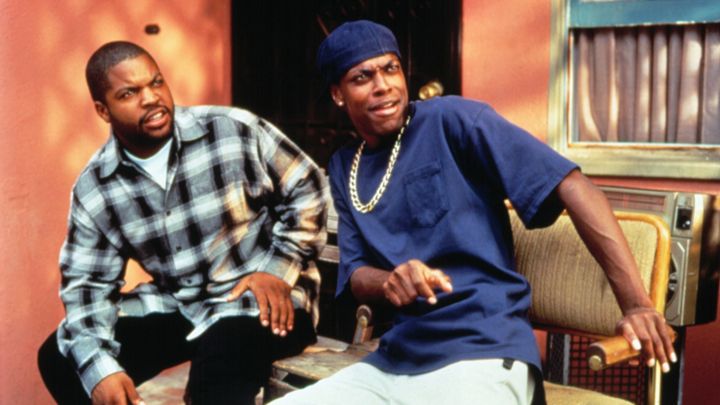
Ice Cube‘s stoner film classic Friday turns 20 years old next month, and in celebration of the anniversary, 400 American theaters will screen the movie on Monday, April 20th – a national weed holiday – at 7:30 p.m. local time, Buzzfeed reports. SIDEBAR 10 Best Stoner Movies of All Time » “For the theaters, for New Line [Cinema], for the fans to want to pay homage to the movie in this way is cool,” Ice Cube, the film’s star and co-writer, told Buzzfeed News. “It lets you know how much people appreciate it and how much fun it is. . . and it lets you know that Friday is now a part of the American fabric.” The one-night-only event will feature a special director’s cut of Friday, along with “Friday Straight Up,” a 24-minute featurette including behind-the-scenes set footage and cast interviews. Ticket sales and theater information are currently available via Fathom Events. On April 14th, in connection with the screening, the film’s double-platinum soundtrack will be reissued on vinyl. The LP, which topped the U.S. charts for two weeks in 1995, includes a mixture of vintage R&B and Nineties hip-hop (like “Keep Their Heads Ringin’,” Ice Cube’s collaborative hit with Dr. Dre). “I remember picking these songs and thinking, ‘No one’s used ‘Mary Jane’ by Rick James in a movie? This is going to be perfect,” the actor-rapper told Buzzfeed. “You usually don’t get the Isley Brothers and a fresh Dr. Dre song. It was a really special labor of love.” The original Friday co-starred Ice Cube and Chris Tucker as two friends toking up, battling drug dealers and searching for employment in urban Los Angeles. Ice Cube wrote and starred in two sequels, 2000’s Next Friday and 2002’s Friday After Next, but the original remains the true fan-favorite. A fourth installment in the series has been rumored for years – but in a 2014 Reddit AMA promoting the Kevin Hart buddy comedy Ride Along, Ice Cube said the project had been stalled by the studio. “The next Friday movie is caught up in development hell at New Line Cinema,” he wrote. “Pray that we get it outta there.” Read more: http://www.rollingstone.com/movies/news/friday-headed-back-to-theaters-for-20th-anniversary-screenings-20150320#ixzz3UyETDSko Follow us: @rollingstone on Twitter | RollingStone on Facebook

Snoop Dogg Has a New HBO Series in the Works
During Snoop Dogg’s SXSW keynote address, he revealed that he is developing an HBO drama with Allen Hughes, director of Menace II Society and Rodney Barnes, writer for The Boondocks. Fader reports that the series will center around a family living in L.A. in the early 1980s under the specter of Reaganomics with some inspiration from the Long Beach rapper’s experience coming up. According to a statement about the as-yet-untitled show the focus will be on the family ”whose seemingly idyllic life is turned upside down by the collision of their community and American politics.” Snoop will hold the title of executive producer. “This is like a dream come true, to tell a story in the right way on the right network,” he said. HBO and the West Coast native seem to be in a happy fit. Snoop is featured on Catch the Throne: The Mixtape Vol. 2, Game of Thrones’s second installment of the Catch the Throne mixtape series. With the fifth season of the HBO hit show premiering on April 12, fans can now stream and download the mixtape now via SoundCloud and download it for free at iTunes. The other artists on the tape are Ty Dolla $ign, Talib Kweli, Method Man, Kap G, Estelle, Melanie Fiona and many more. The tape plays on the series’ themes of fire and ice .Catch the Throne: The Mixtape Vol. 2 was produced by Launch Point Records and features samples of music used during Season Four of Game of Thrones. Snoop Dogg dropped the video to “Peaches N Cream” featuring Charlie Wilson and Pharrell recently. The song is off of OG’s Pharrell-produced album. Bush is Snoop’s 13th studio album, and is expected to drop May 12. Check out the trailer for the album here.

Music Streaming Made More Money Than CDs For the First Time Ever Last Year
The music industry is changing, with music streaming earning more money than the sale of CDs for the first time ever in 2014. According to the RIAA, music streaming earned a total of $1.87 billion in 2014, while CDs generated $1.85 billion, with the entire industry earning $6.97 billion overall, which was slightly down from their numbers in 2013. Though these numbers are close, it’s clear that streaming is on the upswing while CDs are becoming a thing of the past, especially with Spotify records already getting shattered by Kendrick Lamar and Drake just three months into the year. Now all music streaming services needs is for Taylor Swift to get on board, and it’s a wrap.
Fetty Wap – The Story Behind Trap Queen
https://www.youtube.com/watch?v=XlyTLZ4wDOE

Money Maker: Ludacris’ Box Office Success By The Numbers, by URAL GARRETT
In an exclusive “Furious 7” featurette for HipHopDX Ludacris’ breaks down the long tenure of “The Fast and the Furious” franchise. And, of course, his impressive string of successes proves he’s no slouch on the silver screen. The Fast and The Furious started with an article, just in case anyone’s out there who thinks the pen is not mightier than the throttle. And it hasn’t ended, not yet, not through seven films and side universes painted in green hulked out VW Touran’s. It’s never had a hiccup, not until now. Until the beloved Paul Walker died in the car accident the series and his legions of fans will never forget. With that, Furious 7 is as much a vigil to the fallen star as it is the usual testosterone fueled tank rolling through your nervous system. Central to the huge pull of the series has been its close connection to Hip Hop. From the soundtracks to Luda’ becoming a central character (after an abrupt departure by one Ja-Rule), the franchise has retained a lot of its tough guy milieu though the genre. But Ludacris character has become a major part of the party. First appearing afro’d out in the sequel to the original, Mr. Chicken and Beer’s character has evolved into a quasi genius tech visionary with a penchant for helping the crew get into and out of tough jams. A far cry from being just a minor gearhead with a supporting minority role. He’s made the most of his opportunities, and, while he’s not exactly seen as a thespian, he’s racked up quite an impressive turn of roles in very successful films over the years. With the closing of the Furious franchise quickly approaching we decided to look back at the films and franchises he’s helped make successful. If only to realize that Ludacris is a man who builds opportunities and capitalizes on them in way that can only be described as overwhelmingly successful. Oh, and his career box office gross? Try $916,594,096. And below, in a never before seen clip, Luda’ helps to breakdown exactly what set the Furious franchise on its road through seven films filled to the brim with fast cars, beautiful women, honor, and box office success. Furious 7 drops April 3. The Fast & The Furious Franchise: ( 2 Fast 2 Furious, Fast Five, Fast & Furious 6, Furious 7) Release Date: June 6, 2003 (2 Fast 2 Furious) – April 29, 2011 (Fast Five) – May 24, 2013 (Fast & Furious 6) – April 3, 2015 (Furious 7) Major Co-Stars: Paul Walker, Vin Diesel, The Rock, Tyrese Why He Mattered: Tech expert and voice of reason Tej Parker Total Box Office Numbers: $1,652,000,000 Above, Ludacris helps guide you through the numerous twists and turns of The Fast & The Furious Franchise in an exclusive, never before seen featurette, which chronicles the genesis of the films that became the kick start to both Paul Walker and Vin Diesel’s career. However, the series’ first instalment featured an important cameo from a then insanely popular Ja Rule. Alongside other obvious mistakes, clearly the former Murder Inc. artist is kicking himself for not taking the opportunity to participate in the sequel 2 Fast 2 Furious. Well, one man’s trash is another man’s multi million dollar treasure as Ludacris’ role portrayal of Tej Parker has made him a series mainstay since. And an important one, as their resident computer hacker, genius car remodeler and signature badass. Crash Release Date: May 6, 2005 Major Co-Stars: Sandra Bullock, Don Cheadle, Terrence Howard, Larenz Tate Why He Mattered: Troubled criminal Anthony Total Box Office Numbers: $98,410,061 Winning Best Picture during the 78th Academy Awards ceremony, Crash could be considered Ludacris’ first and only dramatic role to date. Playing alongside Larenz Tate’s Peter Waters, Luda’s role as Anthony was a bold move considering the route most rappers turned actors take. An early scene of Crash features an interesting exchange between Peter and Anthony. For someone with limited acting experience the DTP head holds his own with Tate as the conversation discusses the role black male stereotypes play in America. Hustle & Flow Release Date: July 22, 2005 Major Co-Stars: Terrence Howard, Taraji P. Henson, Anthony Anderson Why He Mattered: Local rap success Skinny Black Total Box Office Numbers: $23,563,727 If someone is going to create the greatest cinematic tribute to Southern rap, why not have one of the biggest rappers below the Mason Dixon Line have a critical role. Sure, the biggest story of Hustle & Flow would be Three 6 Mafia’s Oscar win. That doesn’t mean Terrence Howard’s DJay striving to be the next Skinny Black was a narrative slouch. Hustle & Flow’s final moments between the two still remain the film’s best non-musical moments. Interestingly enough, the soundtrack doesn’t actually feature Ludacris and was executively produced by then on wax rival T.I. Max Payne Release Date: October 17, 2008 Major Co-Stars: Mark Wahlberg, Mila Kunis Why He Mattered: NYPD Lieutenant Jim Bravura Total Box Office Numbers: $85,416,905 Based on Remedy Entertainment’s best selling videogame franchise, Max Payne was eventually given the cinematic treatment. Though seen as a critical failure, it made quite enough at the box office. With Wahlberg portraying the titular anti-hero, Ludacris plays NYPD Lieutenant Jim Bravura whose role as NYPD Lieutenant Jim Bravura. Gamer Release Date: September 9, 2009 Major Co-Stars: Gerard Butler, Amber Valletta Why He Mattered: Humanz resistance leader Brother Total Box Office Numbers: $40,828,540 In the future, video games get so hyperrealistic that humans replace the virtual world thanks to nanotechnology. Literally, humans gain the ability to control other humans for entertainment. One game is The Sims and Second Life inspired “Society.” The other is a bloodsport shooter entitled Slayers made up of death row and life term inmates. Ludacris gains a righteous role as resistance leader to opposing sect Humanz. New Years Eve Release Date: December 9, 2011 Major Co-Stars: Hilary Swank, Michelle Pfeiffer, Halle Berry, Common, Jessica Biel Why He Mattered: Brendan in the Times Square plotline Total Box Office Numbers: $142,044,638 One of the most epic romantic comedies of the last decade in terms of casting, New Years Evefeatures Ludacris in the “Times Square” storyline. Though his role was relatively minor, Luda’s castmates were obviously plenty enough in number to place him in good company. No Strings Attached Release Date: January 11, 2011 Major Co-Stars: Natalie Portman, Ashton Kutcher Why He Mattered: He’s Ashton Kutcher’s (Adam’s) friend Wallace Total Box Office Numbers: $149,228,077 No Strings Attached could be considered one of the quintessential romantic comedies for millennials. The story of friends-with-benifits of course has an entirely predictable storyline yet, it’s a cute story for those nights with bae. Playing close friends to Ashton Kutcher’s Adam, Luda provides some of the film’s comic relief.

20 ANNIVERSARY OF FREAKNIK
The homie @DjGregStreet just sent me this,the bootleg t shirt of the month, i love it!!! make sure yall send me some,lol

Loving U Is Complicated
How should white listeners approach the “overwhelming blackness” of Kendrick Lamar’s brilliant new album? I’ve been rummaging in my skull the past few days for the skeleton key that might spring open the interlocking chambers of rap phenomenon Kendrick Lamar’s intricate, imbricated, and self-implicating new album. To Pimp a Butterfly, an immediate contender for best of the year, alighted unseasonably on Sunday night, its wings’ beating fit to trigger a typhoon, and the last thing I want is to pin down and dissect its dazzle. For illumination I’ve found myself holding it up less to music, at least initially, than to poetry. I’m normally sour on such moves, the give-Dylan-a-Nobel routine: Lyrics for performance and verse for the page are different species. The parallel is only elevating if you curtsey to academic authority, and songwriters need no such boost. Here, however, it may fit, given that the through line on which Lamar has strung his 16 tunes is a poem of his own. It unfolds fragment by fragment in between tracks, directing and animating a dialogue among the songs, their characters, their many Lamars. In the 12-minute track at the record’s end, “Mortal Man” (after he shrugs, “it ain’t really a poem”), it morphs into a “conversation” with the wraith of Tupac Shakur, using taped snippets from a rare 1994 interview. All of which is signature heart-on-sleeve stuff from this onetime straight-A studentwho was turned on to verse and metaphor by a seventh-grade teacher and for whom hip-hop became a compass through (and out of) the enticements and dangers of the Compton streets. That double-hinged backstory was the core of his previous landmark record, 2012’s Good Kid, M.A.A.D. City. It’s too soon to say whether To Pimp a Butterfly is a more satisfying album, but it does advance the narrative: It traces the course of that internal division to Lamar’s current age of 27, as it forks and frays again and again under pressure systems of fame and wealth, “survivor’s guilt” and nostalgia, and temptation versus faith. To the disappointment of some listeners, Lamar seems to feel he’s already proven himself peerless as a technical rapper, especially via his 2013 murder-all-comers verse on Big Sean’s “Control.” (On “Hood Politics,” Lamar quotes Jay Z, bragging, “It’s funny how one verse could fuck up the game.”) So he powers those skills up and down as needed while also using spoken word, singing, dramatic recitation, found sound, and whatever else suits his aims. Prime among those priorities is sorting exploitation from expression under white supremacy—that is, to pimp or not to pimp the “butterfly” of one’s gifts to the outside world, whether for love or profit? In that frame, the record interrogates how to sound a singular black voice when the black-American body politic bears wounds centuries deep yet fresh as the morning news, in the skins of Michael Brown, Eric Garner, Trayvon Martin, and Tamir Rice, not to mention Lamar’s own fallen friends and relatives back in Compton. It’s a suite for many voices (mostly but far from solely Lamar’s) that dips into a much bigger pool of public and private ruckus around race. And in that it calls to mind two recent acts in American poetry, literary division. The first is Claudia Rankine’s National Book Award finalist Citizen: An American Lyric, which portrays “micro-aggressions” between the races, generally in the more rarefied social ranks. These stories about the enforcement of second-class citizenship are set in the second person, their (mostly) black protagonists represented as “you.” Your white neighbor calls the cops on the black friend who’s babysitting at your house. Your white boss complains about being required to hire minorities instead of the “great” candidates (so which are you?). Your new doctor screams at you to get away from her door before she realizes you have an appointment. As Jonathan Farmer said in Slate’s review, whether the “you” is Rankine herself or someone else, the device insinuates the reader’s vulnerability and/or complicity while it stages displacement within its own language: “The opening, between you and you, occupied,/ zoned for an encounter,” Rankine writes, “given the histories of you and you—/ And always, who is this you?” The book also purposefully puts white readers such as Farmer and me in an uncomfortable position: With whom do you let (or make) yourself identify, and why? In its rougher, ruder manner, Lamar’s album is also constantly spinning the camera around, or the mirror, as it conducts its own investigations into the psychic toll of social violence. You have to hold on tight to parse the shifting perspectives and personae. On opener “Wesley’s Theory,” Lamar is his younger self lusting for cash and notoriety, then his current self jaded by that desire (through a metaphor pickpocketed from Common’s 1994 classic “I Used to Love H.E.R.,” hip-hop becomes an ex-lover), and then he is “Uncle Sam on your dollar” seducing with promises but plotting to double-cross (ostensibly through taxation, à la Wesley Snipes, though what’s being extracted here feels more existential). Late in “Institutionalized,” with a storytelling assist from Snoop Dogg, Lamar becomes a friend from the hood whom he’s brought to an awards show, who gets tempted to play Robin Hood and snatch away the opulence around them. Likewise in the last verse of “Momma,” Lamar slips into the voice of a skeptical little boy he meets back home. Then on “You Ain’t Gotta Lie (Momma Said),” he channels his own mother, passing along her (and some of Tupac’s) harsh but sage advice. And on both “Alright” and “For Sale? (Interlude)” he plays “Lucy,” aka Lucifer, a temptress who speaks in high-pitched nasal tongues and who bargains with him at the classic Robert Johnson crossroad and sends him “runnin’ … home.” None of this is unique—the theatricality of rap as an abstract spoken art invites such role-playing, even as the gospel of realness serves to keep it in check. But the intensity with which Lamar does it here is defiant, recalling (as does the jazz-funk sound of much of the record) a Daisy Age, early-1990s approach to rap narrative, albeit with encyclopedic knowingness rather than wide-eyed novelty. Even when he’s speaking for himself, you never quite know when he’s parodying his own ego and the standard rap tropes, and when he’s playing it straight. Then there are metamorphoses not of character but of signification: On “These Walls,” the vaginal walls teased about in a sex jam disturbingly become prison walls in a critique of the prison-industrial complex until Lamar connects the dots by revealing he’s been “abusing [his] power” by sleeping with a convict’s girl for revenge. Finally, the next song, “u,” is a stream of suicidal invective Lamar howls at himself in a hotel room, dispirited by his own hypocrisies and the horrors he is unable to alleviate despite all his supposed influence—an even queasier, more toxic version of Rankine’s “blackness as the second person.” “U” is the prequel to “i,” which came out as a single in September, and in this context the self-affirming buoyancy of that song (over a sample of the Isley Brothers’ “That Lady” riff) seems much more earned and much less corny, which was a common slam against it then. If one of the complaints about this album is that there don’t seem to be more potential singles (the other advance release was the miles-from-corny, but also controversial, “The Blacker the Berry”), the misinterpretation in isolation of “i” may be a reason why. Isn’t radio the most prolific butterfly pimp, mangling music’s wings as often as it gives them flight? On an album, the artist can be programmer, DJ, announcer, and advertiser, too; he makes his own weather and directs all the traffic. But that option is commercially viable only because of the resurgence of the Event Album as a force in pop, through the surprise-drop strategy that’s become dominant since Beyoncé’s palace coup in late 2013. In fact several commentators have taken the week-early arrival of To Pimp a Butterfly (intentional or not) as an obituary for the release date as a convention, period. The trend seems to have reawakened an appetite for the concept album, in a way I never would have predicted five years ago. Back then, mixtapes were the stream-of-consciousness zone, the official album more a mere display case of products meant for airplay. It seemed probable that full-length recordings would be a casualty of contracted digital attention spans, supplanted by more frequent singles and EPs. Yet now, with the album returned to its role as top-of-the-card spectacle, it’s encouraging artists to make more audacious bets.
Philadelphia 15-year-olds murdered married father in failed robbery: cops
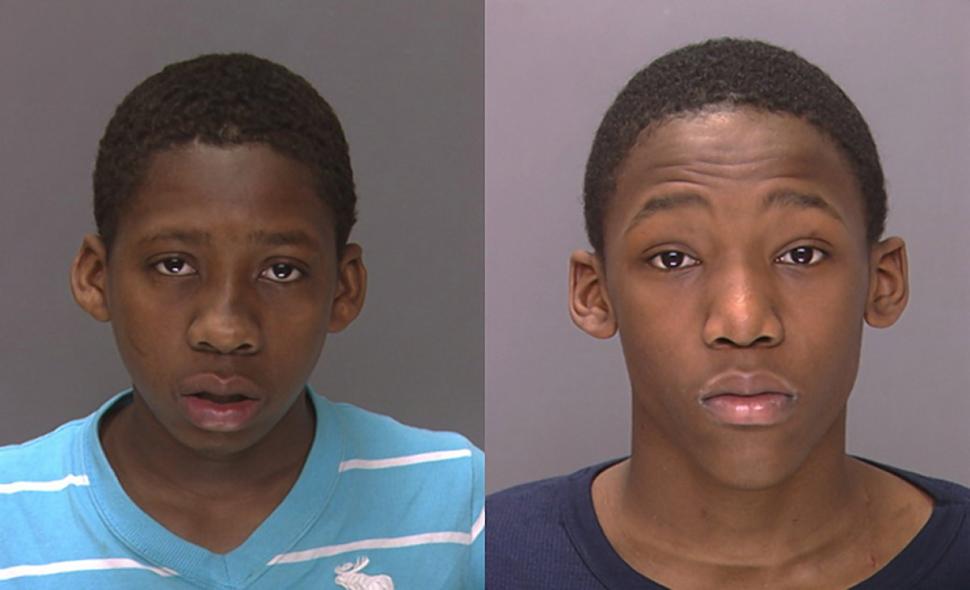
THIS FUCKED UP ! Two 15-year-old Philadelphia boys face murder charges for shooting a man while he walked his dog, firing the final round as he pleaded for his life, authorities said. The cold-hearted teens and a 14-year-old boy targeted 51-year-old James Stuhlman for a robbery after they tired of playing basketball, police Captain James Clark told reporters. “At one point, he did plead for his life,” Clark said Thursday at a news conference. “He said, ‘Please don’t shoot me, please don’t shoot me,’ and they shot still shot him one more time.” Cops busted Brandon Smith on murder charges, but the hunt is on for the alleged triggerman, Tyfine Hamilton. He’s considered “armed and extremely dangerous,” Clark said. The 14-year-old faces lesser charges and has cooperated with detectives, police said. Stuhlman usually brought his 13-year-old daughter along on the nightly walks through the city’s Overbrook neighborhood, but on March 12 he decided to go alone — a decision that may have saved her life. The three boys were prowling the streets for a victim, cops said. They considered another, younger man but settled on Stuhlman, because he seemed like an easier target with his little dog. FAMILY HANDOUT James Stuhlman was gunned down on March 12 while walking his dog in Philadelphia. The married father struggled briefly with the boys before Tyfine allegedly opened fire. They ran as Stuhlman crumpled. Cops found the man still clutching the dog leash and a flashlight, NBC 10 reported. His faithful pet lay trembling next to his lifeless body. Police on Wednesday raided a home where the boys reportedly lived and confiscated handguns and assault rifles, authorities said. The Philadelphia Inquirer spoke by phone with Tyfine’s father, who claimed his son was a habitual truant from Overbrook High School and had gone to live with his mother. The frustrated dad said he didn’t know where Tyfine is now. “If he would listen, then he wouldn’t be where he’s at,” he told the Philadelphia Inquirer. Cops said the robbery was pointless — the boys didn’t even get anything from Stuhlman before they ran. “For no other reason than these kids wanted to rob somebody, he ended up losing his life,” Clark said. “His daughter will never see her father again. That is really sad.”