

Author: JD

Lil Wayne Drops $51 Million Lawsuit Against Cash Money
Via Houston Williams (@AllHipHopcom) News. In a stunning turn of events, Lil Wayne has dropped a massive lawsuit against his recording home, Cash Money Records. The suit was dropped on April 6th, suggesting that Lil Wayne and mentor and “father” figure Birdman had reached a settlement of sorts, according to theJasmineBRAND.com. While the case was dismissed, Wayne could re-file if he so desired. Previously, Wayne charged that Cash Money had essentially swindled him of millions for rooted in his looming opus Tha Carter V. The initial lawsuit was filed in January and there was considerable friction between the camps, even lyrically.

Long Island High Schooler Accepted by All 8 Ivy League Colleges
A high school senior on Long Island has a big decision to make: He has been accepted to all 13 colleges he applied to, including all eight Ivy League schools. On March 31, when the official college decisions were posted online, Harold Ekeh logged onto his computer in Elmont, New York. The 17-year-old was shocked to discover he was accepted to all eight Ivies, as well as the Massachusetts Institute of Technology, Johns Hopkins, Vanderbilt, New York University and SUNY Stony Brook. North Carolina Teen Writes Rejection Letter to Duke University’s Rejection Letter MIT Releases Drone-Themed Admissions Video in Anticipation of Decision Day His mother was with him when the great news came in. “Everyone was so excited and surprised,” he said. “The hard work paid off.” Ekeh’s impressive high school resume spans from conducting scientific research, to starting a college prep mentoring program, to serving as editor-in-chief of the newspaper and vice president of Model United Nations. But Ekeh’s true passion is medicine. He says he plans to attend medical school and specialize in neurosurgery. “I knew I wanted to go to a really good school that would allow me to get into a great medical school,” he said. Ekeh said he didn’t have a certain college in mind until he visited Yale with his high school’s Model United Nations team. “I got to see how passionate people are at Yale,” he said. “That skewed me to start leaning towards Yale in my junior year.” Wherever he ends up, Ekeh says he’s looking forward to college courses that “spark my intellectual curiosity.” “And I want to learn things outside the classroom,” he said. “I’m looking forward to hands-on internships and travel abroad opportunities.” “And definitely the student life,” he added. “The new friends that I’ll meet. I’m sure I’ll meet long-lasting friends there.” So how will the high schooler make his big decision? “I still have to make visits to other schools like Harvard, Princeton and MIT,” he said today. “That’s what I’ll do in the upcoming weeks.” He has until May 1 to decide.

Daisy Lowe for ‘Ponystep’ No.7 (NSFW)
English beauty Daisy Lowe recently stripped down for Ponystep magazine’s No.7 issue. Styled by Akari Endo-Gaut and photographed by Catherine Servel, the editorial showcases Lowe in various NSFW looks, featuring her in less-than-there bathing suits, a dress, a skirt with no top, and more. To see the rest of the shoot be sure to purchase the latest issue of Ponystep.
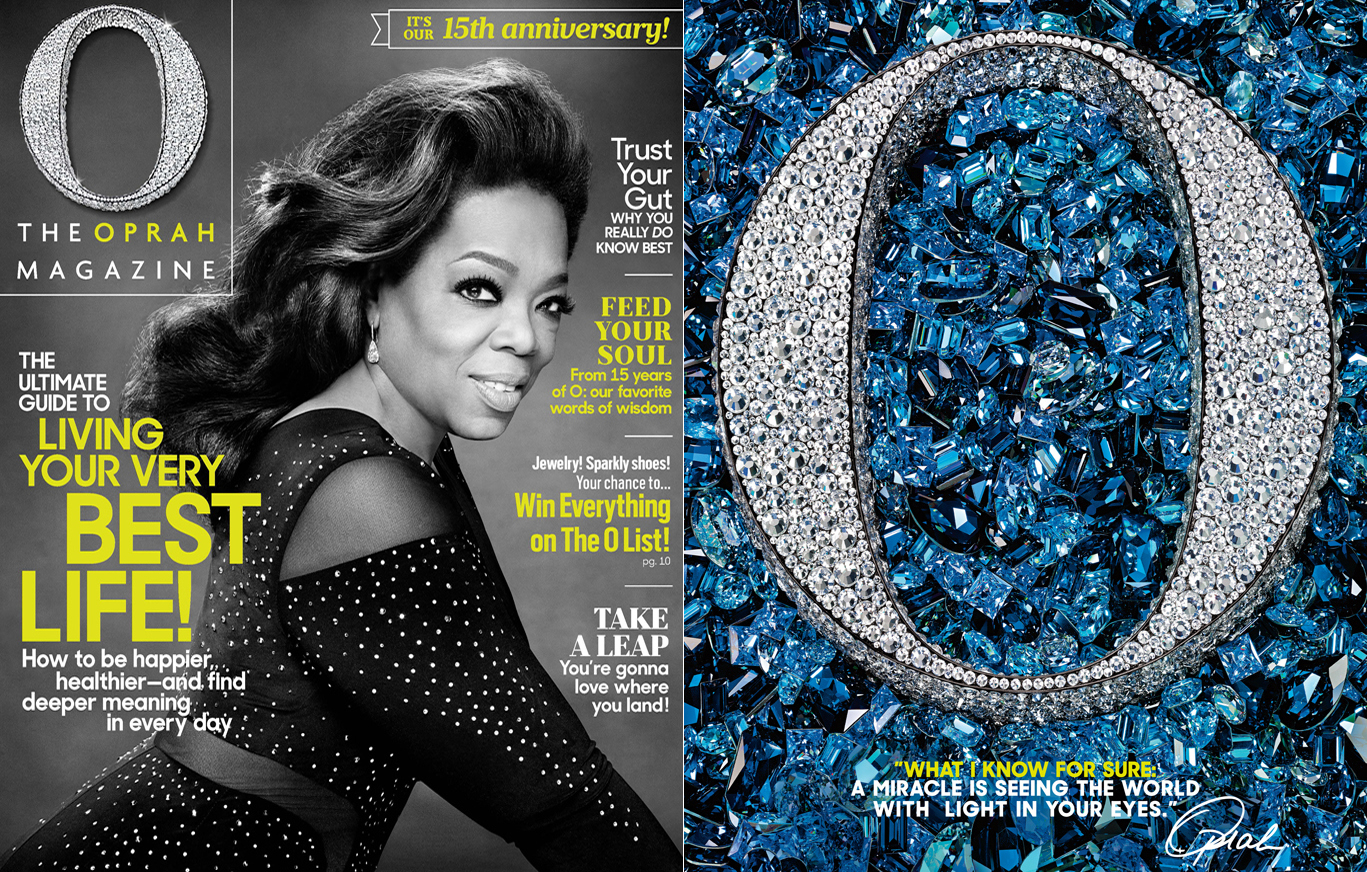
Oprah Winfrey’s O Magazine Dazzles With Swarovski For 15th Anniversary
By Joan Stern in Style Women 15th anniversary is also celebrated as Crystal anniversary and Oprah Winfrey’s O magazine sure knows to make the best of the dazzling milestone. O, The Oprah Magazine, first published on April 19, 2000, is a monthly magazine founded by Oprah Winfrey. Primarily marketed at women, the magazine’s cover has been dominated by Oprah only since its inception. Marking the glossy’s 15th anniversary, the cover features its founder in a dazzling Swarovski crystal-encrusted dress complemented by a sparkling “O” logo. Signed by Winfrey, the Crystal anniversary edition is adorned with over 1500 Swarovski crystals per issue. However Oprah played it modest on the occasion of the unveiling of O’s May cover by dressing up in a bright orange sweater with white piping, dark blue jeans and off-white sneakers bearing sparkles on the toe box. The founder and the face of the magazine described the first-ever black-and-white Omagazine cover as “It’s very iconic.” The 61 year old media giant Oprah Winfrey raised a toast at the unveiling and added, “I won’t say 15 more [years]. Fifteen more of dragging me out, I don’t think so.” Though the commemorative edition will hit the stands on April 14, the exclusive May 2015 anniversary edition will be offered to only fifteen premier members of O’s Circle of Friends who can win a copy of the magazine. Lucky winners will also receive a selection of luxury beauty products worth $500 with the issue.
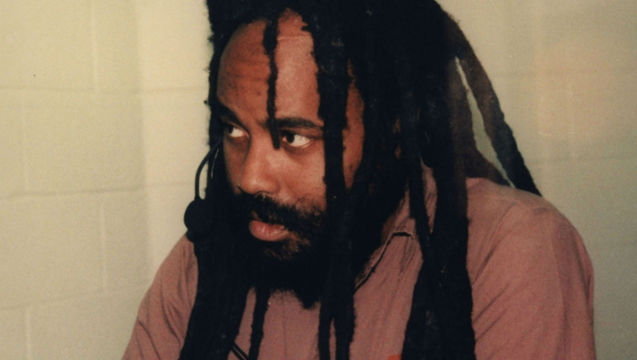
Mumia Abu-Jamal Taken to Hospital in Emergency, Surrounded by Guards; Family & Friends Denied Access
Imprisoned journalist and former Black Panther Mumia Abu-Jamal has been taken to the Intensive Care Unit of Schuylkill Medical Center in Pottsville, Pennsylvania, after he was removed from prison for a medical emergency without any notification to his family, friends or lawyers. Abu-Jamal’s longtime friend Johanna Fernández said she only learned he had been transferred when she went to visit him Monday morning at SCI Mahanoy after worrying that he had sounded sick when the two spoke by phone last week. “Upon arrival I was told I could not see him,” Fernández told Democracy Now! “We were told he was in diabetic shock and taken to the hospital.” For the past three months Fernández says Abu-Jamal has complained of suffering from an “extreme eczema outbreak” and described his skin as “akin to that of an elephant’s.” Watch Fernández’s interview on Democracy Now! “He tried to access whatever healthcare was available to him and it was woefully inadequate,” said Noelle Hanrahan, producer of Prison Radio. Abu-Jamal’s brother and next of kin, Keith Cook has traveled from North Carolina to Pottsville, but so far has been denied access. Prison authorities say they refuse to comment on inmate medical conditions or hospitalizations, and a hospital official said he had no information about Abu-Jamal. Abu-Jamal was convicted in 1982 of killing of a Philadelphia police officer, but has long maintained his innocence and is one of the world’s most famous political prisoners. Supporters say hospital staff has confirmed Abu-Jamal is in the ICU. They think he is being held in a private room that has the curtains drawn and is under armed guard. No updates have been given on his condition. They remain extremely concerned and are asking for people to call authorities and request that his family be allowed to see him. “Taking prisoners to outside hospitals is not standard operating procedure,” Hanrahan noted. “You have to be extraordinarily sick.”
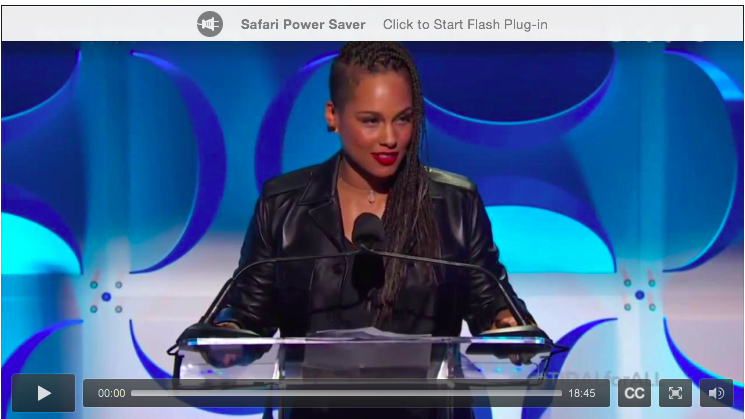
Time.com Thoughts On Tidal Press Conference
The launch event for the rapper’s streaming service was a big mess After its splashy launch press conference yesterday, the primary argument for Tidal—the two-tiered music service recently purchased by Jay Z that costs either $9.99 or $19.99 per month—is that artists deserve more money for their work. It’s not necessarily a wrongheaded argument, but the manner in which Jay Z and his contemporaries have pressed the point is embarrassingly out-of-touch. Sign up for THE BRIEFand moreview example There are real, systemic problems with current streaming services like Spotify, which stream music for free to listeners and distribute to artists a paltry fee drawn from advertising. That’s why Taylor Swift withdrew her hugely profitable catalog from the service last year. The argument Swift has been making is that music has inherent value; from her statements regarding Spotify to her op-ed in the Wall Street Journal, it’s a point she’s consistently made well. The argument Jay Z and his fellow stars at the Tidal launch (including Nicki Minaj, Madonna, and Beyoncé) are making is that they deserve to set the price point for their music. The supporting evidence for this claim? They want to set the price point for their music. The rhetoric around Tidal was pretty funny, when it wasn’t embarrassing. A promotional video showed various celebrities gathering to discuss their master plan as Beyoncé, who would seem to know better, said “Every great movement started with a group of people being able to get together and really just make a stand.” From Seneca Falls, to Selma, to Stonewall, to Los Angeles, where a bunch of celebrities demanded that their fans give them more money—this country has such a rich history of protest movements. Jokes aside, the celebrities at the Tidal launch press conference did a remarkably poor job of elucidating why the consumer accustomed to getting music for free should begin paying for it. In the age of Spotify, it is entirely legal to listen to music constantly and never spend money on it. Countering that fact with the moral claim that celebrities would prefer if you didn’t stream music for free only makes sense if you believe celebrities should get everything they want, one hundred percent of the time. As for the rhetoric in the press conference that music is special and has a unique place in our culture: Music fans agree! That’s why they listen to music often, on services that provide that music for free. But rather than building a better system, Jay Z and friends have, so far, put their energy behind a product that’s more or less the same as Spotify, but more expensive. A product this pointless could, maybe, be sold as a charity case by artists who depend on every penny of fan support. But Jay Z, a rapper who wastes no opportunity to brag, on his records, about his business acumen, is not that figure. Based on the optics of the Tidal launch, his business acumen may have failed him this time.

Microsoft at 40, the iPad at 5 and the always-changing nature of tech
This weekend, tech history buffs are celebrating the 40th anniversary of Microsoft. Love it or hate it, there is no denying that Microsoft is one of the most important players in tech and over the last forty years, has fundamentally changed the industry. I’ve spent a lot of time thinking about Microsoft, especially how the company rose to prominence in the 1980s, became an utter powerhouse in the 1990s and has had its share of challenges over the last decade. SEE ALSO: Bill Gates on Microsoft’s 40th birthday: ‘What matters most now is what we do next’ In his letter to employees commemorating the 40th anniversary of the company he co-founded, Bill Gates wrote that “what matters most now is what we do next.” At Microsoft, it’s certainly better for the company to focus on the future, rather than the past. That’s partially because the last decade has been difficult for the company. In fact, the last five years have been particularly challenging, with Microsoft being passed in market cap and mindshare by the likes of Apple and Google. In fact, it was five years ago this May that Apple actually overtook Microsoft in market cap, becoming the world’s most valuable tech company in the process. Google also overtook Microsoft in 2012. Millions of words have been written about Microsoft’s strategic missteps over the last decade and it’s not worth rehashing all of that here. Microsoft made some of its most noted errors when it came on betting on the future, primarily in the areas of mobile and tablet computing. It wasn’t that Microsoft was blindsided by the mobile revolution, the way the company was blindsided by the web in the mid 1990s (in the case of the web, Microsoft was able to successfully use its market resources, team of developers and some hardball business tactics to win wars against AOL, Netscape and others), no. The problem was actually worse than that. Microsoft was too early to both smartphones and tablets, and as a result never managed to get a modern product to consumers at the right time. When being too early is worse than being too late The idea of being too early costing a company a chance to succeed really comes into view in light of the other big tech anniversary this week: The fifth anniversary of the iPad. Apple entered the tablet market in 2010 after a lot of established companies (including Microsoft on more than a few occasions) had tried and failed at that market. Coming at the market at a different price point and, more importantly, with very different use cases being sold to consumers, the iPad was a huge hit. Christina Warren waits for an iPad on April 3, 2010. IMAGE: FLICKR, GRANT ROBERTSON A few months ago, I wrote an analysis of the iPad at age five, so I won’t repeat that here, but that story is worth reading to get a sense of what all of us got right (and wrong) about the iPad five years ago. On Friday, I discussed the the iPad’s anniversary with Mike Elgan on “Tech News Today.” Elgan made a point I thought was worth revisiting: Apple basically had a two-year lead on the competition. Wait, what? Putting aside the original Android tablet that pre-dated the iPad (and was neither optimized, nor particularly good), the first real iPad competitor didn’t get launched until the Samsung Galaxy Tab 10.1 appeared (re-designed, post iPad 2, no less) in the summer of 2011. Beyond that, it would take until 2012 for truly solid tablet competition to show up from the likes of Samsung, Amazon and LG. Microsoft’s first few stabs at actually competing with the iPad came in the form of the Microsoft Surface and the Surface 2 tablets. Neither was a success and it took until the Surface Pro 3 in 2014 for Microsoft to finally have a viable tablet on the market. And make no mistake: the Surface Pro 3 is a success because it doesn’t target the iPad, it targets the MacBook Air. So what happened? Well, simply put, Microsoft was too early. Microsoft and Bill Gates had visions for tablet computing in the early 2000s, but the implementation and the hardware left much to be desired. In fact, some of the early criticism around the iPad was that the device wasn’t the OS X equivalent of one of those terrible Windows XP Tablet Edition monstrosities. Microsoft’s plans for tablets in 2010 — before the iPad was released — was to basically add a capacitive touch screen to Windows 7 in the form of a “slate PC.” The concepts were dropped almost as soon as the iPad was shown off and it would take until the launch of Windows 8 for Microsoft to meaningfully address tablet computing in any real sense. I don’t think it’s a coincidence that Microsoft’s fortunes over the last five years have decreased while those of Apple and Google have ascended higher and higher. Google, like Microsoft, was late to fully respond to the iPad. The first version of Android optimized for tablets wasn’t even released publicly, just on a handful of tablets in 2011. But because Google hadn’t wasted time with earlier tablet efforts, it was easier for the company to pivot its resources to address tablets. It also didn’t hurt that Google, like Apple, had a modern mobile operating system ready to put on lower-powered devices. Microsoft, also too early to the smartphone game, was equally busy in 2010 trying to reboot its mobile efforts with Windows Phone 7. It won’t be until 2015 that Microsoft finally achieves its goal of having its mobile OS, desktop OS and tablet OS all on the same core platform, with Windows 10. A lesson for what can happen in just five years I think it’s worth looking at what has happened not just to Microsoft, but to the tech world in general over the last 40 years. Forty years ago, when Microsoft was founded, computers were mainframes and the tools of big corporations and universities. Microsoft was smart enough to see the PC revolution coming and get in to help make it huge. Within 20 years of its founding, Microsoft would be the biggest tech company on the planet. But 20 years after conquering the world, technology has moved on several times over. First to the web and then to mobile. The next big shift may be based on virtual reality or augmented reality. It may be something we haven’t even thought of yet. But even the last five years — since the launch of the iPad — has changed the tech world tremendously. Instagram, Snapchat, Pinterest, Uber, Airbnb and Xiaomi were all non-existent or nascent just five years ago. All of those companies are now valued at (or in the case of Instagram, exited at) more than $1 billion each. It’s worth looking at what Microsoft lost by being too early (and then too late) to the most recent tech revolution, when we think about what tech will look like in another five years.

Apple and Beats Developing Streaming Music Service to Rival Spotify
In what would be the biggest change to its music strategy in years, Apple is pressing ahead with a sweeping overhaul of its digital music services that would allow the company to compete directly with streaming upstarts like Spotify. Almost a year after agreeing to pay $3 billion for Beats, the maker of hip headphones and a streaming music service, Apple is working with Beats engineers and executives to introduce its own subscription streaming service. The company is also planning an enhanced iTunes Radio that may be tailored to listeners in regional markets, and, if Apple gets what it wants, more splashy new albums that will be on iTunes before they are available anywhere else, according to people briefed on the company’s plans. In a sign of how important Beats is in reshaping Apple’s digital music, the company has made a musician a point man for overhauling the iPhone’s music app to include the streaming music service, as opposed to an engineer. Trent Reznor, the Nine Inch Nails frontman who was the chief creative officer for Beats, is playing a major role in redesigning the music app, according to two Apple employees familiar with the product, who spoke on the condition they not be named because the plans are private. Read more from the New York Times: Drones beaming web access are in the stars for Facebook Parrying the latest predictions of Facebook’s demise From Microsoft, a novel way to mandate sick leave Perhaps most telling for Apple is what its new streaming service will not have: a lower price than rival services. According to several music executives, who spoke on the condition of anonymity because the talks are private, Apple recently tried but failed to persuade record labels to agree to lower licensing costs that would have let Apple sell subscriptions to its streaming service for $8 a month — a discount from the $10 that has become standard for services like Spotify, Rhapsody and Rdio. That $2 markdown may be small, but Apple’s failure to secure it reflects a shift in the company’s relationship with the music industry. While Apple once enjoyed enormous negotiating power as the dominant force in digital music — an area it helped pioneer more than a decade ago with music downloads — it now faces an array of new competitors and finds itself in the position of needing to modernize its offerings to catch up to the streaming revolution. That has weakened Apple’s leverage — and the labels could not be happier about it. Toni Sacconaghi, a financial analyst for Sanford C. Bernstein, said that Apple’s apparent struggle over lowering the pricing of its music service now was a result of being late to the streaming game. “They’re used to being a shaper rather than a responder,” Mr. Sacconaghi said. “This is one of the few times where Apple is playing catch-up and not necessarily coming from a position of strength.” Tom Neumayr, an Apple spokesman, declined to comment or make executives including Mr. Reznor available for interviews. Apple’s turn toward streaming is a matter of necessity, as listeners increasingly shift from music downloads to streaming. According to the Recording Industry Association of America, downloads generated $2.6 billion in revenue in 2014, down 8.5 percent from the year before. Streaming made $1.87 billion last year, and overtook CD sales for the first time. Read MoreHow to turn your Apple Watch into an office As the biggest retailer of music, Apple remains a crucial marketing partner for the music industry. Yet its absence from streaming has let others get a head start. Spotify, which started in Sweden in 2008 and came to the United States in 2011, said in January that it has 15 million paying subscribers around the world, as well as 45 million more who listen free, with advertising. (Apple’s iTunes has more than 800 million customer accounts.) Exactly how Apple will match Spotify is unclear. Music executives say they have not been shown a prototype of the new streaming service, nor been given much detail on it. The new music app, which is a collaborative effort between Mr. Reznor and other Apple and Beats employees, including Jimmy Iovine — who founded Beats with the hip-hop star Dr. Dre — will feature the streaming music service with many of the same characteristics as the Beats Music streaming service, one Apple employee said. Those may include curated playlists and a more vivid visual appeal, while conforming to Apple’s sleek and minimal design aesthetic, one person said. The name Beats Music will most likely be shed. According to an Apple employee, the service is being tested as part of a new version of the company’s mobile software system, iOS, which has been given the code name “Copper” and is expected for public release this year. Mr. Iovine has set the tone of the transformation of Apple’s music plans, according to music executives. Mr. Iovine, who reports to Eddy Cue, Apple’s head of software and Internet services, has been leading aggressive talks to secure prominent album releases that will be exclusive to Apple, akin to what Beyoncé did when she released her self-titled album on iTunes in December 2013. One music executive involved in the negotiations described this part of the new iTunes as “Spotify with Jimmy juice.” A crucial difference for Apple’s streaming service is that unlike Spotify, it will have no free tier. That has greatly pleased top executives at major music labels, who have begun to complain openly that so much free music has given consumers too little reason to pay for it. Apple is also expected to overhaul iTunes Radio, the free service that the company introduced in September 2013 as a competitor to Pandora, and which has had little impact on the marketplace. One new player is Zane Lowe, a former BBC radio D.J. known as a trend-spotter. Last month he announced that he would join Apple in Los Angeles, where the Beats team is concentrated. Read MoreIt’s time to buy Apple—I’m playing for $140: Trader Mr. Lowe is expected to play a role reconfiguring iTunes Radio. Among the ideas that have been floated for iTunes Radio are a more geographically targeted approach that would bear some resemblance to a traditional radio station, with Mr. Lowe as the voice, music executives said. Whether or not Beats is a success, it would make just a small dent in Apple’s overall business. Mr. Sacconaghi of Sanford C. Bernstein noted that if Apple’s streaming music service were to make as much money as, say, Pandora, which generates roughly $1 billion in revenue a year, that amount would be less than one half of 1 percent of Apple’s annual $183 billion in revenue. Ben Bajarin, a consumer technology analyst for Creative Strategies, said that the hope for online entertainment services like Beats is to add more hooks for people to keep buying Apple products. But a music service is just one potential lure among many others in Apple’s offerings, like apps, movies and the iPhone’s operating system. “In the grand scheme of things, this isn’t trying to be the next big business,” Mr. Bajarin said of Beats Music. “It’s just trying to be an evolution in their ecosystem that has many moving parts, not just one.