

Author: JD

Music piracy fears
Despite the endorsement, some musicians have claimed that the expense of Tidal subscription could tempt listeners “back to pirate sites.” Last week, British pop singer, Lily Allen, went on a Twitter storm about how the premium service would increase music piracy, which she said the cheaper Spotify was helping subdue—its most expensive “premium” service costs subscribers £9.99 ($14.84) per month. On March 30th, Allen tweeted that whilst she loved Jay Z, Tidal is “expensive compared to other perfectly good streaming services” and that he’d taken the biggest artists and “made them exclusive to TIDAL (am i right in thinking this?), people are going to swarm back to Pirate sites in droves… sending traffic to torrent sites.” “Up and coming (not yet millionaires) artists are going to suffer as a result,” she added in a later tweet. After tweeting, the singer was inundated by comments, with some Twitter users agreeing that the service was too expensive. One user called Erica Burton replied: “I don’t think jay z knows how much stuff costs. Like if I asked him for money to buy a banana he would give me $40.” #TIDALforALL? Jay Z faced a mixed response when unleashed the hashtag #TIDALforALL on Twitter to promote the service on March 30th, which offers over 25 million songs and 75,000 videos to those “who care about quality.” Co-founder of Simple as Milk, a “user-experience agency”, James Seymour-Lock tweeted that it was “Ironic that these artists moan about pirated music then rip off @Spotify’s hard work.” Twitter user Adam Bennett tweeted: “Tidal is way too expensive! $240 a year is absolutely ridiculous – it just makes the already rich even richer.”

Indiana Pacers forward Chris Copeland stabbed outside 1 OAK club; two Atlanta Hawks arrested in aftermath: NYPD sources
WTF!!! ROBERT SABO/NEW YORK DAILY NEWS A former member of the New York Knicks now playing for the Indiana Pacers was stabbed in the abdomen — and his wife slashed — during an argument outside 1 OAK club in Chelsea early Wednesday, cop sources said. Chris Copeland’s attacker was arrested, and two members of the Atlanta Hawks, Pero Antić and Thabo Sefolosha, were also booked, for trying to prevent police from setting up a crime scene, the sources said. A second woman was also stabbed amid the fracas, which happened shortly before 4 a.m., as the popular club on West 17th St. was preparing to close. An argument erupted as Copeland, the other victims and the suspect were leaving, the sources said. The man who was arrested, Shezoy Bleary, 22, pulled out a knife and stabbed Copeland, 31, and slashed 28-year-old Katrine Saltara, described by investigators as Copeland’s wife, in the arm and leg, the sources said. The second woman, Catherine Somani, 53, was slashed in the abdomen, the sources said. Pero Antic, of the Atlanta Hawks, was also arrested. Copeland came to New York because the Pacers are playing the Knicks at Madison Square Garden on Wednesday night. The Hawks, meanwhile, will tip off against the Brooklyn Nets at the Barclays Center on Wednesday. Copeland and Saltara were rushed to Bellevue Hospital and were in stable condition, the sources said. Somani was taken to Lenox Hill Hospital. When police arrived at the scene, they busted Bleary and recovered a knife, sources said. Charges against him were pending. Sefolosha, 30, and Antić, 32, refused to move when police tried to set up a crime scene, the sources said. They were charged with obstructing governmental administration. TAMI CHAPPELL/EPA Thabo Sefolosha, also a player on the Atlanta Hawks, was arrested along with Antic for allegedly blocking police as they tried to set up a crime scene. A police source said that Somani is a friend of Bleary’s and was with him when the argument broke out. It is believed that she was slashed by accident, the sources said. “She was with him, and in the course of what he was doing, (he) slashed her in the abdomen,” the source said. Copeland, a 6-foot-8 forward from Orange, N.J., played 56 games with the Knicks during 2012-2013 season, his rookie year. In July 2013 he signed with the Pacers as a restricted free agent, inking a two-year, $6.1 million contract. Sefolosha and Antić had been in the city no more than a few hours before the incident, as they spent Tuesday night in Atlanta, scoring a combined 32 points to help the Hawks beat the Phoenix Suns.

Video Shows Officer Michael Slager Shooting Unarmed Black Man In The Back In South Carolina
MORE OF THIS BULLSHIT!!! A white South Carolina police officer was arrested and charged with murder Tuesday after video showed him fatally shooting a fleeing, unarmed black man in the back. North Charleston Police Officer Michael T. Slager, 33, can be seen shooting 50-year-old Walter Scott after a confrontation on Saturday, according to The Post and Courier. Slager chases Scott and shoots at him eight times in the video recorded by a passerby and obtained by The New York Times. Scott died there, though it wasn’t clear if he died immediately. The graphic video raises questions about Slager’s original assertion that he used his gun because he felt endangered. WARNING: GRAPHIC VIDEO https://www.youtube.com/watch?v=kXO3Ix_GIyI

Young Thug Announces ‘Carter 6’ Release Date, Unveils Artwork
Via Complex.com In another move that proves he’s not bluffing, Young Thug has unveiled the artwork (above) and announced the release date for Carter 6 on Instagram. Thugger’s newest project is set to drop April 17, meaning we’ll likely get his take on the Carter series before Lil Wayne’s own Tha Carter V. Young Thug first announced his next project’s title last month. Lil Wayne’s daughter, Reginae Carter, wasn’t happy about it, calling the move “childish” and “disrespectful.” At the very least it’s instigative, considering the beef between his idol Weezy and frequent collaborator Birdman shows no sign of deescalation. Reports indicated Lil Wayne was dropping his lawsuit, but it was just moved to New Orleans.

Snapchat Debuts ‘Friend Emojis,’ Low-Light Camera Button
Who do your friends snap the most? Snapchat’s replacement of the “Best Friends” list with “Friend Emojis,” released on Monday, gives users new clues into their friends’ social habits. In the past, the Best Friends list revealed which usernames people snapped most often. Now, the app uses a series of emojis to categorize users’ relationships with each other as well as users’ mutual friendships. The Los Angeles, Calif.-based company announced the change in a post on the Snap Channel of Discover, its news and media feature that launched in January. The emojis aren’t necessarily intuitive labels. However, they do give users more ways to track their socializing patterns and those of their friends’. The app used photos of Beyoncé with other celebrities to explain each emoji. A gold heart means two users both snap each other more than they snap any other person; a grimacing emoji means two users send more snaps to the same third user than they do to any other user; a sunglass-wearing emoji means two people have a best friend in common and send many snaps to this person; a smiling emoji indicates that a friend is among the people a user snaps most often; a smirking emoji means the friend sends many snaps to the user, but the user does not send many snaps to that friend; and the fire emoji means two users have been snapping each other for consecutive days. Snapchat also added a “Needs Love” section to show which friends you haven’t been snapping as much as you did in the past. In addition, the app made an image and video brightening button in the shape of a crescent moon to improve shooting in dim lighting. The messaging service’s latest round closed last December, when it raised $485 million, giving it a valuation of more than $10 billion. Alibaba, the Chinese e-commerce company, plans to invest $200 million in Snapchat at a valuation of $15 billion, according to reports earlier this month. Last month, Snapchat was aiming to raise about $500 million in its next round, Bloomberg reported, citing people close to the matter. For years, the app’s security and privacy policies have fallen under scrutiny. In 2013, the FTC launched an investigation challenging the service’s claim that it offered “disappearing” photos and videos. Snapchat ultimately settled with the FTC, creating a comprehensive privacy policy to protect user information. Snapchat also announced several new security and privacy changes in a Medium article last week. The company has joined Facebook, Google GOOGL +0.15% and Yahoo YHOO -0.11% in reporting the frequency of requests for user content and information from government agencies, is expanding its “bug bounty program” and aims to completely ban third-party apps, according to Medium. “We actually consider it a competitive advantage that we care that much about users’ privacy and security,” Snapchat’s vice president of engineering Timothy Sehn told Medium. “We care enough to delete their data. That is something that most companies don’t do because that data is valuable.”

TEAM GLOBAL14
About a week ago, @cory and my self spoke at GA.Tech and @emoryuniversity about tech start ups,entrepreneurship,the disruption of the music business and Global14,one of my main goals was to find,like minded,talented interns to help me with my Global14 vision,and today I put together “Team Global14”
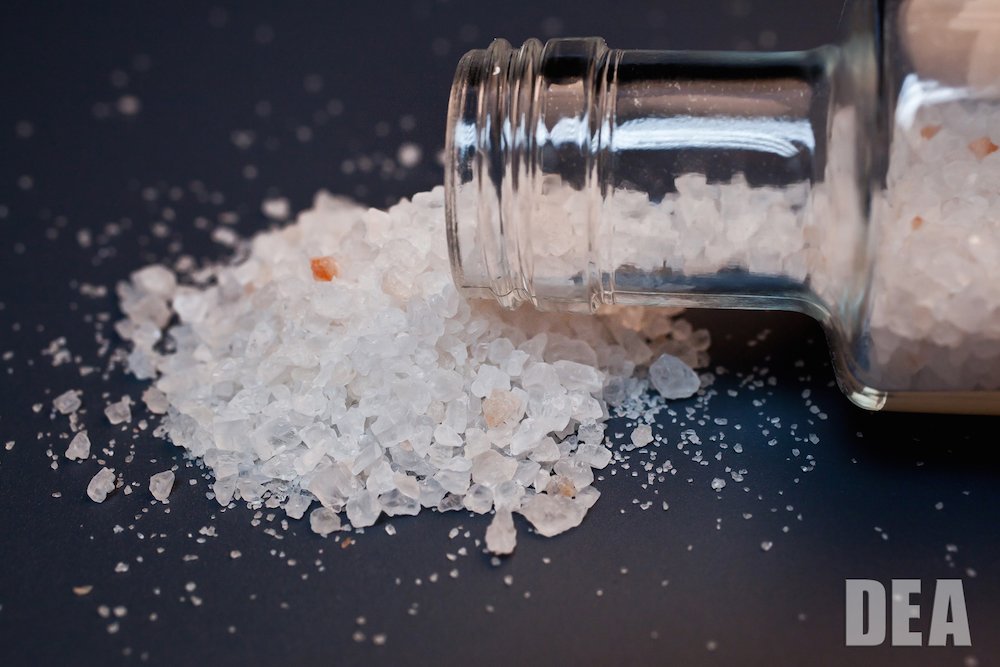
Everything you need to know about the new street drug ‘flakka’ — its insane side effects aren’t even the worst part
There’s a new drug in town called flakka. While many reports are saying this new designer drug is sweeping the state of Florida, the mind-altering substance has also been popping up in a few other states across the country, including Ohio and Texas. There, it goes by the name “gravel” because it looks like the colorful gravel pebbles you’d use to decorate the bottom of an aquarium. Use of the drug, which can be snorted, smoked, injected, and swallowed, has been linked with serious — and sometimes deadly — behavioral problems: Earlier this week police arrested a man on flakka running naked across an intersection to escape the imaginary people he said were chasing him. In February, a man on flakka was caught on camera trying to kick in the glass doors of Florida’s Fort Lauderdale police headquarters. And last March, a man on flakka reportedly impaled himself on a metal fence. If these behaviors remind you of the ones that made headlines a few years ago with the appearance of drugs called “bath salts” — it isn’t a coincidence. The two drugs are closely related. What’s it made of? Alex Dodd/flickr Flakka is made from a compound called alpha-PVP, a chemical cousin of cathinone, the amphetamine-like drug found in bath salts. Here’s the worst part: While the active ingredient in bath salts was officially banned in 2011, its newer relative, alpha-PVP, was not. That means it is legal in any state without its own ban. What does it do? Like cathinone, alpha-PVP is a type of stimulant, colloquially called an “upper.” Uppers are linked with feelings of euphoria, enhanced alertness and wakefulness, and increased movement — all symptoms that are similar to those experienced by people on other drugs like amphetamines or cocaine. Since flakka is so new, researchers aren’t sure exactly how it affects the brain, or how addictive it is. For now, they can only guess by looking at how its chemical cousins, like cocaine and amphetamines, work. These drugs cause a surge in two chemicals: the feel-good chemical dopamine (responsible for the euphoric sensations) and norepineprhine (which raises heart rate and blood pressure and can make us more alert). Like cocaine and meth, flakka comes with a comedown, the period when the drug leaves the body and the person is left feeling fatigued or depressed. This sensation often results in users returning to the drug to get rid of the negative comedown feeling, jump-starting a cycle of use that can lead to abuse. Also like cocaine and meth, the drug may alter brain chemistry in a way that makes users require a larger and larger dose to get the same high. Excessive use has been linked with feelings of extreme anxiety, paranoia, and hallucinations. Like with bath salts, people have also reported dozens of episodes of violent behavior in people on flakka. At high doses, flakka may also cause the body to reach high temperatures (bath salts have been linked with the same symptom). This excessive temperature can lead to severe physical complications like kidney damage and muscle breakdown. Flakka is on the rise Still, flakka use is on the rise. According to Forbes contributor Robert Glatter, the US Drug Enforcement Administration has seen a nearly 780% increase in the number of reported cases in the last three years. Back in 2010, not a single case of the drug had been reported in the US. Suddenly in 2012 there were 85 cases, and in 2014 there were 670. Not surprisingly, one of the main reasons for this increase may be the price: flakka can cost as little as $5 a pop according to Dispatch Times, and is easy to buy in bulk. “The cost is what really alarmed us … a lot more people can get their hands on it, and that’s always a problem,” Fort Lauderdale police Sergeant Nick Coffin told Dispatch Times. Read more: http://www.businessinsider.com/what-is-flakka-and-what-are-the-side-effects-2015-4#ixzz3WerqnI9g

Former Atlanta Hawk Mutombo to join Basketball Hall of Fame
Eight-time NBA All-Star Dikembe Mutombo was elected to the Naismith Memorial Basketball Hall of Fame Class of 2015. Mutombo will be honored alongside 10 other classmates Sept. 10-12 during this year’s Enshrinement Ceremonies in Springfield, Mass. In addition to Mutombo, this year’s list includes 39-year NBA referee Dick Bavetta, two-time College Coach of the Year John Calipari, four-time NBA All-Star Spencer Haywood, seven-time NBA All-Star Jo Jo White and three-time WNBA MVP Lisa Leslie. “We are honored to recognize the highly distinguished Basketball Hall of Fame Class of 2015,” John L. Doleva, President and CEO of the Naismith Memorial Basketball Hall of Fame said in a statement. “They have contributed a great deal to the game we all love, as players, coaches, teachers, mentors and more. They have dedicated themselves to their craft and serve as an inspiration to many. We look forward to honoring each of these inductees during the Enshrinement festivities in September.” To be elected, finalists must receive 18 of 24 votes from the Honors Committee for election into the Naismith Memorial Basketball Hall of Fame. The addition of the direct elect committees were incorporated into the election process to maintain a strong focus on keeping history on the forefront of the voting procedures and to preserve a balance between two eras of basketball, the Hall of Fame reported. Mutombo is an eight-time NBA All-Star (1992, 1995-98, 2000-02) and a four-time NBA Defensive Player of the Year (1995, 1997, 1998, 2001). He led the NBA in blocked shots for five consecutive seasons (1994-98) and blocks per game for a record three consecutive seasons (1994-96). He earned NBA All-Rookie Team recognition in 1992 and All-NBA Second Team in 2001. A native of Zaire, Africa, Mutombo attended Georgetown University and played in the NBA from 1991 until 2009 recording 11,729 points, 12,359 rebounds, and 3,289 blocks in eighteen NBA seasons. He received the J. Walter Kennedy Citizenship Award in 2001 and 2009. His legendary finger-wagging motion after blocked shots became one of the most recognized gestures in the game.