

Author: JD

The Weeknd Tops Hot 100 With ‘Can’t Feel My Face,’ One Direction Debuts at No. 3
The pop/R&B singer crowns the chart for the first time, while One Direction launches the highest debut of the year with ‘Drag Me Down.’ It’s a big week for The Weeknd, as the Hot 100 Music Festival headliner scores his first No. 1 on the Billboard Hot 100 with “Can’t Feel My Face,” which rises 2-1. The song dethrones OMI‘s “Cheerleader” after four weeks at No. 1. Plus, One Direction blasts in at No. 3 with “Drag Me Down,” marking the Hot 100’s highest debut of 2015 and the boy band’s best sales week of its career. As we do each Monday, let’s run down the top 10 and more on the Hot 100 (dated Aug. 22). As a reminder, highlights of the airplay/sales/streaming-based Hot 100 now post on Billboard.com each Monday, with all charts updated on Tuesday, following the July 10 adoption of the Friday retail global release date. The Weeknd’s “Face,” released on XO/Republic Records, tops the Hot 100 after spending three weeks waiting at No. 2. It becomes the 1,045th No. 1 in the history of the chart, which began on Aug. 4, 1958. As on the Hot 100, “Face” takes over at No. 1 on the Radio Songs chart (2-1), up by 5 percent to 152 million audience impressions, according to Nielsen Music. Despite the July 28 premiere of its official video on Apple Music and its wider release the following day, the track drops 1-2 after a week atop the Digital Songs chart, with 134,000 downloads sold (down 9 percent) in the week ending Aug. 6. It jumps 5-4 on Streaming Songs (15.4 million, up 18 percent), good for the top Streaming Gainer award on the Hot 100. Billboard Hot 100 Music Festival, Aug. 22-23, Jones Beach, NY: Everything You Need to Know The Weeknd (born Abel Tesfaye) tallies his first Hot 100 No. 1 after three prior top 10s, all in the past year: “Love Me Harder,” with Ariana Grande, reached No. 7 in November; “Earned It (Fifty Shades of Grey)” hit No. 3 in May (and No. 1 on Radio Songs); and “The Hills” rolled to No. 10 three weeks ago. Both “Face” and “The Hills” are from The Weeknd’s second studio album, Beauty Behind the Madness, due Aug. 28. The set is due to feature collaborations with Lana Del Rey, Labrinth and Ed Sheeran. “Face” also leads Billboard’s Hot R&B/Hip-Hop Songs chart for a fourth week and adds another No. 1 ranking: it rises 2-1 on the Pop Songs radio airplay chart. Even with a new leader, turnover atop the Hot 100 in 2015 remains at a record-tying slow pace, as “Face” is just the fifth song to ascend to No. 1 this year. That equals three other years in which only five songs had also risen to No. 1 from Jan. 1 through charts dated Aug. 22: 1995, 1997 and 2005. With The Weeknd’s ascension, OMI’s “Cheerleader” drops 1-2 on the Hot 100 after four weeks on top. Still, the pop/reggae smash rises 3-2 on Radio Songs (144 million, up 4 percent). It pushes 3-2 on Streaming Songs (16 million, down 1 percent) and descends 2-3 on Digital Songs (129,000 downloads sold, down 13 percent). The Weeknd’s “Face” wins a tight race over “Cheerleader” atop the Hot 100, with the former up by 5 percent in overall activity and the latter down by 3 percent. Rounding out a busy top three on the Hot 100, One Direction rockets in at No. 3 with “Drag Me Down,” which arrives as the highest debut this year. The song bests the No. 8 start of Maroon 5’s “Sugar” (which reached No. 2) in January. It’s the best opening since Taylor Swift’s “Shake It Off” became the 22nd song to debut at No. 1 nearly a year ago (Sept. 6, 2014). “Drag” is 1D’s first recording released since former member Zayn Malik departed the then-quintet in March. The track is the lead single from the group’s forthcoming fifth studio album, due later this year. Upon its Hot 100 debut, “Drag” becomes One Direction’s fifth top 10. Its introductory smash “What Makes You Beautiful” soared to No. 4 in 2012, followed by “Live While We’re Young” (No. 3, where it debuted, 2012), “Best Song Ever” (No. 2, also its debut, 2013) and “Story of My Life” (No. 6, 2013). ‘Descendants’ Soundtrack Hits No. 1 on Billboard 200 “Drag” debuts atop Digital Songs as One Direction’s third No. 1 on the list, following “Live” and “Best.” With 349,000 first-week downloads sold, “Drag” tops the 341,000 that “Live” sold in its debut week (Oct. 20, 2012) for the act’s best sales week for a song. It also roars onto Streaming Songs at No. 12 (8.5 million in its first week), notably without the benefit of a proper official video, and enters as the group’s first No. 1 on the subscription services-based On-Demand Songs chart (7 million on-demand U.S. streams). It additionally boasts 17 million (up 51 percent) in radio audience. Silento‘s “Watch Me” drops to No. 4 from its No. 3 peak, while leading Streaming Songs (20.7 million, up 8 percent) and Hot Rap Songs for a third week each. Rounding out the Hot 100’s top five, Major Lazer and DJ Snake rise 6-5, reaching a new peak with “Lean On,” featuring MO. The collab adds top Airplay Gainer honors for a second week, lifting 7-5 on Radio Songs (99 million, up 16 percent). It climbs 10-7 on Streaming Songs (11.6 million, up 6 percent) and 10-9 on Digital Songs (71,000, essentially even with last week’s total). “Lean” is the first top five Hot 100 hit for Major Lazer and MO and the second for DJ Snake, following “Turn Down for What” (with Lil Jon), which peaked at No. 4 last year. “Lean” additionally leads the Hot Dance/Electronic Songs chart for a fourth week. ‘See You Again’ or ‘Cheerleader’: What Will Win for 2015 Song of the Summer? Capping the Hot 100’s top 10, Taylor Swift’s “Bad Blood,” featuring Kendrick Lamar, drops 4-6, with the former Hot 100 No. 1 (on the chart dated June 6) falling 1-3 on Radio Songs after five weeks in the lead; Rachel Platten’s “Fight Song” hits a new high (9-7); Wiz Khalifa’s “See You Again,” featuring Charlie Puth, slides 5-8 after the Furious 7 smash spent 12 weeks at the Hot 100’s summit, tying for the longest stay at No. 1 ever for a rap hit; and Fetty Wap again posts two songs in the top 10: his former No. 2 hit “Trap Queen” (7-9) and “My Way,” featuring Monty, down 8-10 after reaching No. 7. In action just below the Hot 100’s top 10, The Weeknd’s “The Hills” bullets at No. 11; Selena Gomez’s “Good for You,” featuring A$AP Rocky, keeps at No. 13 (after debuting at its No. 9 high six weeks ago); and Sheeran’s “Photograph” hits a new high, rising 20-18 and snapping up a top 10 rank on Radio Songs (12-8; 83 million, up 8 percent). Find out more news of note beneath the top 10 in the weekly “Hot 100 Chart Moves” column to post later this week. Visit Billboard.com tomorrow (Aug. 11), when all rankings, including the Hot 100 in its entirety, will refresh, as they do each Tuesday. The Hot 100 and other charts will also appear in the next issue of Billboard magazine, on sale on Friday (Aug. 14).


How the Timberland Boot Became an Icon of Hip-Hop Style
Timberland’s 6″ Work Boots – known as Style #10061 to the brand’s employees or by their street monicker “Timbs” – have come a long way since their release in 1973. Originally designed as a hard-wearing boot for New England construction workers, the six-inch high waterproof nubuck shoe has become synonymous with hip-hop style, appearing on the feet – and in the songs – of everyone from Notorious B.I.G. to Kanye West. The story behind the brand’s popularity in hip-hop circles is a strange one; Timberland never intended for their boots to be worn by rappers, and found the association so far removed from their blue-collar roots that they at first tried to distance themselves from their new-found “urban” audience. But like so many brands who found popularity in places they didn’t know existed – Converse, Dr. Martens and Vans, to name a few – the subculture association has become such a large part of the brand’s identity that today that it’s hard to imagine them without it. In the early ’90s, when Timberland was serving its core customer base of blue-collar workers – who adored the brand’s boots for their hard-as-nails construction and superior waterproofing – the company noticed a strange thing happening in New York City. The Big Apple’s hustlers, rappers and scoundrels, miles away from Timberland’s rural heartland and oblivious to the brand’s blue-collar reputation, had become obsessed with their boots. As consumer journalist Rob Walker reports in his book Buying In, “the legend goes that the first ‘urban’ buyers of Timberland boots were New York drug dealers – guys who had to stand on the street all night and needed the best possible footwear to keep them warm and dry.” Ever keen to enhance their hustler credentials, the city’s rappers followed suit, and soon the boot was everywhere; on Tupac’s feet, in Biggie’s lyrics, on Wu-Tang’s feet and in Mobb Deep’s artwork. Rap magazine Vibe reported that “everyone from thugs to step teams were stalking, walking in their six-inch construction boot,” as they “stood up beautifully to urban elements like concrete, barbed wire, and broken glass.” As a brand priding itself on its rugged, salt-of-the-earth roots, Timberland actively tried to distance itself from this new-found street cred. Timberland’s CEO Jeffrey Swartz (and grandson of the company’s founder Nathan Swarz) told The New York Times in the early ’90s that “If you want to buy us and you are not our target customer, we don’t have a point of distribution that speaks to your lifestyle.” That didn’t deter any of the boots’ fans though, as trekking to backwater New England towns to cop Timbs became part of the experience; a pilgrimage of sorts. Of course, things are a little different today. Timberland, realizing that there was nothing it could do to deter a demographic hell-bent on appropriating the brand’s boots for themselves, soon embraced the hip-hop association. The brand has since hooked up countless rap artists with boots (like the ones worn by OutKat’s Big Boi on the cover of Speakerboxxx), expanded their collections to include more ‘urban’ oriented product (pink Timbs, anyone?) and collaborated with tons of streetwear brands; including Supreme, Black Scale, Ronnie Fieg, Billionaire Boys Club, Stussy and many more. Shop the latest gear from Timberland here.
Go Behind the Scenes of N.W.A’s Biopic ‘Straight Outta Compton’
https://www.youtube.com/watch?t=28&v=YmwkaX5LJDs

Shane Mosley Wants His Money Back, Claims Ex-Wife Was Married To Someone Else The Whole Time
THIS IS CRAZY!!! Shane Mosley got divorced from his wife Jin back in 2011 and you would think that’s the end of that. However Mosley claims he has recently found proof Jin was married to someone else when she said “I do” to him which would be a HUGE deal because it would mean his marriage to her was never legal. That means everything she got in the divorce would go back to him! @IamJoeSports The ex boxing champ marched into an L.A. courthouse on Wednesday to start taking legal action against Jin Mosley — who he was married to from 2002 to 2011. Shane claims he recently got proof Jin was also married to another guy from 1995 until 2006 … which would make her a bigamist. It would also mean Shane and Jin were never legally married, and therefore never divorced — which makes a huge financial difference, ’cause according to docs … Jin cleaned up in the break up: – 3 houses – several investment and bank accounts – 2009 Mercedes G Wagon and 2008 Cadillac Escalade – income from Mosley’s fight library – $600k lump sum for spousal support So, clearly there’s a lot on the line. However, Jin tells TMZ Sports … she has no idea what Shane is talking about, and denies being married to anyone else. It’s unclear what kind of “proof” Shane has, but outside court he told us he plans to sue for bigamy and fraud so he can get back everything he shelled out.
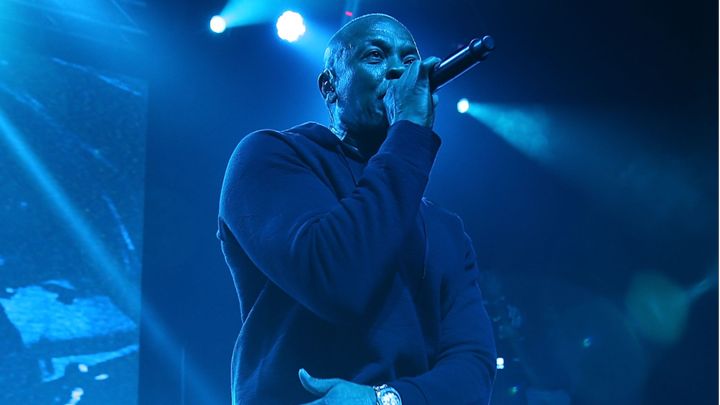
One of hip-hop’s all-time greats sums up his legacy on a brilliant, confounding album
Who in the world has better ears than Andre Young? Throughout his many incarnations, the common thread in Dr. Dre’s career has been his ability to hear things differently from everyone else, and his certitude that millions of paying customers will want to hear those things too. Paradoxically, he’s been both prolific and patient: It doesn’t seem like he’s ever stopped working, and yet somehow 16 years have elapsed since his last solo LP. For much of that time, he’s said, he was working on a solo record to follow up 1992’s landmark The Chronic and 1999’s lushly raucous 2001. The project — which grew increasingly mythical as time passed — consisted of a title, Detox, and little else. Now, with scant warning, Dre’s solo return is upon us, with the twist that it isn’t Detox at all. Maybe it’s marketing: How could anything meet the wild expectations tied to that name? Or maybe the dream of Detox paralyzed Dre, and the only way to free himself was to set his sights elsewhere. So he set them on his past. Compton is a companion piece to the new N.W.A biopic, and the album’s backward gaze is evident from the intro, where narration from an old TV documentary describes how Dre’s California hometown went from black-middle-class idyll to a crime-ravaged “extension of the inner city.” Dre reminisces over past indignities (“Face down on the pavement with the billy clubs . . .”) and glories (“. . . Now it’s ‘Fuck Tha Police’ all up in the club”) — but this is no dusty museum tour. Compton contains some of his most ambitious, idea-stuffed production ever, combining the layered bombast and narcotic ooze of his catalog’s peaks with a bunch of bold new tricks. On standouts like “Talk About It” and “Genocide,” Dre and his co-producers manage insane juggling acts between throbbing funk bass, jazz trumpet, extended high-hat solos, acoustic guitars and irresistibly pounding drums. Lyrically, Compton is not only vibrant but full of an indignation that suggests world-beating success has done little to lessen the vitriol that fueled Dre back in N.W.A. On “Issues,” co-starring Ice Cube, Dre declares, “Fuck money, that shit could never change me.” The line seems at once boastful and true, for better and worse: The track ends with a jarring fantasy about a woman’s violent murder. Throughout, Dre’s rhyming (aided as always by co-writers) is impressive. He trades his familiar stentorian boom for double-time syncopations, hoarse snarls and even bursts of song — Eminem and Kendrick Lamar, both of whom cameo, clearly rubbed off on him. The latter in other ways, perhaps: This is Dre’s most explicitly political album, featuring lines from him and guests that evoke police violence, particularly the killings of Michael Brown (“Blood on the cement, black folks grieving”) and Eric Garner (“I can’t breathe, I can’t breathe”). He’s still full of contradictions — on “Animals,” he calls himself a “product of the system, raised on government aid,” but on “Darkside/Gone,” he raps, with palpable disgust, that “anybody complaining about their circumstances lost me, homey.” It adds up to an album by turns confounding and enthralling. It’s no Detox. It’s something realer, and better. Read more: http://www.rollingstone.com/music/albumreviews/dr-dre-compton-20150806#ixzz3i5Z4Q9NQ Follow us: @rollingstone on Twitter | RollingStone on Facebook
Jermaine Dupri Mixes Beats and Makes Music
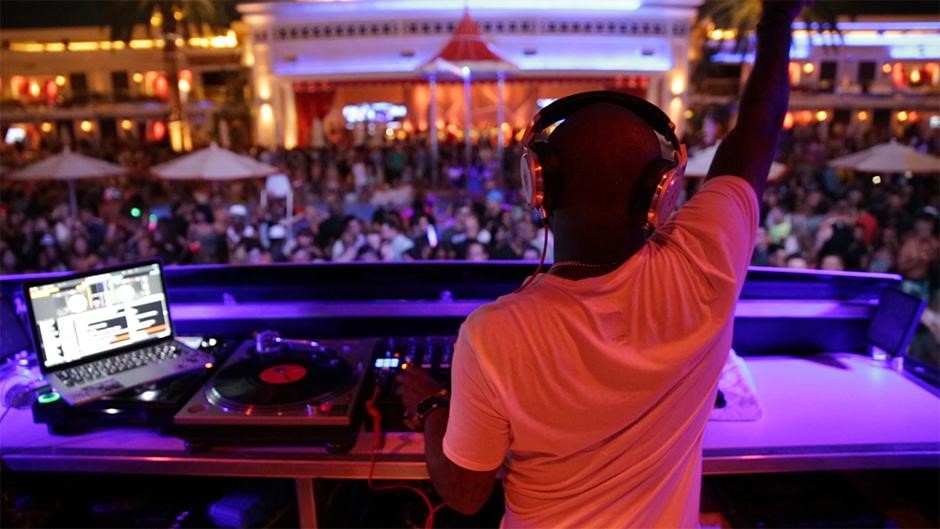
The veteran hip-hop producer discusses how tech in the studio and the club have altered the music industry and his career. When Grammy Award winner Jermaine Dupri built his first studio, he installed a $100,000 48-track mixer that recorded on digital tape. Soon after, his friends advised him to replace the system with one using recording and editing software Pro Tools. He resisted until fellow hip-hop artist Sean “Diddy” Combs left his studio during a recording session. “[He] couldn’t wait for the tape to rewind,” Dupri recalled. “It was driving him crazy.” Dupri, 42, now embraces new technology while keeping some tried-and-true tools alive. As a professional mixer of music, he uses technology to borrow from the past and create something fresh. His passion for music and playing with sound started when he discovered kid rappers Kris Kross at age 17. In 1992, he wrote and produced their No. 1 hit, “Jump.” The next year, he co-founded So So Def Recordings, through which he has produced such artists as Jay-Z, Mariah Carey, Ludacris and Usher. He recently won the Founders Award of the American Society of Composers, Authors, and Publishers, a prestigious honor previously bestowed upon his “biggest influence,” Quincy Jones. Dupri used the Akai MPC60 to sample beats for Kris Kross’ “Jump” in 1992. Credit: Wikimedia Commons. Studio Tech, ‘90s to Now Shortly before 1 a.m. on a Friday in June, Dupri was riding an IO Hawk transporter and checking calls on his Apple Watch. As he prepared to DJ a late-night set at the Wynn’s Encore Beach Club, he reflected on how technology has helped shape his career. When Dupri produced “Jump” on a four-track recorder at his mother’s house, mixing “scratches, and samples, and loops, and beats, and 808s…like a big pot of gumbo,” one of his biggest limitations was the amount of memory. His Akai MPC60 beat-sequencing machine, equipped with a 3.5-inch disk drive with 793KB of capacity and a 10MHz Intel 80186 processor, was not up to the task. “I was sampling so many different things,” he recalled, “textures that I felt like we had to have in that song.” But Dupri said the MPC60 could handle only samples “like 2.8 seconds of a beat.” He needed longer samples and to track each clip separately. Dupri wasn’t able to assemble the song until he brought everything to a professional studio. According to recording expert Gannon Kashiwa, who helped develop Pro Tools and now works for studio hardware maker Universal Audio, most artists use powerful specialized hardware and software to record, mix and edit. Dupri runs Serato DJ software on his MacBook. Credit: @jermainedupri on Instagram. Pro Tools, which Digidesign (now Avid Technology) launched in 1991, “could run on a NuBus Mac and give you up to 16 channels of [input/output] and waveform-based editing for less than $15,000,” Kashiwa said. Producers still favor high-end studio consoles first popularized in the 1980s, like those from AMS Neve and Solid State Logic, but today’s versions are complemented by sophisticated software. Kashiwa said those who create electronic dance music usually choose Apple’s Logic, Ableton Live, Steinberg Cubase and other programs that feature great tools for creating loop-based music. “People doing music that is primarily recorded and mixed will tend toward Pro Tools, Steinberg Nuendo, [and] Cockos Reaper.” Dupri revs up the crowd. Hashtags and Instant Feedback Dupri’s latest single, “WYA (Where you At),” recorded with Pro Tools, mixes decades-old sounds with a contemporary style and message. Durpi said he was “messing with vinyl again,” listening to old rap records with rapper Bow Wow and some other artists, when they established a beat that “sounds like now.” Then they started singing the words behind a popular social media hashtag: “where you at?” The song “perfectly fits what’s going on — everybody uses #whereyouat,” Dupri said. “It just seemed like it was perfect for us, going into the summer. “Then I just started working more and more on the track to make sure that it sounded sonically like something that I wanted the world to pay attention to now.” Dupri says social media “is probably the best thing that’s ever happened to music.” Record companies used to assemble focus groups to gauge whether consumers would buy an album. Today, with instant feedback from people posting to his Instagram account, YouTube channel and Global 14 blog, “it’s like the focus group is right in front of us,” Dupri said. “You get to see immediately what the taste is,” Dupri said. “You put a beat up, [and] their reaction is immediate. Some people love it, some people don’t. Some people want more.” Dupri’s DJ setup includes Technic turntables and a Pioneer mixer. Getting the Beat Right In developing “WYA (Where You At),” Dupri borrowed beats from floppy disks he plugged into his tried-and-true MPC60II, a 1991 update to the MPC60 drum machine. “I still have my beats, my sounds, on my floppies,” said Dupri, aware that using them dates him in the eyes of younger producers. “They still have them out there,” he joked. Many producers today like “to put a whole bunch of sounds on a computer, and then just run through sounds,” Dupri said, noting this method is different from his process. “When I hear the music, I automatically know what sound I want. So I’m going to go sample that kick from this old record, and I’m going to put it in the drum machine.” As he does in the recording studio, Dupri likes to mix sounds and tech old and new on the DJ stage. His setup: Technic SL-1200 turntables and a Pioneer mixer — mainstays of old-school rappers for the ways they “let you sync songs and beats and do crazy crossfades and effects,” Kashiwa said — connected to a MacBook running Serato DJ software, which enable Dupri to play gigabytes of music rather than just a heavy crate full of vinyl. Technology has also made it easier and more cost-effective to be a DJ. One DJ recently demoed a suite of tools made with Intel’s $55 Edison development boards. Dupri has noticed the evolution. He said he used to think that computers couldn’t create the sounds that he hears in his head. “As technology moves forward,” he laughed, “I’m starting to hear these machines do things that I usually hear.”