

Author: JD
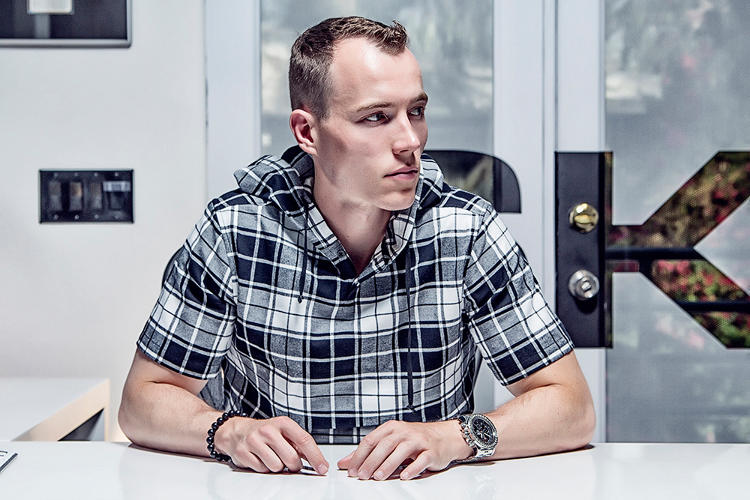
THE DJ BEHIND DASH RADIO BELIEVES APPLE SWIPED HIS IDEA FOR BEATS 1—AND THAT’S A GOOD THING
When Apple introduced its revamped Apple Music ecosystem in June, one of the most intriguing features was Beats 1, a live, 24-hour, human-curated Internet radio station featuring top talent. Beats 1 eschews firm playlists and computer algorithms in favor of an old-school, expert-led, handcrafted listening experience, using lean, internet-only technology. Observers have hailed it as a “serious threat” to both traditional and satellite radio as well as other streaming services, and analyzed its content for secrets to Apple’s grander musical agenda. But Apple didn’t have the idea first. More than a year earlier, veteran DJ Scott Keeney, aka DJ Skee, began quietly building Dash Radio, a round-the-clock, live, curated, internet-only multi-channel radio network. By the time Dash came out of beta about a month before Beats 1 launched, the network had one million users, with virtually no marketing, and $2 million in funding. Its 60-plus stations are led by talent including Snoop Dogg and rap collective Odd Future, and it’s the new home for longtime favorite institution East Village Radio, which shut down as a broadcast station in May of 2014. And this week, Dash is launching 10 new stations and a slate of new high-profile partnerships including a show with legendary radio personality Art Laboe on Snoop’s Cadillacc Music channel, programming with K-Pop entertainment juggernaut YG and Latin lifestyle magazine Nylon Español, stations with Atlanta hip-hop label Quality Control and massive EDM label Monstercat, and Playboy Radio, giving a new network home to the channel after SiriusXM canceled it in 2013. Keeney is also scoring programming ostensibly in Apple’s domain, such as an interview with the cast of new musicians and writers on the new album Compton by Dr. Dre, who, as a senior executive at Apple, has a Beats 1 radio show and released the album exclusively on iTunes. DJ Skee and the cast of new musicians & writers for Dr. Dre’s Comptonalbum who Skee interviewed on Dash (King Mez, Justus, Anderson .Paak, Marsha Ambrosius, Dem Jointz, Jon Connor, DJ Khalil , DJ Silk, Curt Chambers, Candice Pillay,Sly Pyper, Asia Bryant, Cardiak, DJ Dahi, Theron Feemster,Trevor Lawrence, Jr, Andre “Briss” Brissett , Dontae Winslow) When Beats 1 debuted, Keeney publicly supported the move as validation of his business model and a positive indication that radio was evolving in the direction he envisioned. But there’s no question that he feels Apple got much of the idea for Beats 1 from his own multiple meetings with the company about Dash. “I’ve been in radio for a long time so we know a lot of people that worked over there, we’re friendly with them,” says Keeney, who has spent his career as a wildly popular DJ on platforms including iHeartMedia’s KIIS FM, SiriusXM, and video platform Skee.TV, now a show broadcast on Fuse. “They saw everything that we were doing and all the success that we had earlier on. Then we heard that they were doing the broadcast thing, and it’s funny watching a lot of the Apple Keynote speech from Jimmy [Iovine] and all those guys because it felt like, it was the same pitch that we gave them.” https://www.youtube.com/watch?v=mNp8Z7bPF_U Originally, says Keeney, the meetings were meant to ensure good support from iTunes for the Dash app’s placement, and to discuss possible partnerships. “This was way before they’d even thought about doing any radio or broadcasting, and we just wanted to let them know that we’re not competing with [Apple-purchased streaming service] Beats, just like we’re not competing with Spotify,” says Keeney, whose live radio model provides a very different service than on-demand streaming, just as music discovery on traditional radio supports rather than competes with retail. “We wanted to let them know that, ‘Hey, we’re not infringing on your territory, it’s something totally different. In fact, we could work together. Maybe there’s a cool way we can create playlists.” Apple didn’t respond to request for comment about meetings with Keeney or Dash’s influence on Beats 1. But as he was when Beats 1 launched, Keeney is still adamant that Apple’s success only feeds his own. “We want them to succeed because if it doesn’t, that’s not good for us,” he says. “From most of the reviews, it’s everybody’s favorite part of the [Apple Music] service, and now we know we are on the right track because we have something that is what they have on steroids.” https://soundcloud.com/dash_radio/shane-takover-on-taco-tuesday-july-17-2015 Even if Keeney’s diplomacy masks some resentment toward Apple, he’s probably right to feel bolstered by the existence of and, so far, positive reaction to Beats 1. Apple has just one channel that can’t possibly appeal to everyone; Dash has 60-plus stations and is growing across nearly every genre programmed by more than 100 celebrities and experienced DJs. It’s also available on the web, as well as on Android and iOS, where it has near-perfect ratings. Even if Apple expands BBC-style to Beats 2 and beyond, radio still isn’t Apple Music’s sole focus, and it would raise the profile of the model of Internet radio that is Keeney’s primary mission. Dash grew out of Keeney’s love for the discovery and community function of radio along with mounting dissatisfaction with the industry that he’d been a part of for 15 years. He boils radio’s quality decline down to two main complaints: lack of variety resulting from consolidation, and the preponderance of constant advertising. “There are 10 formats that dominate the country,” he says. “Those formats each have, it’s not even top-40 playlists a lot of time, it’s top-20 playlists.” He cites a study that 80% of listeners change the station when an ad comes on, suggesting that it’s both annoying and ineffective. https://soundcloud.com/dash_radio/the-self-help-comedy-hour-with-ed-crasnick-july-20-2015 But people still listen to the radio. “Radio is primarily listened to in the vehicle, where it is still the number-one source of discovery in the music business,” says Keeney. “The reason it works is because it’s passive, you don’t have to think about it. Even me being a DJ and it being my job to listen to all these records all day, I still hop in the car and listen to radio, even though I don’t like it, because it’s easy.” Keeney also dismisses the idea that algorithm-based Internet radio services like Pandora solve the problem. “Pandora and other things have created ‘radio services’ that aren’t true radio,” he says. “They’re not broadcast, they’re not live, they’re not curated, it’s all algorithm. They’re really playlists, and there’s an unlimited number of stations. We almost say that they’ve bastardized the work of radio. They semi-compete, but not really. They’re almost akin to creating a mixtape back in the day. It’s a playlist generator. Also, our licensing is much easier than Pandora or any of those other guys because you can’t skip, fast-forward, rewind, or do anything. It’s live radio.” Keeney says that Dash is closest programming-wise to SiriusXM, with a huge cost advantage. “I’d argue all day about why we’re better and we have a better model, but at the end of the day they’re a very expensive service,” he says. “We think asking almost 20 bucks a month for radio when people are hesitating to spend $9.99 for a subscription on-demand library of every new song in the world—that’s a big ask. We don’t think that’s what radio is either. Plus, you have billions of dollars in satellite costs to get those out there. We’ve created 60-plus stations for less than the cost of an AM antenna out here. It’s just the technology.” Instead of traditional ads or subscriptions, Dash’s revenue will come from title sponsorships of stations, brand-supported pop-up stations, and other integrated opportunities with talent. Campaign partners so far have included EA Sports, NBA 2K15, Wu-Tang Clan, HBO’s Entourage, and vape maker Grenco Science, whose G Pen Radio station focuses on “counterculture” (read: weed-friendly) music and content. Despite these early arrangements, Dash is focusing on growth before hiring a sales staff to actively sell station sponsorships. While the company isn’t releasing user numbers beyond the million mark passed in June, it did just determine that user retention increased from an average 4.5 minutes per session to 30 minutes per session in the past year, surely an attractive growth metric for potential station sponsors. DJ SkeePhoto: Mo Korched While talent won’t see much cash before sponsorships kick in, the revenue split for is straight 50/50, plus Dash’s back-end infrastructure and staff, and full creative and marketing control for artists. Keeney says this is particularly valuable for a group like Odd Future who have lots of material and fans but get no radio play. “These are kids who are ignored by regular radio, even though they’re winning Grammys, they’re selling festivals, they have their own cartoon and app,” says Keeney. “They’ve always been pushing boundaries yet they’ve been largely ignored. Their fan base didn’t have anywhere to tune in to get their stuff. It’s been one of our most successful stations to date. They do live shows every day, the whole crew.” In the hype around Beats 1, a lot of the attention has turned to DJ Zane Lowe, the superstar BBC Radio 1 DJ whom Apple tapped to oversee programming for their new radio enterprise. Given Keeney’s experience and early talks with Apple, it’s hard not to think that he could have been a contender. “Honestly, I would have said no, because I’m really confident with what we have,” says Keeney when asked if he would have accepted that kind of offer from Apple. “I’m a huge Apple fanboy. I wear an Apple watch, I’ve had all Apple products since I was in elementary school. When it comes to technology, that’s really what I look to Apple for, and historically, they haven’t always…I think they finally have the right team in there. But until then, especially when they put U2 on everybody’s iPhone… it really didn’t go over so well.” Keeney also says he wants talent to retain creative control, including staying away from radio censorship, which Apple has employed even though Beats 1 isn’t subject to FCC regulations. “I don’t want to go into a system where people come in and say we have to do this and follow those rules,” he says. “There’s a lot of scrutiny when you’re the biggest company in the world, and I feel that that’s one reason why they’re censoring their station.” But Keeney says he’d still be happy for any future Dash/Apple partnerships that made sense for both. “We equate ourselves to traditional radio, versus Spotify or even Apple’s primary service,” he says. “The reason they even have Beats 1 is to promote the music service. That’s still their number-one goal. I don’t think their number-one goal is to be the biggest radio broadcasting corporation in the world. That could change, but until it does, we look at them as the same way that a traditional radio station would look at a Best Buy. There are synergies and cross promotions, and if artists break on our platform, we want fans to go support them by streaming their music so they can get paid. Whether it’s Spotify, whether it’s at Tidal, whether it’s Apple. We’re totally up with working with anybody that helps do those things.”

Skam Artist – Sujit’s 40th Birthday Celebration in NYC!
Sujit Kundu aka the man behind Skam Artist turns 40 this year and takes over NYC in a major way!! This is the Birthday Celebration you didn’t want to miss out on.
Jermaine Dupri Reflects On Impact Of So So Def
On the night of February 23, 2013, Jermaine Dupri cemented his name in not just rap, but music’s hall of fame with an epic show at Atlanta’s Fox Theater for what was So So Def Recordings’ 20th Anniversary concert. “Out of all the labels, my 20th anniversary was the only one where all the artists performed,” he remembers, before elaborating, “Every artist that was actually on the label, every artist that I worked with closely like that was at my 20th anniversary.” That special night welcomed Dupri’s longtime friends, like Mariah Carey, Usher and Jay Z, as well as So So Def alumni like Bow Wow, Kriss Kross, Jagged Edge and Da Brat all to the stage. While one night was needed to bring all this talent together, the label itself has over two decades of history featuring the star-studded roster. Jermaine Dupri Recounts The Genesis Of Usher’s ‘Confessions’ Since its inception in 1993, So So Def has been the house of hits for everyone from its own cast of stars (Xscape, Jagged Edge, Bow Wow, Da Brat) to, well, pretty much the rest of the music world, spanning pop (Jessica Simpson, Mariah Carey), R&B (Mary J. Blige, Dru Hill) and of course hip-hop (the list is far too many). While Dupri’s production was never as distinctive as The Neptunes’ and Dr. Dre’s of the world, the elasticity of his sounds were able to span generations and achieve a longevity far unmatched from most others in music. Others made the hits, but JD and So So Def created long-standing movements with their records and not to mention reinventing the remix the altogether. Jermaine Dupri Points Out The ‘Bounce’ That Led To Creating Mariah Carey’s ‘Emancipation Of Mimi’ “The thing that I’m most proud of is the fact that people know the company,” he tells REVOLT. “That makes me feel like we did something as a company. Or myself as a visionary to create the company, it makes me feel like I really touched on something that is really hard for people to do.” Over 20 years later, it still is.


Damon Wayans calls Bill Cosby’s accusers ‘unrapeable b***hes’ on radio show
Comedian Damon Wayans has defended Bill Cosby saying that the women who accused him of sexual assault are “unrapeable b***hes”. Mr Wayans made the comments during an interview on the radio program The Breakfast Club. Asked what advice he would have for Bill Cosby, Mr Wayans said: “I don’t believe he was raping. I think he was in relationships with all of them, and then he’s like, ‘You know what, it’s 78, I can’t get it up for any of y’all, bye b***hes.’ “And now they’re like, ‘Oh, really? Rape.’ Forty years- listen, how big is that penis that it gives you amnesia for forty years?” The actor continued: “And some of them, really, is un-rape-able. I look at them and go, ‘No, he don’t want that. Get outta here!” He then said: “Look, I understand fame. I’ve lived it. Women will throw themselves at you. They just want to be in your presence. There’s some that innocently will come up there, but not 40-something women. They’re not that naïve.”


Women are anonymously writing about how to give them better orgasms
Women have been anonymously sharing their advice on a website – exploring issues around the female orgasm and educating their partners on how to be better in bed. The imaginatively-named How To Make Me Come is a collection of 72 essays from different women. The website prompts its writers to: “Imagine you could give this essay to a past or future sexual partner, free of judgment or repercussion. What would you want them to know?” As a result, some of the stories speak about personal experiences of pleasure, others speak about what turns them on in the bedroom and others of their disappointments. The female orgasm can sometimes be challenging to achieve and/or talk about, but it goes beyond that. When we talk about female orgasm, something deeper is at play—for one, the societal assessment and conversation of female sexuality; the consequences of which bleed into the areas of our lives far outside the bedroom. We wanted to start a dialogue about how women achieve sexual pleasure; something that is often ignored, devalued, or misunderstood.