

Author: JD

Young Dro Feat. ME “FDB”
[audio:https://global14.com/wp-content/uploads/2013/07/Young-Dro-Feat.-JD-FDB-Dirty_02.mp3|titles=Young Dro Feat. JD-FDB]
Build A Company That Attracts The Next Steve Jobs
S/O TO MY MAN @DerekjAndersen FOR ROCKING THAT GLOBAL14 TEE Editor’s note: Derek Andersen is the founder of Startup Grind, a 45-city community in 20-countries, uniting the global startup world together through educating, inspiring, and connecting entrepreneurs. On Steve Jobs’ first day at Atari in 1973, he walked into the founder/CEO Nolan Bushnell’s office unannounced. “I think you have a really awesome company. I think that everything is pretty good, but I’ve seen your soldering connections and they’re really crappy.” Nolan Bushnell replied, “Well, let’s fix them.” Jobs replied, “I will.” So what did Atari do as a company and culture to become so attractive that Steve Jobs’ literally walked in off the street and demanded a job? Recently Bushnell wrote a book called, Finding the Next Steve Jobs: How to Find, Hire, Keep and Nurture Creative Talent. In it he outlines how the culture that he helped create at Atari was critical to hiring and keeping creative talent like Steve Jobs. While Steve Jobs eventually started his own companies, it wasn’t before he made significant contributions to Atari’s success which included building the circuit boards for Breakout (with the help of Steve Wozniak). Let’s also not forget that people like Jack Dorsey and Kevin Systrom also started out as employees. After moving to the Valley for his first job following college, Bushnell quickly realized that working for someone else wasn’t in his DNA. “One of the reasons that Silicon Valley exists is that we have all worked next to somebody who has gone off and been successful,” Bushnell recently told me at Startup Grind. “We know firsthand that the guy next to us, that went off and was very successful, was an idiot.” Bushnell went on to pioneer the video game industry with Atari, and after leaving Atari he founded a dozen companies, among other things the popular family restaurant chain Chuck E. Cheese’s. Atari was critical in changing Valley company culture and startups themselves. “Every engineer in the valley in 1970 wore a white shirt and tie to work – that was professional. But we decided we wanted to create a new kind of company that was a total meritocracy. Don’t care about process. Treat everybody like an adult. Let them wear what they want, come to work when they want, work hard or work easy. Where you minimize process, you maximize outcomes.” In this book he outlines dozens of ways that startups can create the type of culture to attract the next great creators. I had a chance to ask him about a couple of these and an except of that conversation is included below. Why are secrets important? Bushnell: It’s a marketing ploy. Secrets amplify the press at the time you want it. That is, advertising a product before you can buy it is a waste of money. People are very in the present. So what you really want to do is really push on things when there’s stuff on the shelf, when people can actually act and buy and what have you. So secrets amplify that a great deal. Why hire the obnoxious and the crazies? Bushnell: You don’t seek crazies and you don’t seek obnoxious, but you put up with it if they’ve got certain aspects. There are certain people in the world that are the smartest people in the room. It’s obnoxious for them to keep telling you that. Yet, when the chips are down, you kind of want them on your team. So when you have an obnoxious, capable person, figure out how to deal with it. Every company should have an ecosystem that can keep really talented people around. Even if they’re obnoxious, even if they smell bad. Beware of posers. Bushnell: When you’re hiring people, there are a lot of people who are able to fake being capable. Certain businesses are more prone to that than others. For example, in the early days of chip design, it took almost a year to get the first prototype of a custom chip. There were some engineer around who posed as one of the great chip designers. Never ever got a chip going. They would be employed until the company had given up on getting a custom chip, then go somewhere else and say, “I was working on custom chips for this company.” Ultimate posers. So you really want to make sure the person has the capability stated and the ability to execute. Skunk it up. Bushnell: I love skunkworks. The nice thing about skunkworks is you can try things cheaply. Bureaucracies creep into companies because you have different rules if you have a thousand employees than if you have three. And you can – when you have 1000 employees, the paperwork to buy a pencil will often exceed the pencil, and going down to Radio Shack to buy a part rather than going through purchasing can be the difference between a week’s delay and no delay at all. Those are the sort of things you can open up in a skunkworks that really accelerate projects, get rid of the impediments and go straight through. There are also certain people that just work really well in skunkworks environment that, when in the main body, don’t do as well. Some people like to hide in plain sight, you can’t hide in a skunkworks. Why make something for the rich? Bushnell: Every innovation that has ever happened started out with the rich, because the rich, in some ways pay for the tooling to get it down to consumer prices. Airplanes, automobiles, these were all toys for the rich – telephone. So it clears your mind. If you say, “I want to build this for everyone,” you’re talking about a price that’s probably unrealistic at that point in time. But with experience and with mass production techniques and that, you’ll get there. But maybe not for a couple years. You tell people to change every day, every hour. Bushnell: It turns out that our brains are either stuck and ossified, or they’re flexible. And change is what really drives that. What I’m focusing on a lot right now – I’ve got anti-aging games in Brain Rush – is how do we keep our brains flexible? Change is really a key. Creativity is going to be the next big wave. My son right now has a Kickstarter. It’s called the Steam Carnival, and it’s about, how do you turn on people – or kids, primarily, that technology is a big giggle? You don’t have to build pacemakers and the next tank. You can build games and carnival rides, all kinds of things. What that does is it opens up new kinds of horizons. I’ve found the more I change, the more happy I am. How do you reward turkeys? Bushnell: I went to a flea market, and there was a tin turkey that was about this tall, and it was ungodly ugly. I mean, it was just really bad. And I thought, “Hm.” What I wanted to do was to let people know it was okay to try something and fail at it. So we had a management dinner every quarter, where we would talk about what was happening at the company. One of the core values was, if you try something for all the right reasons, but it still fails, that’s okay. I didn’t want my employees to start feeling guilty about something. We all wanted to be on the same time, and all wanted a good confession. You want to get it cathartically removed.
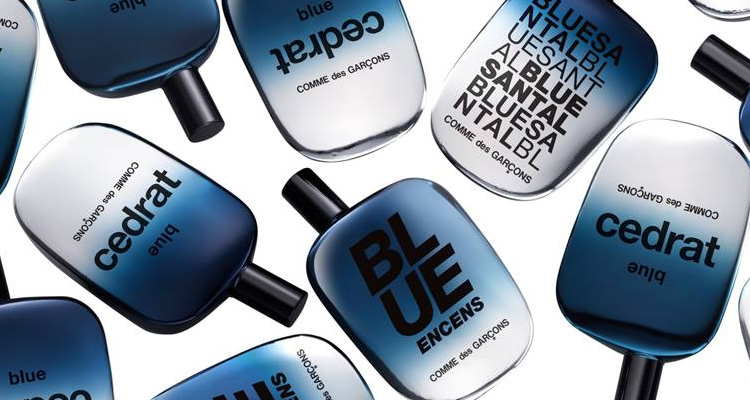
COMME DES GARCONS BLUE INVASION
Comme des Garcons delivers a new series of scents for the summer, Blue Invasion. Blue Invasion consists of three scents: Blue Encens, scented with Artemisia and Indian cardamon, black pepper, and cinnamon. Blue Cedrat with its notes of Italian cedar, bitter quinine accord, metallic rose and Virginian cedarwood. And last but not least, Blue Santal which is a fresh and spicy formula of Mediterranean parasol pine, juniper berry essence, blue pepper and Australian cedarwood. Number 3
Eddie Murphy Ft. Snoop Lion – Redlight
GOONIE GOO GOO!! AT FIRST I THOUGHT THIS WAS A JOKE,BUT I SEE EDDIE IS BACK AS A ARTIST AGAIN http://youtu.be/PhTH89tX_is

Marilyn Was Here: The Hip, Retro & Über Chic Avalon Beverly Hills Hotel
THESE PICTURES ARE THE SHIT Photo: Life Magazine 1949 The Beverly Carlton was built in 1948. and remade fifty years later as The Avalon. Marilyn, taken at home in The Beverly Carlton, April, 1952 by Andre De Dienes Avalon Beverly Hills It’s not fancy schmancy, but it’s uber nostalgic The Avalon turned a motor hotel into a luxury boutique space. Designer Kelly Wearstler installed classic modern designs from George Nelson and Charles and Ray Eames alongside new furniture made from rope, raffia, and stainless steel. The hotel has continued to evolve, and what was once the “ultimate in modern living,” and home to folks like Marilyn Monroe and Mae West, is as spiffy as it was when Harry Truman was president. In 1995 Wearstler opened her design firm, Kelly Wearstler Interior Design (Kwid). In the late 1990s, she decorated the house of real estate developer Brad Korzen (whom she married in 2002), eventually providing design services for residential properties owned by Korzen’s Kor Realty Group.[9] Wearstler would go on to redo the interior of the Avalon, a late 1940s-era hotel in Beverly Hills owned by Korzen. This launched her foray into hotel interior design, creating what the New York Times has described as “retro-theatrical” interiors for Korzen’s collection of boutique hotels, Viceroy Hotels and Resorts

Opera Web Browser is All-New for Windows and Mac
Opera, an alternative web browser, unveiled a brand-new version on Tuesday that features an updated design for both Windows and Mac computers. The Norway-based software company released desktop version 15 of its browser. Among other updates, it sports a cleaner, modern look that seems to take inspiration from its competition. The “Stash” feature (pictured above) lets users save webpages, and organize them into a list that is searchable using keywords. Opera says Stash is useful for tasks such as saving articles, comparing offers or looking for the best hotel. Much like Chrome and Safari, Opera’s new webpage address and search bar are now combined into one field. Opera’s new download manager, which also bears similarity to its competition, is sleeker and includes pop-up listings and statuses of downloading items. Opera 15 includes a “Discover” feature (pictured above) to help users access the latest articles based on categories of interest, a revamped “Speed Dial” for organizing favorite sites, and “Off-Road” mode, which uses compression technology to speed up browsing when a network is slow. In the competitive market of web browsers, Opera is definitely an underdog. Data published by Toshiba in June indicates that Microsoft’sInternet Explorer (IE), Mozilla Firefox, Google Chrome and Apple’s Safaridominate in most countries worldwide. For example in the United States, 42.4% of web surfers use IE, 27.9% use Chrome, 15.6% use Firefox and 12.1% use Safari. In countries where Opera was actually referenced in Toshiba’s data, the market share remains small: 0.7% in Mexico, 2% in India, 0.6% in Australia, 1% in Japan and 0.4% in Brazil. In Russia, however, Opera is the fourth most-popular browser, grabbing 12% market share.

Pharrell Countersues will.i.am! Cites Dr. Suess In ‘I Am’ Lawsuit!
THIS IS SO CRAZY!! I SAW THESE GUYS TALKING ABOUT THIS ONE NIGHT, AND I WAS SURE IT WASN’T GONNA GO THIS FAR Pharrell does not like this will.i.am lawsuit. He does not like it so much that he’s suing right back! And he’s citing the case of Dr. Suess v. Green Eggs & Ham as his legal basis! OK, not exactly! But since this case does come down to word usage, specifically Pharrell’s use of the words I AM in his YouTube channel I Am Other, Dr. Suess really did come up! Pharrell said in his suit that will.i.am is using the phrase “I am” in a Suessian way, as in “Sam I am, I am Sam” from Green Eggs And Ham. He then says: “In contrast, the I Am Other mark means ‘I am something else,’ leaving what that ‘else’ is to the imagination of the consumer. It certainly does not mean ‘I am Will.'”

Toni Braxton & Babyface Teaming Up For New Album!
HAPPY TO SEE THIS,I NEVER UNDERSTOOD WHY THEY STOPPED WORKING TOGETHER IN THE FIRST PLACE She’s hard at work on some new music that they’ll release in the fall with Motown Records.