

Author: JD

Spinning Profits: How Hip-Hop Is Cashing In On The DJ Boom
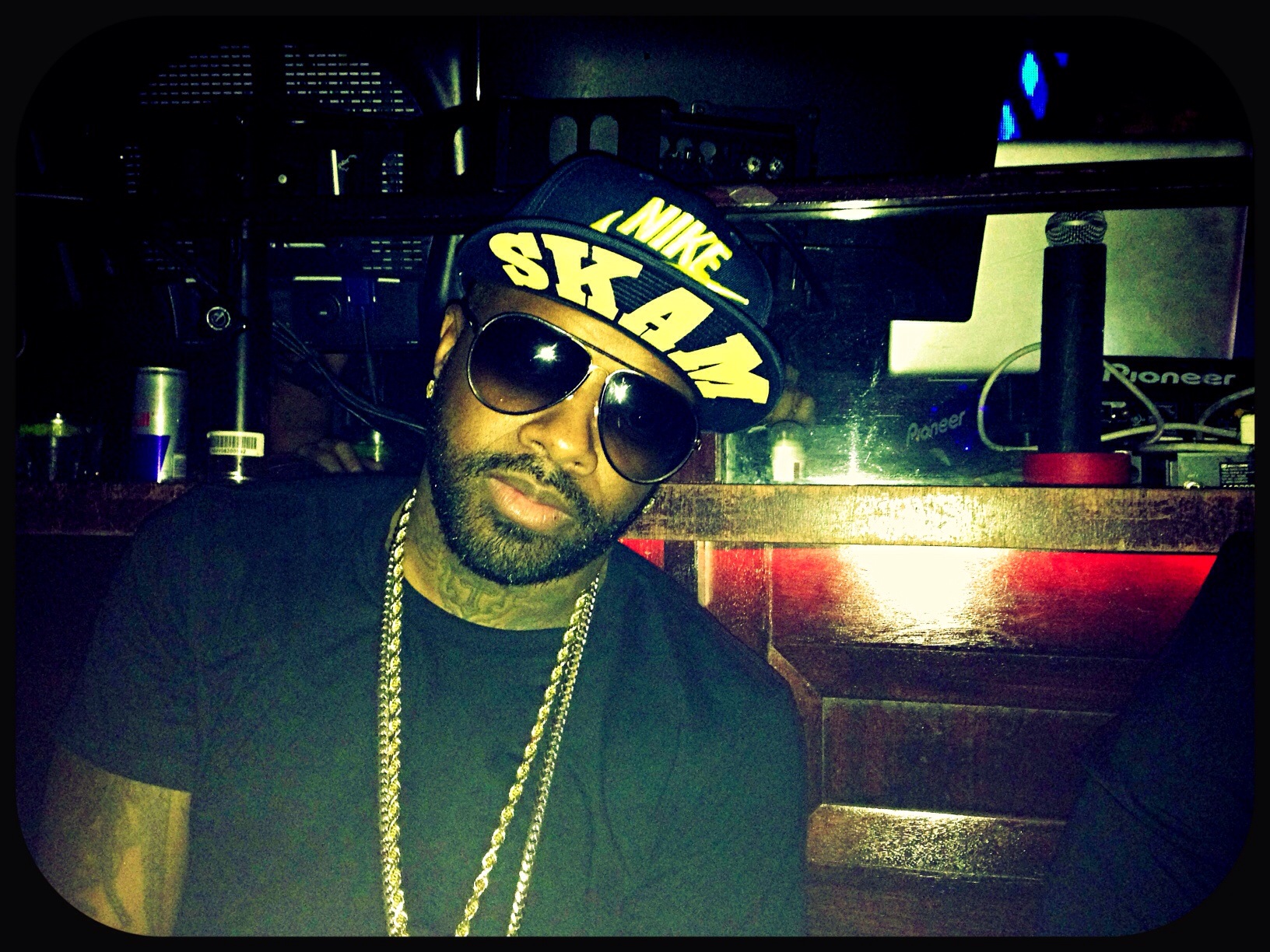
It’s lunchtime at the Dream hotel’s penthouse lounge, but aside from the late summer sunlight filtering through the floor-to-ceiling windows, the scene seems positively nocturnal. Questlove, the venerable drummer and frontman of the Roots, is stationed in the DJ booth, his trademark ‘fro erupting from the headband of an oversized pair of orange headphones. He’s readying himself to launch a 60-minute set, part of a series of mid-day dance parties backed by Absolut vodka and Flavorpill Media. “Probably the biggest challenge I ever had,” he says of the gig. “You only have an hour to make a statement, and I’m notorious for taking three or four hours to get that point across. For me, I like to do every genre. I just don’t want to play all the hits, I want to kind of sneak lessons in there.” These days, he’s got ample opportunity. In addition to the lunchtime series, he landed a residency at Las Vegas superclub Hakkasan, home to EDM’s top earners, Calvin Harris and Tiësto. Though his nightly rates are about a tenth of theirs, Questlove now banks more from spinning than he does for his role with the Roots. Boosted primarily by those DJ gigs, along with his other jobs as an author, professor and producer, FORBES estimates he earned $6 million over the past year, placing him on the Hip-Hop Cash Kings list for the first time. The electronic dance music boom has created a surge in demand for DJs, and just as top EDM producers like Skrillex and Avicii are cashing in on the road, some of hip-hop’s top beatmakers are now getting behind the decks to bolster their bottom line. Besides Questlove, big names include fellow Lil Jon, Swizz Beatz and Jermaine Dupri. And many of them aren’t mincing words about their electronic counterparts. “A lot of these EDM dudes have their sets already recorded,” says Dupri, who boasts a residency for Wynn’s Vegas clubs and DJs about 100 shows per year. “So they don’t really be doing nothing when they get on the stage, they’re just faking the knobs and putting their hands in the air.” Indeed, at a recent Tiësto show in Las Vegas, the Dutch DJ left the stage in the middle of the stage to use the restroom. His music continued blasting through the packed club while he relieved himself. When he returned a few minutes later, it seemed that many in the audience never noticed that he’d been gone. This sort of occurrence is common in the electronic music scene, and makes easy fodder not only for the genre’s critics, but for some of the DJs themselves. Last year Deadmau5 publicly disparaged David Guetta in Rolling Stone, saying, “He just plays tracks” and generally deriding “button-pushers.” Swedish House Mafia’s response: “That’s exactly what [Deadmau5] does.” Tiësto, for one, isn’t fazed by this sort of critique. “If I would have played piano for twenty years, and I played live,” he says, “it’s also pushing buttons.” (Then again, he probably wouldn’t have made $32 million last year as a piano player). The controversy only makes hip-hop DJs more viable. Dupri points out that he selects tracks on the fly instead of simply pressing play on a pre-recorded set—and typically adds to his performance by rapping along to his own songs on a microphone, a live element that’s not available at most EDM shows. It only seems fitting that stars of his ilk are getting in on the action. After all, the modern concept of the DJ—along with hip-hop itself—traces its roots to the South Bronx block party scene, to pioneers like Afrika Bambaataa, Grandmaster Flash and DJ Kool Herc. With the help of facilitators like Fab 5 Freddy, the genre became the bridge that brought turntables and thumping beats to the club scene decades ago. Sujit Kundu has witnessed the changing economics of turntablism firsthand. He now books gigs for Dupri, Lil Jon and a host of others at his firm SKAM, but got his start in 1999. “Back then,” he says, “$1,000 was like $1 million.” By 2001, the demand for DJs had started to grow, and some of his acts were getting $1500 per show. Two years later, mashup legend DJ AM scored a landmark residency at the new Body English club at the Hard Rock in Vegas for $3,500 a night. Within two years, he was up to $19,000. Sin City still had only a handful of nightclubs on the Strip where music was the main attraction. Then casinos went all in on the DJ economy. Steve Wynnpoured $100 million into XS at his eponymous hotel, while Sheldon Adelsonbuilt up Tao at the Venetian and Marquee at the Cosmopolitan. Sensing an opportunity to get in on the management side of the action, Jay Z and his manager asked Kundu if he’d consider selling part of his company to them a few years ago. “It was like, ‘Would you rather own 100% of $1 million or 50% of $10 million?’” Kundu recalls. “Implying that if I gave it up, it’d get a much bigger much quicker. But the valuation, to me, didn’t add up.” This year, as the EDM explosion reached new heights, Cirque du Soleil’s Light opened at Mandalay Bay and Hakkasan debuted at the MGM. Even at new clubs where electronic music is the focus, there are side rooms where hip-hop is the genre of choice. That’s where Questlove spins when he plays Hakkasan. “I’m in the room for, like, all the midlife crisis people that don’t want to move on,” he says, laughing. “The first time I tried to do an EDM set, they were like, ‘No, no!’ I’ve never been to Vegas before where I was allowed to play break beats and old hip-hop.” DJs like Questlove earn far more these gigs that they would playing with a band. There are no bandmembers to share the proceeds with, and there’s no need for a traveling crew or backup dancers (“I’ve got a USB stick and [turn-tables], and there’s no production cost,” Skrillex told me last year. “But you throw a great party and people have the best time.”) FORBES estimates that the likes of Questlove, Lil Jon (who returns to the Cash Kings at $6 million) and Dupri earn $20,000-$40,000 for a typical DJ set, perhaps 50% more than they could clear on a standard non-DJ gig at a comparably-sized venue. “Right now, they’re making more money as DJs,” says Kundu. “That could easily change … If, all of a sudden, Lil Jon has a No. 1 record, he might be able to do Staples Center tomorrow.” There may be more hip-hop stars on his heels. Earlier this year, Jay Z signed Timbaland to his Roc Nation label, which also has a management arm. Could the superproducer be headed for the decks on a regular basis? Depends who you ask. “I think Timbaland likes to be in the studio,” says Tiësto. “But maybe not. The touring life is so hard for a lot of people, it’s not for everybody.” Meanwhile, Kundu claims he has no regrets about spurning Jay Z’s advances, and sees a bright future for his line of business. “I’ve put a lot of blood sweat and tears into that brand,” he says of his firm. “I wouldn’t just give it up for a couple bucks.” As for Questlove, the next step is another DJ gig–a residency at Brooklyn Bowl’s new location in Vegas. “I could go there and do EDM, but I’m old school,” says Questlove, who owns 70,000 vinyl records. “I like the feeling of wax.

The Best Redesigned NFL Logo
YOU SEE IT!!!!

SONY HI-RES AUDIO PLAYERS
If you want to listen to your music the way it was meant to be heard, you’re going to need more than just a smartphone plugged into a Hi-Fi sound system. Sony’s new Hi-Res Audio players give you 500GB to 1TB (expandable) of storage to hold and play large lossless audio files in virtually any format. The players come in two models with the HAP-Z1ES ($1,999) model boasting 1TB of storage and an Analog FIR filter, low-phase noise liquid crystal oscillator, and large capacity twin transformers while the HAP-S1 ($999) has 500GB of storage and a 2-channel Class AB amplifier. Both can sync with your existing music libraries on your PC and MAC and can be controlled via Sony’s Android or iOS remote app. Sony
QUOTE OF THE DAY
“You can love people, and you can befriend them, but the only person you can ever one hundred percent depend on is yourself.” -Trisha Leigh
Over 11 Million People Have Already Used iTunes Radio
The Internet radio business suddenly got a lot more competitive. Less than one week after its launch, over 11 million people have already tried iTunes Radio. The figure was included in a press release Apple issued Monday morning about last week’s record-setting launch of iPhone 5s and 5c models. It is too early to say if iTunes Radio will become a serious competitor to Pandora. To establish itself as a dominant presence in Internet radio, Apple will have to compete against companies that specialize in radio — Clear Channel, SiriusXM and Slacker, in addition to Pandora. But the release of this surprising figure suggests the pecking order of the U.S. Internet radio market might be less settled than previously thought. The news knocked over $650 million off Pandora’s market capitalization Monday morning. Shares of Pandora, which hit an all-time high of $27.50 the day after iTunes Radio launched, were down 11% to $24.03 at midday Monday. Even so, Pandora has been flying high lately. Shares of the Oakland-based company are up 162% this year. The true measure of iTunes Radio will come from returning users, not early trial users. If iTunes Radio is able to keep those 11 million users over the coming months, it could make a dent in Pandora, which ended August with 72.1 million monthly active listeners. Apple is also likely to find increasingly strong competition from Clear Channel’s iHeartRadio. Clear Channel has negotiated deals with record labels — such as the one announced last week with Warner Music Group — that allow it to put greater emphasis on webcasting. But there’s a big drop-off after Pandora. According to Triton Digital’s latest tracking of U.S. webcasters, Pandora led the market with 888.1 million session starts in August. Second-place Clear Channel had 147.3 session starts and Slacker was third 38.6 million session starts.

Cyrus Gets Nude For Rolling Stone
Her VMAs Performance Could Have Been WAY Raunchier. Miley thought there was a chance the network might pull the plug on her mid-performance, but she didn’t expect so much shock and vitriol. “Honestly, that was our MTV version,” she says. “We could have even gone further, but we didn’t. I thought that’s what the VMAs were all about! It’s not the Grammys or the Oscars. You’re not supposed to show up in a gown, Vanna White-style” – a little dig at Taylor Swift. “It’s supposed to be fun!” Miley Cyrus Is Very Self-Aware. OK, Guys? “I wasn’t trying to be sexy. If I was trying to be sexy, I could have been sexy. I can dance a lot better than I was dancing.” She knows sticking her tongue out isn’t hot and that those weird stubby pigtails aren’t flattering (“I look like a little creature”). And she even knows it’s ridiculous for her to twerk. “People are like, ‘Miley thinks she’s a black girl, but she’s got the flattest ass ever,'” she says. “I’m like, I’m 108 pounds! I know! Now people expect me to come out and twerk with my tongue out all the time. I’ll probably never do that sh*t again.” Miley Cyrus Understands What Cultural Appropriation Is, Says She Didn’t Do It & Her Performance Wasn’t Racist. “I don’t keep my producers or dancers around ’cause it makes me look cool. Those aren’t my ‘accessories.’ They’re my homies.” Her Mom Still Embarrasses Her. “When she’s being embarrassing, she’ll call me ‘sweet girl,'” Miley says. “When we were getting ready for the VMAs, I was about to put on my teddy-bear costume and she’s like, ‘Sweet girl, do you need to potty before you put your costume on?’ I’m like, ‘Mom! Kanye is standing right here!'” Her Breakup With Liam Hemsworth Was A Long Time Coming. “Holy shit!” Miley says. “That was awesome!” She calls her mom and tells her she’s alive. “One thing about sky diving,” she says, “you really know who you love, based on who you call.” I ask her if she talked to Liam already. “Oh, shit!” she says, and takes her phone back out. (Two weeks later, the couple will announce their split.) She Drinks Malibu At LA Clubs Though She’s Underage. We stay until the club shuts down, and then some. Miley spends the whole night dancing on a banquette and drinking Malibu. Afterward, Cheyne orders a couple of Uber cars, and about a dozen of Miley’s friends pile in and head to their friend Ryan’s house in the Hollywood Hills.

“Wild Hearts, Blue Jeans, and White T-Shirts” – A Photo Project by Nicholas Maggio
I LOVE ALL THIS The idea is to “strip” everything from these models except for a standard tee, no makeup, no hair stylist, no direction, and take pictures of them being them. Give them the opportunity to do whatever they want and be whomever they want for 20 minutes or so. With a career consisting of being told what to do, when to do it, and how to do it, it’s fun to give a little power back to the girls and let them have total control of the images. It gives the project a human quality and an aspect of realism I hope people can connect with.
Bugatti launches new Lifestyle Collection
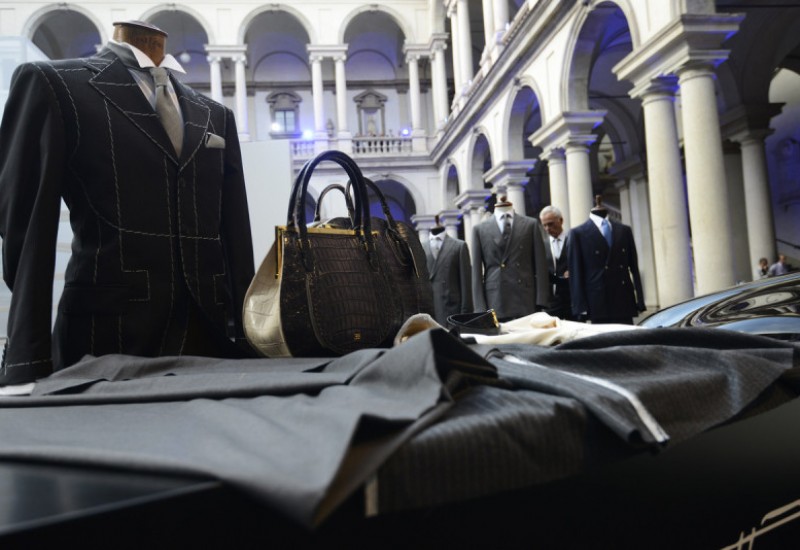
The new Bugatti collection will consist of two lines, Ettore Bugatti Line and Extreme Performance Line, complemented by a Bespoke Programme only for Bugatti customers. A global retail network of 35 exclusive boutiques will be established over the next five years.