

Author: JD
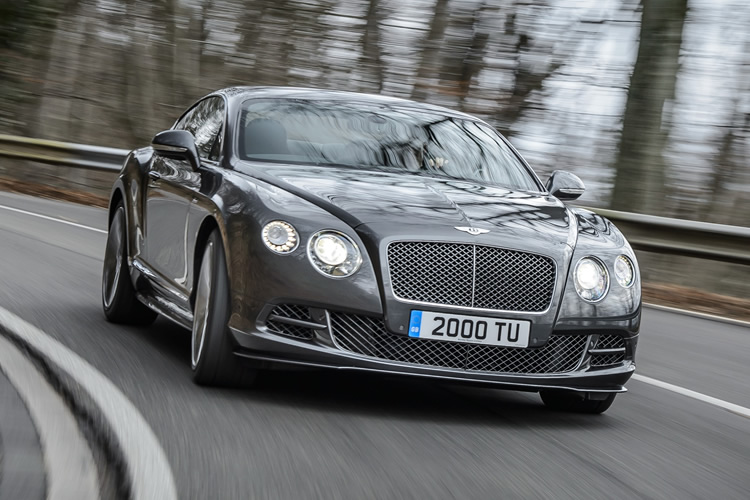
2015 BENTLEY CONTINENTAL GT SPEED
The car is officially the fastest production Bentley with a beefed up 6.0L W12 that now produces 626 hp which will get it from 0-60 in 4 seconds and will hit a top speed of 206 mph (203 in the convertible).

ARMATIX FIREARM SMART SYSTEM
This unique system pairs an .22 calibre iP1 pistol with the iW1 RFID watch, making it so that only someone wearing the watch can fire the weapon. The gun automatically deactivates when it loses contact with the watch, and the watch itself lets you enter a pin code to release the safety, adding yet another measure of security.

Jaguar XFR-S Sportbrake
Jaguar’s 2015 Model Year XF range to be unveiled at the Geneva International Motor Show 2014 From real-world efficiency to Autobahn-storming performance, Jaguar’s 2015 model year XF range caters to every sensibility, without compromising on the luxury, refinement and versatility expected of a Jaguar The XFR-S Sportbrake is the first high-performance R-S branded sports estate car to be produced by Jaguar, with 550PS on tap and 1675 litres of rear load space The XFR-S Sportbrake’s 5.0-litre supercharged V8 delivers 550PS and 680Nm of torque New XFR-S Sportbrake priced at £82,495 in UK, with full 2015 MY XF range available to order from 01 April 2014 IN DETAIL The XFR-S Sportbrake is the first high-performance sports estate car to be produced by Jaguar The XFR-S Sportbrake builds on the already acclaimed XFR-S saloon – boasting the same power figures and levels of agility – with increased versatility and practicality Its 5.0-litre supercharged V8 delivers 550PS of power and 680Nm of torque with the added benefit of 1675 litres of rear load space when the rear seats are folded flat The XFR-S Sportbrake will sprint from zero to 60mph in 4.6 seconds (0-100km/h in 4.8 seconds) and on to an electronically limited top speed of 186mph (300km/h) An eight-speed transmission with ‘Quickshift’ functionality enables optimal acceleration throughout the speed and rev ranges The XFR-S Saloon’s chassis has been specifically retuned for the XFR-S Sportbrake Active electronic differential and Dynamic Stability Control systems from the XFR-S Saloon enhance the XKR-S Sportbrake’s handling characteristics Aerodynamic changes reduce lift compared to the standard Sportbrake and give the XFR-S Sportbrake an assertive appearance 20-inch ‘Varuna’ forged alloy wheels – the same as those fitted to the XFR-S Saloon – are shod with bespoke tyres to maximise grip Exclusive interior materials include carbon leather and contrasting highlight micro-piping and stitching The third model in Jaguar’s ultra-high performance R-S range, the XFR-S Sportbrake joins its XFR-S saloon sibling in the exclusive 300km/h club and is a vivid expression of Jaguar’s longstanding and legendary sports saloon lineage. The XFR-S Sportbrake incorporates engineering features from both the XKR-S and the all-new F-TYPE two-seater sports car to create the most driver-focused, agile and responsive iteration of Jaguar’s award-winning XF model range. “Combining real-world versatility with electrifying performance, the XFR-S Sportbrake brings Jaguar’s sporting character to life in a truly engaging car that will satisfy the most demanding of drivers while fitting into the most active of lifestyles.” Dean Murden, Vehicle Programme Director, Jaguar The XFR-S Sportbrake’s R-S powertrain, chassis and body enhancements enable the car to push the performance boundaries. Electrifying performance is provided by the 5.0-litre supercharged V8 petrol engine, which now boasts 550PS and 680Nm – up 40PS and 55Nm respectively over its XFR installation. The increases have been achieved through revisions to the engine management system and optimisation of the flow of air both into and out of the engine. Fitted with an eight-speed transmission incorporating Jaguar’s ‘Quickshift’ technology (developed for the F-TYPE), the increase in engine output allows the XFR-S Sportbrake to accelerate to 60mph in 4.6 seconds (0-100km/h in 4.8 seconds) and on to an electronically limited top speed of 186mph (300km/h). In order to manage the extra rear mass of the XFR-S Sportbrake while retaining the sharp turn-in and response of the XFR-S Saloon, the Sportbrake’s rear suspension has been modified with revisions to both rear spring rates and the adaptive damper tune. These revisions work together to increase the feeling of connectivity with the road surface, allowing for confidence-inspiring handling and a supple, controlled ride. Recalibrated active electronic differential and Dynamic Stability Control settings have been tuned to work with the XFR-S Sportbrake’s modified rear suspension to allow the enthusiastic driver to make the most of the car’s huge potential. Design Reflecting the changes under the skin, the appearance of the XFR-S Sportbrake has been subtly modified in order to allow the car to achieve its full potential. As with the standard Jaguar Sportbrake, the combination of a flowing rear window graphic, rising waist and estate roofline lends the XFR-S Sportbrake a dynamic, broad-shouldered stance, while the extended roofline affords rear-seat passengers an additional 48mm of headroom and the seats offer both a 60:40 split fold function and integral ski hatch. Remote-fold levers inside the load-space opening allow the seats to be stowed flat quickly and easily, creating a cargo volume of up to 1675 litres. Rear lift has been reduced through the fitment of a spoiler mounted on the top of the rear hatch to manage the airflow off the top rear surface of the car. The new, deeper front bumper incorporates larger lower central and side air intakes – the former framed in carbon fibre – in order to provide adequate airflow into the engine bay. A front splitter at the lower edge of the bumper provides the first of a number of aerodynamic changes designed to smooth the passage of the car through the air at very high speeds. The extended side sills and aeroblade mouldings behind the front wheels serve to create a sharp break-off point between the lower bodywork and the road surface in order to keep the airflow attached to the car’s sides for as long as possible. The same thinking dictated the deeper side mouldings behind the rear wheels. This extended rear bumper also incorporates a central, carbon fibre diffuser, deeper than the item found on the XFR and which travels further under the rear of the car to reduce lift. The wider, six-spoke, 20-inch lightweight Varuna forged alloy wheels provide the XFR-S Sportbrake with a purposeful, broad-shouldered stance and come as standard with a dual finish. A ceramic polish is applied to the outer surfaces, its eye-catching appearance contrasting with inner gloss black areas. As an option the wheels can be supplied in either full gloss black or technical grey finishes. The assertive appearance of the XFR-S Sportbrake is further enhanced through the use of gloss black trim in place of chrome around the grille, within the side vent, around the front and rear screens, windows and across the bootlid. The mesh in the front grilles is also a purposeful gloss black. XFR-S Sportbrake customers can choose from an exterior palette comprising five colours: Ultra Blue, Ultimate Black, Stratus Grey, Polaris White and Italian Racing Red. This colour palette is complemented inside the XFR-S Sportbrake with Warm Charcoal leather trim on the seats and doors enhanced through the use of carbon effect leather. Exclusive to R-S cars, this is used on the seat bolsters and arm rests and reflects the use of exotic carbon fibre on the aerodynamic elements of the car. The seats themselves are embossed with the R-S logo and can be finished with a choice of contrast colour micro-piping and stitching in either red, blue or ivory. The same subtle enhancement runs across the top of the dashboard, the fascia of which is finished in a Dark Aluminium unique to the R-S, complete with badging. Performance The XFR-S Sportbrake features Jaguar’s acclaimed 5.0-litre supercharged V8 petrol engine in its most potent form matched to an eight-speed transmission with Quickshift functionality. This all-new combination provides a visceral blend of vivid acceleration, driver involvement and control plus entry to the exclusive 300km/h (186mph) club of ultra-high performance cars. The all-aluminium quad-cam engine delivers not only extreme performance but also tremendous efficiency thanks to the technologies incorporated into it, including spray-guided direct injection (SGDI) and dual independent variable cam timing (DIVCT). The high-pressure die-cast lightweight aluminium block is stiffened with cast iron liners and cross-bolted main bearing caps, providing refinement to match its power. The four-valve cylinder heads are constructed from recycled aluminium, between them sitting the Roots-type twin vortex supercharger fed by two intercoolers. These feature their own water-cooling circuit to reduce the temperature of the pressurised air to optimise power and efficiency. In order to help liberate the additional 40PS and 55Nm of torque over the standard XFR, larger front air intakes in the lower bumper of the XFR-S allow greater volumes of air to be fed into the engine. The intake system also features a symposer that channels more of the induction noise into the cabin, adding to the aural excitement of the XFR-S Sportbrake. The result is a 0-60mph time of 4.6 seconds (0-100km/h in 4.8 seconds) and an electronically-limited top speed of 186mph (300km/h). The exhaust system has been optimised in order to channel the waste gases away from the engine with the greatest efficiency. The central silencer has been replaced with an X-piece and near straight-through rear pipes combining to provide an enhanced exhaust note with the added benefit of a motorsport-style crackle on the overrun. Maximising the benefit of the engine recalibration is the eight-speed automatic transmission with Quickshift technology. Developed for the F-TYPE sports car, Quickshift ideally suits the XFR-S Sportbrake’s focused and involving remit. When the enthusiastic driver changes up a gear manually by using the steering wheel-mounted paddles, the Quickshift technology ensures the quickest, crispest shifts via rapid and precisely timed engine torque intervention. When downshifting (either manually or when in Sport mode) the engine management system automatically blips the throttle to ensure the XFR-S Sportbrake remains balanced and composed, particularly important on entry to a corner. This function also allows the transmission to perform multiple and very rapid downshifts during hard braking. When operating in automatic mode, the transmission can detect the manner in which the car is being driven by monitoring acceleration and braking, cornering forces, throttle and brake pedal activity, road load and kickdown request. On detecting a more enthusiastic driving style, the transmission will automatically make the gearshifts more aggressive and move the shift-up point higher in the rev range. Corner Recognition senses when the car is negotiating a bend, the transmission holding the correct gear for the exit. The transmission will also recognise when the car is performing a series of overtaking manoeuvres requiring rapid changes in throttle position and, rather than change up, remain in a lower gear ready for the next demand for acceleration. Dynamics The dynamic characteristics of the XFR-S Sportbrake were informed by the engineering development of both the XKR-S and the F-TYPE, the result being an incredibly agile, responsive and involving car. For the XFR-S Saloon both front and rear suspension systems were uprated and carefully tuned over tens of thousands of miles at Jaguar’s testing centre at the legendary Nürburgring, the high-speed bowl at Nardo in Italy and the engineers’ favourite roads around the Gaydon Research and Development centre and in north Wales. The main challenge in the development of the XFR-S Sportbrake was to manage the extra rear mass of the car while retaining the sharp turn-in and response of its saloon cousin. In order to achieve this, Jaguar engineers tuned the XFR-S Sportbrake’s rear active suspension to cope with the extra weight of the car’s increased rear mass, with the dampers and springs adjusted to match the mass distribution of the car. The anti-roll bars have been changed and the rear axle has been modified, while the rear brakes have been tuned to work in conjunction with the car’s ABS system. Overall lateral suspension stiffness has been increased by 30 per cent front and rear, with front and rear spring rates increased by the same amount. As on the XFR-S Saloon, the front suspension knuckles have been revised in line with those found on the XKR-S to achieve the increased camber and castor stiffness which, along with new wheel bearings, optimise steering and handling precision. The steering system has additionally benefited from the fitment of the valving developed for the F-TYPE. The rear subframe has enabled revisions to suspension geometry which, allied to stiffer bushes – new rear knuckles and working in tandem with the stiffer springs – increase stability and response over standard XF Sportbrake models. In order to achieve the maximum benefit from the suspension revisions, the XFR-S Sportbrake has lightweight, forged 20-inch ‘Varuna’ alloy wheels. These are half an inch wider at the front and an inch wider at the rear in comparison to the wheels found on the XFR but their construction means there is no weight penalty to be paid. The tyres, developed in conjunction with Pirelli exclusively for the XFR-S Sportbrake, are 10mm wider all round, being 265/35 and 295/30 front/rear. The difference between the wheel rim and tyre width increases has the effect of pre-loading the sidewall to improve handling and steering response without adversely affecting refinement. Working in harmony with the uprated suspension, wheels and tyres are revised electronic programmes controlling the Adaptive Dynamics, active electronic differential and Dynamic Stability Control systems. Jaguar’s Adaptive Dynamics system actively controls vertical body movement, roll and pitch rates through the use of continuously variable dampers. The system monitors driver inputs and the road conditions, adjusting damper rates in response up to 500 times a second to optimise stability and agility. The driver’s selection of Dynamic Mode offers enhanced body control through moving the damping rates to the firmer end of the available range. The Jaguar active electronic differential – which can apply full locking torque almost instantaneously when necessary – has been recalibrated in order to exploit the greater grip offered by the wider rear tyres, the more precisely controlled suspension and the engine output. Working in parallel with the differential, the ‘Trac DSC’ setting of the Dynamic Stability Control system now offers the enthusiastic driver more opportunity to explore the outer edges of the handling envelope while nevertheless providing a discreet safety net. Providing equal levels of confidence is Jaguar’s High Performance Braking System, which offers an unmatched combination of power, stability and fine modulation. The 380mm front and 376mm rear discs are internally ventilated for assured repeated stopping power and on XFR-S benefit from additional cooling provided by under-body air channelling. The XFR-S Sportbrake is fitted as standard with a 825W, 18-speaker system from British audio experts Meridian. Recognised by audiophiles as a leader in audio reproduction and fidelity, the system uses digital signal processing to create a sound field that is second to none. The system features Meridian’s proprietary Trifield System that places every occupant at the centre of their own perfectly focused surround-sound arena.

Nikon Announces D4S DSLR with ISO 409,600
Nikon has just announced an upgrade to its top-range D4 DSLR camera with the new D4S. The most noteworthy addition is the ability to shoot up to ISO 409,600 over the older model’s 204,800 capabilities, which translates to roughly a full stop of range in low-light situations without comprising much on image quality. Other features include shooting up to 11fps at full-resolution with autofocus and autoexposure on each frame, thanks to 30 percent more processing power than its predecessor. In terms of video capabilities, the D4S is the first professional DSLR that shoots 1920 x 1080 footage at 60 fps. The Nikon D4S releases on March 6, $6,499 USD
Hennessey Venom GT Set a World Record at 270.49 mph
DAMN!!!!! On February 14, 2014, the Hennessey Venom GT set a new world speed record for 2-seat sports cars by reaching a top speed of 270.49 mph (435.31 km/h). The test was performed at the Kennedy Space Center on the 3.2-mile Space Shuttle landing runway. Brian Smith, Director of Miller Motorsports Park, drove the Venom GT to its record speed. A representative from Racelogic, world-renowned maker of VBox GPS data-acquisition systems, was on hand to independently verify and document the Venom GT’s highest recorded speed. The Venom GT was powered with Pennzoil Platinum® with PurePlus™ Technology, a first of its kind synthetic motor oil made from natural gas

QUOTE OF THE DAY
“If you don’t do it excellently, don’t do it at all. If it’s not excellent, it won’t be profitable or fun & if you’re not in business for fun or profit, what the hell are you doing there?” -Robert Townsend

Live Nation’s ‘Epic’ 2013 Earnings Broken Down
The full extent of the “epic” year Live Nation Entertainment CEO Michael Rapino told Billboard about more than a month ago was revealed yesterday (Feb. 24) in the company’s Q4/2013 earnings report, which helped boost LN stocks by 8.42% to $23.69 per share by the end of closing Tuesday. Among the highlights from yesterday’s report: 2013 revenue up 11% to $6.5 billion; adjusted operating income (AOI) up 10% to $505 million; and free cash flow up 9% to $300 million. Live Nation Entertainment Reports Record Year Michael Rapino, Live Nation CEO, on Banner Year, Expanding Mgmt Holdings, ‘Exploding’ Global Market, Way More (Video Q&A) Billboard Power 100: Michael Rapino Backed by “a record year for revenue, AOI, and free cash flow,” Rapino sounded confident on Monday’s investors call: “Our results demonstrate the effectiveness of our business model, establishing Live Nation as what we believe to be the number one player in each of our businesses,” he told investors, “with concerts driving our flywheel, which then is monetized across our high margin onsite sponsorship and ticketing businesses.” Perhaps the most important metric of all: Live Nation’s concert attendance was up 19%, with 60 million fans attending Live Nation events. Concert revenue for the year was up 17% on a global basis for Live Nation, which doubled AOI on concerts to $60 million. North American Concerts, a division run by co-presidents Bob Roux and Mark Campana, saw attendance increase by 18% (5.9 million fans) for the year, with amphitheaters alone attracting 13.9 million fans, up 2.8 million for the year. In the sheds, LN pulled off the tricky feat of increasing both show count (up 14%), and per-show attendance (up 10%), a scenario that played out elsewhere for Live Nation on a global scale. LN’s North American arena business also grew, up 19%, (1.9 million fans), for the year. As was the case with sheds whose growth was also due to more shows (up 12% to nearly 1,300) and better attendance (up 7% per show). On the call, COO Joe Berchtold said Live Nation’s festival business was up by almost 800,000 fans, “largely due to EDM activity.” While EDM remains LN’s fastest growing genre, country music, led by Live Nation Country president Brian O’Connell, is clearly a pillar of the firm’s business. On the earnings call, Rapino said, “We grew the business across all markets and venue types, as well as across all genres and music with country music delivering the greatest fan growth, up 2.3 million fans to nearly 7 million, a 50% increase year-over-year.” Paralleling the overall live music industry, the growth in international touring activity is proving a boon to Live Nation, which operates in 33 countries. International attendance grew by 20%, with 600 more shows and an 11% jump in per-show attendance. LN presented 62 festivals worldwide, attracting 4.5 million fans, a 26% increase from 2012. Rapino also noted that LN’s sponsorship and advertising business “reached almost 300 million in revenue, connecting over 750 sponsors with 900 million visitors to our online and mobile sites and 60 million onsite fans. We now have the scale and unique online and onsite user base to attract a broad advertising base, which drove 26% increase in ad units in 2013. At the same time our traditional sponsorship business continues to show strength, growing 11% last year. This was led by a 29% increase in festival sponsorship. Long-term deals with Citi, Starwood, Hertz, Anheuser-Busch, Coca-Cola and UPS all expanded in 2013 — including Live Nation’s production of Bud Light’s 50-50-1 program with 50 concerts in all 50 states on August 1 – while new clients included Ford, Bose and Motorola, the latter of whom signed on for a global, multi-million dollar sponsorship of the company’s EDM festivals. 2014 is shaping up to be another big year for new business, with a freshly-inked deal with Microsoft’s Skype just beginning to roll out in House of Blues venues. “Brands are really looking to own properties and assets,” Russell Wallach, president of Live Nation Alliances, told Billboard in January. “Whether that’s a 50-50-1 or what you see Budweiser do with Made In America, brands are looking to have ownable programs vs. just getting involved with existing assets.” Online and mobile advertising has also been a fast-growing source of revenue for the company, Wallach added, noting that business has grown by 100% over the past three years thanks to clients like Jeep, Microsoft and Toyota. Facing the most competitive environment in its modern history, LN’s Ticketmaster division saw an AOI of $298 million, an increase of 1%, along with a 1% increase in fee-bearing tickets sold. On the earnings call, Rapino cited TM’s 400 million tickets issued (representing more than $17 billion in gross transaction value), and a 106% client renewal rate. Rapino also touted the launch of Ticketmaster’s new resale platform, which puts all tickets primary and secondary together in one place. “We believe the $9 billion secondary market that has historically not benefited content owners will start to be captured by content, and Ticketmaster resale will be at the forefront of empowering this,” Rapino said. Artist Nation, Live Nation’s artist management division (operating in its first full year since the departure of former chairman Irving Azoff, who led that division formerly known as Front Line before resigning in Dec. of ’12) saw AOI for the year of $32 million, down $6 million from last year. The division delivers profit margins of over 20%, but saw a decline in profitability of $6 million, “which was due to the departure of 12 artists with management in Dec. of 2012,” according to Berchtold, “and offset by savings elsewhere in the company. But, despite these departures, profits more than doubled in the fourth quarter, and were up in the second half of 2013, as we had a double-digit increase in revenue in this part of our business.” The synergies between the management division and Live Nation’s core businesses seem to be coming to bear, as Live Nation is now promoting more shows by its management clients. “We increased the number of shows we promoted with Artist Nation acts by 50%,” Rapino said. “This delivered increased value of approximately $20 million to our concerts and ticketing businesses, while providing additional opportunities for our sponsors.” Rapino may well have been referring to the addition of Guy Oseary and his clients Madonna and U2 to the Artist Nation fold when he said, “We now feel confident that with added leadership we will grow our artist management business in 2014, and it will continue to be a valuable pipeline into our concert flywheel.” Even with these positive numbers, Live Nation is still operating in the red, but the gap is narrowing significantly. Net loss for 2013 was $43 million, compared to a loss of $163 million last year. On the call, CFO Kathy Willard pointed out, “After adjusting for the cost related to refinancing debt in the third quarter, our adjusted net loss for this year is $7 million, an improvement of $157 million over 2012.” Willard further pointed out that free cash flow for 2013 was $300 million, compared to $276 million in 2012, a year that included $26 million in tax refunds. Cash flow from operations was $417 million for the full year, as compared to $367 million last year, driven by the higher AOI. As of Dec. 31, LN had total cash of $1.3 billion, which includes $538 million in ticketing client revenue, according to Willard. Free cash, which excludes event-related cash for future shows, was $445 million, up from $340 million in 2012. The increase in free cash comes from higher free cash flow, proceeds from the sale of the Foxwoods Theater in New York, and $85 million from stock options exercised during the year, “partially offset by higher acquisition activity in 2013,” Willard said.
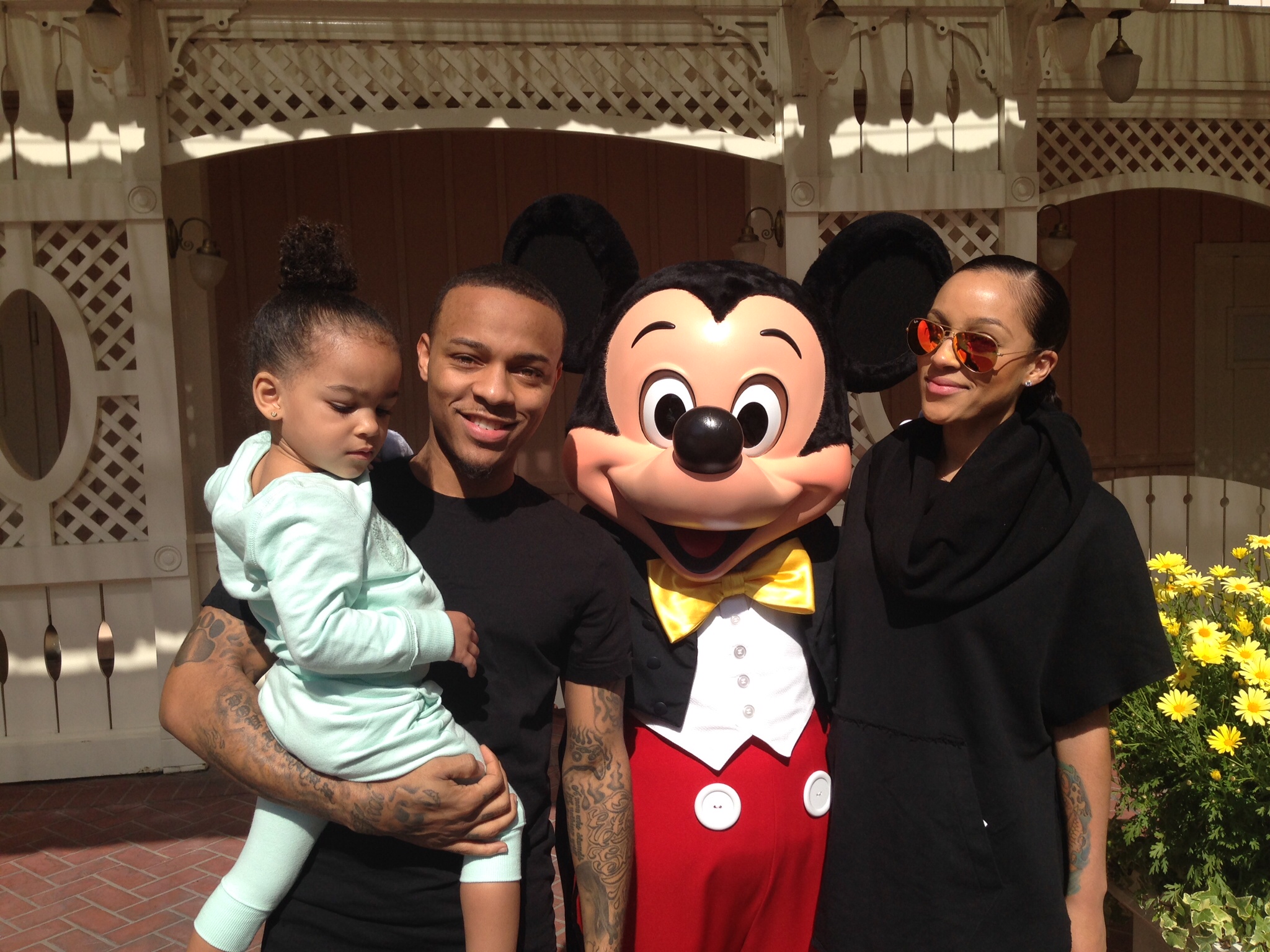
Bow Wow & Joie Take Baby Shai To Disneyland
I LOVE SEEING THIS “Hardly ever like to post pics of my baby girl.. For my own personal reasons. But disney was dope. All she wanted was mickey & mini mommy n daddy made it happen. Felt like daddy of the year! Now i know how yall dads feel when yall say “my daughter would kill me if i dont get a picture bow” feels good to be a proud dad! She aint gotta worry for the rest of her life. My lil monster!”