

Author: JD

HTC One (M8)
HTC One (M8) boasts a high quality metal unibody with a Smart Sensor Hub that anticipates your needs and uses Motion Launch controls to make everyday tasks easier. New Duo Camera technology delivers creative, professional-looking photos and amazing effects, and HTC BoomSound again sets new standards for audio quality on a smartphone. The high quality metal unibody flows right up to the 5-inch, full HD (1080p) display, tapering to thinner edges, with softer curves for a smooth and natural grip.

Facebook to Acquire Oculus VR for $2 Billion USD
“Mobile is the platform of today, and now we’re also getting ready for the platforms of tomorrow,” said Facebook founder and CEO, Mark Zuckerberg. “Oculus has the chance to create the most social platform ever, and change the way we work, play and communicate.” For more information head on over to Facebook.

2014 Chanel Première Flying Tourbillon Will Turn Heads At Baselworld
Chanel has unveiled the 2014 edition of the Première Flying Tourbillon watch. All set to charm at the oncoming Baselworld from 27th March to 3rd April 2014, the latest version of this timepiece is only limited to 20 pieces.


TIME Magazine Interviews Apple’s Design Chief Jonathon Ive
‘Hello. Thanks for Coming’ We use Jonathan Ive’s products to help us to eat, drink and sleep, to work, travel, relax, read, listen and watch, to shop, chat, date and have sex. Many of us spend more time with his screens than with our families. Some of us like his screens more than our families. For years, Ive’s natural shyness, coupled with the secrecy bordering on paranoia of his employer, Apple, has meant we have known little about the man who shapes the future, with such innovations as the iMac, the iPod, the iPhone and the iPad. But last month, he invited me to Cupertino in Silicon Valley where Apple is based, for his first in-depth interview since he became head of design almost 20 years ago. The gods — or was it the ghost of Steve Jobs? — seemed against it. Jobs didn’t like Apple execs doing interviews. It had not rained properly in California for months but that morning the clouds rolled off the Pacific, turning the Golden Gate Bridge black. Interstate 280 South to Silicon Valley was a river of water, instead of the usual lava streaks of stop-start SUVs. But just after 10AM, an Apple tech-head appeared in an all-white meeting room on the first floor of building 4 of the firm’s antiseptic headquarters with strict instructions to find an Earl Grey tea bag. “Hello. Thanks for coming,” grins Ive, as he rolls in, picking up his brew. Ive is the most unremarkable remarkable person you could meet. You might think you’d recognize him if you passed him on the street, but you wouldn’t. He’s not particularly tall, is well built and bald(ish), has two-day-old stubble and dresses like dads do on weekends — navy polo shirt, canvas trousers, desert boots. He speaks slowly and softly in an Essex accent totally unaffected by living in America for more than two decades. “I can’t even bring myself to say math, instead of maths, so I say mathematics. I sound ridiculous,” he laughs. Ive is in a good mood today — and not just because he’s celebrating his 47th birthday. He likes the idea of this interview series because he sees himself as more of a maker than a designer. “Objects and their manufacture are inseparable. You understand a product if you understand how it’s made,” he says. “I want to know what things are for, how they work, what they can or should be made of, before I even begin to think what they should look like. More and more people do. There is a resurgence of the idea of craft.” Ive has been a maker ever since he could wield a screwdriver. He inherited his craftsman’s skills from his father, Michael. He was a silversmith who later became a lecturer in craft, design and technology at Middlesex Polytechnic. Ive spent his childhood taking apart the family’s worldly goods and trying to put them back together again. “Complete intrigue with the physical world starts by destroying it,” he says. Radios were easy, but “I remember taking an alarm clock to pieces and it was very difficult to reassemble it. I couldn’t get the mainspring rewound.” Thirty years later, he did the same to his iPhone one day. Just to prove he still could. “I want to know what things are for, how they work, what they can or should be made of, before I even begin to think what they should look like”A love of making is something he shared with Jobs,Apple’s former chief executive who died three years ago. It helped the two men forge the most creative partnership modern capitalism has seen. In less than two decades, they transformed Apple from a near-bankrupt also-ran into the most valuable corporation on the planet, worth more than $665 billion. “Steve and I spent months and months working on a part of a product that, often, nobody would ever see, nor realize was there,” Ive grins. Apple is notorious for making the insides of its machines look as good as the outside. “It didn’t make any difference functionally. We did it because we cared, because when you realize how well you can make something, falling short, whether seen or not, feels like failure.” For a man whose products are all called iSomething, it’s surprising that “i” is one word Ive scarcely uses. He talks constantly about his team or Jobs, using “we.” This is not “aw-shucks” false modesty or corporate-speak. “I don’t like being singled out for attention. Designing, engineering and making these products requires large teams,” he says. Ive really does keep a low profile — or at least as low a profile as you’d expect one of the world’s most highly paid designers to keep. He has only one house — in the swanky Pacific Heights district of San Francisco, where his neighbors include Oracle’s Larry Ellison, Paypal co-founder Peter Thiel and actor Nicolas Cage. He lives there with his British wife, Heather Pegg, a writer and historian, and their twin sons. He avoids publicity. He and his design team have only been seen in public once: in London two years ago when they all turned up to accept a prestigious D&AD design award. Apple’s 2001 iPodGetty Images The simple truth is, Ive hates fuss and relishes simplicity. You can see that from his products. They may be revolutionary, high-tech magic boxes, but they look so elegantly simple that you know what they are for and how to use them the moment you first pick them up. The iMac banished complicated, hard-to-use PCs from our desks and made computing easy. With just a tiny white box with a scroll wheel, he put 1,000 songs in our pocket. The iPhone was so touchy-feely, it trashed the fiddly Blackberry in a heartbeat. Five-year-old kids can pick up and use the iPad. His love of simplicity and directness extends beyond tech. He collects point’n’shoot cars — the kind that are hewn from a single block of aluminum. He has a few Bentleys and a natty 1960s Aston Martin DB4 in a silvery blue. It was his teenage love of cars that made Ive decide to become a designer. When he left school, he checked out a few car-design courses in London, including one at the Royal College. He swiftly changed his mind. “The classes were full of students making vroom! vroom! noises as they drew,” he recalls, still horrified. So he headed to Newcastle Polytechnic to study industrial design. His work there — notably a telephone and a hearing aid — was so good it was exhibited at the Design Museum in London. After leaving Newcastle, he went to work for Roberts Weaver group, the London design agency that had sponsored him through college. He left a year later to join Tangerine, a new design agency in the capital’s Hoxton Square. (He obviously has a thing about firms named after fruit.) There, he designed everything from microwave ovens to toothbrushes. But he quickly became disillusioned working for clients he didn’t like or whose values he didn’t share. The final straw came one rainy day when he drove to Hull to present his design for a new hand basin and toilet for ideal Standard. It was the BBC’s Comic Relief Day and the boss lampooned his work as too modern and too expensive to build — while wearing a giant plastic red nose Remaking Apple But there was one Tangerine client Ive admired: Apple, for which he had started working as a consultant. He came up with the early designs for a portable computer that became the Powerbook in 1991. He had first come across Apple after “having such problems with computers” during his student years that he feared he was “technically inept.” Apple’s intuitive mouse-driven system suddenly made it all seem so simple. The company had been asking him to work full-time for two years, but he had hesitated. Apple was in trouble at the time and the firm was half a world away. This time he signed up. It was 1992. His first few years were frustrating. Back then,Apple’s products were dull. Remember the Newton? Thought not. Design didn’t matter much. He almost quit several times. But when Steve Jobs, who had been ousted in 1985, returned to try to save the firm in 1996, he spotted Ive’s talent and the two men set out on their maniacal journey to remake what they saw as the bland, lazy world around them. Or at least the bits of it they thought they could change. Unlike other electronics giants that make everything from computers to cameras to fridges, Apple makes and has only ever made three things: computers, entertainment devices and phones.Ive works in a design studio in a building on one corner of Apple’s campus at 1 Infinite Loop in Cupertino, the firm’s address. It looks like all the other dull, un-Apple-like glass and beige — yes, beige — concrete blocks. With one really big difference. The glass is opaque and no-one other than Ive, his core team and top Apple executives is allowed in. “The reason is, it’s the one place you can go and see everything we’re working on — all the designs, all the prototypes,” Ive says. His team, from Britain, America, Japan, Australia and New Zealand, “is really much smaller than you’d think — about 15. Most of us have worked together for 15 to 20 years.” That’s useful. “We can be bitterly critical of our work. The personal issues of ego have long since faded.” The large open-plan studio is, like most of Ive’s personal Apple products, all-white. A large wooden bench, like the Genius Bars in Apple Stores, is devoted to new products. At one end are a lot of CNCS — high-tech machines that are used to make prototypes. “Everyone I work with shares the same love of and respect for making,” he says. Apple’s 1998 iMac.Getty Images Ive starts a project by imagining what a new kind of product should be and what it should do. Only once he’s answered those questions does he work out what it should look like. He seeks advice in unlikely places. He worked with confectionery manufacturers to perfect the translucent jelly-bean shades of his first big hit, the original iMac. He travelled to Niigata in northern Japan to see how metalworkers there beat metal thin, to help him create the titanium Powerbook, the first lightweight aluminum laptop in a world of hefty black plastic slabs. He spent “months and months and months” working out the exact shape of the stand of the desktop iMac computer because “it’s very hard to design something that you almost do not see because it just seems so obvious, natural and inevitable”. When he has finished a product, even one as fresh and iconic as the white headphones that came with the first iPod, he is haunted by the idea: could I have done it better? “It’s an affliction designers are cursed with,” Ive frowns. It was an affliction he shared with Jobs, although he seemed to apply it to everything, with — almost — funny consequences. Ive recalls traveling with Jobs. “We’d get to the hotel where we were going, we’d check in and I’d go up to my room. I’d leave my bags by the door. I wouldn’t unpack. I’d go and sit on the bed and wait for the inevitable call from Steve: ‘Hey Jony, this hotel sucks. let’s go.’ ” Jobs’ presence still looms large at Apple. Outside the room where Ive and I meet is one of his sayings printed in huge letters on the wall. It reads: “If you do something and it turns out pretty good, then you should go do something else wonderful, not dwell on it for too long. Just figure out what’s next.” What made the two men work so well together? After all, they are very different. Ive has a gentle, easy-going manner. The laser-sharp intensity of his ideas is leavened by warmth and humor, much of it self-deprecating. No one ever described Jobs as easygoing or self-deprecating. “When we were looking at objects, what our eyes physically saw and what we came to perceive were exactly the same. And we would ask the same questions, have the same curiosity about things.” Was Jobs as tough as people say? Stories abound of him humiliating underlings and even — perhaps especially — top executives. “So much has been written about Steve, and I don’t recognize my friend in much of it. Yes, he had a surgically precise opinion. Yes, it could sting. Yes, he constantly questioned. ‘Is this good enough? Is this right?’ but he was so clever. His ideas were bold and magnificent. They could suck the air from the room. And when the ideas didn’t come, he decided to believe we would eventually make something great. And, oh, the joy of getting there!” For such a determined maker, you might think that Ive would single out a product, probably the iPhone, as his greatest achievement. It is certainly the most copied invention of the modern era. But it is an idea he likes most. He and his team have, he says, proved that consumers are not the price-obsessed philistines they are often assumed to be. “We’re surrounded by anonymous, poorly made objects. It’s tempting to think it’s because the people who use them don’t care — just like the people who make them. But what we’ve shown is that people do care. It’s not just about aesthetics. They care about things that are thoughtfully conceived and well made. We make and sell a very, very large number of (hopefully) beautiful, well-made things. our success is a victory for purity, integrity — for giving a damn.” “It’s not just about aesthetics. Our success is a victory for purity, integrity — for giving a damn”Perhaps. But critics complain about the built-in obsolescence of Apple products, its hermetically sealed operating systems, the need to buy new chargers for new products and the prices it charges. Oh, the prices! $20 for a plastic charger that probably costs less than $2 to make! Chargers and iOS are matters for Apple’s software fellas and the firm’s new boss, Tim Cook. When it comes to obsolescence, Ive himself concedes he is carrying the fifth version of a phone that was only invented in 2007, with, yes, a new charger. But, he says: “One of the things that is distinct about our products is that they get reused and passed on.” What do you do with your old iPhones? “Erm. Actually, they’re not mine. They’re the company’s.” What does the company do with them? “We reuse stuff and then we’ll disassemble stuff and recycle stuff. I understand what’s behind the question, but I think it’s a fundamental — and good — part of the human condition to try to make things better. That’s the role we’re playing.” On price, Ive points out that developing life-changing products that we could not have imagined before but when we see them we want at once, is very expensive. What’s more, manufacturing them the Apple way, often to tolerances far higher than needed, costs a bomb. “We don’t take so long and make the way we make for fiscal reasons. Quite the reverse,” he laughs. Ive picks up his iPhone to demonstrate how technically complex its construction is. “The body is made from a single piece of machined aluminium,” he says, sticking to the British pronunciation Jobs used to tease him about. “The whole thing is polished first to a mirror finish and then is very finely textured, except for the Apple logo. The chamfers [smoothed-off edges] are cut with diamond-tipped cutters. The cutters don’t usually last very long, so we had to figure out a way of mass-manufacturing long-lasting ones. The camera cover is sapphire crystal. Look at the details around the sim-card slot. It’s extraordinary!” Apple’s iPhone 5s.Apple It’s pretty, all right, and doubtless costs a pretty penny to make. But there’s something else at play, something Ive won’t say. As long as Apple keeps on making such wildly innovative products — no other manufacturer, not even Apple’s arch-rival Samsung, has even come close to beating the iPad, and not for want of trying — Apple can charge whatever it likes and consumers will pony up. Apple sells about 250m iPhones, iPads and Macs a year and, since its launch, customers have downloaded more than 25 billion songs and 1 billion TV episodes from the iTunes Store — all with margins that make its competitors weep. Ive talks so much more about making things than designing them, it seems odd that he has chosen to work in tech, where so much of the magic is in the software, not the hardware. You can’t touch tech. There are no wheels or moving parts in an iPad or an iPhone. Ive says tech products offer something unique — and uniquely challenging. “The product you have in your hand, or put into your ear, or have in your pocket, is more personal than the product you have on your desk. The struggle to make something as difficult and demanding as technology so intimately personal is what first attracted me to Apple. People have an incredibly personal relationship with what we make.” What’s Next That relationship is getting closer all the time. The new big thing is wearable tech. Google has brought out web-enabled Google Glass spectacles. Samsung and Sony have introduced web-linked smartwatches. Will Apple make an iWatch? “Obviously, there are rumors about us working on… and, obviously, I’m not going to talk about that. It’s a game of chess, isn’t it?” Sounds like the Jaeger-LeCoultre sports watch he’s wearing is not long for his wrist — even though he designed it himself for an AIDS-charity auction and it is only one of three in the world. That’s the trouble with tech. It changes so quickly. Just when you think you have the best gadget, something newer, cooler, comes along — usually something made by Ive. Not that Apple’s hundreds of millions of fans care. The newer it is, the more they like it. But should they? When Ive sees customers queueing overnight to buy the latest iPhone, does he worry that we have become too obsessed with the latest “this” or “that”, that we are genuflecting at the altar of technology? A phone is just a phone, not the second coming of Christ. “What people are responding to is much bigger than the object. They are responding to something rare — a group of people who do more than simply make something work, they make the very best products they possibly can. It’s a demonstration against thoughtlessness and carelessness,” he says. It’s the first time in more than an hour and a half that Ive allows himself to be a little grand. Beneath his studiously modest public demeanor lies a heart of solid steel — ok, aluminum. He’d have to have terabytes of confidence and resolve to win the battles that Jobs deliberately fostered between senior executives in a brutally Darwinian effort to get the best from each of them. I hear it again when I ask whether he is flattered or frustrated when he sees his designs so widely referenced, reworked — ok, copied. “It’s theft,” he replies in a heartbeat, his eyes narrowing sharply. “What’s copied isn’t just a design, it’s thousands and thousands of hours of struggle. It’s only when you’ve achieved what you set out to do that you can say, ‘This was worth pursuing.’ It takes years of investment, years of pain.” Jobs put Ive’s anger into action. He severed ties with the Google boss and former Apple board member Eric Schmidt, when it emerged the search giant was developing its own answer to the iPhone. Jobs also successfully sued Samsung for $1 billion for ripping off Apple’s ideas. “Yes, Steve Jobs had a surgically precise opinion. Yes, it could sting. But his ideas were so bold and magnificent. They could suck the air from the room”Ive describes Jobs as “my closest friend” and says he finds it “odd and tough to talk about him, because it doesn’t feel that long ago that he died.” There is, perhaps, another reason. Since Jobs died, Apple has hit a rough patch, at least by its ludicrously high standards. It has not had a break-out hit. There has been no Apple TV set to revolutionize home entertainment. No spiffy watch. (Yet.) The firm’s share price has slumped and it has lost its title of the world’s most valuable firm. Some speculate that, without Jobs, Apple has lost its golden touch. An acclaimed new book by the former Wall Street Journal technology writer Yukari Iwatani Kane dubs the company “the haunted empire.” Others say it has killed its own future: that by creating so many extraordinary products in such a short time, it has run out of things to invent. If that were true, if Apple could no longer make stuff that shreds, not pushes, the envelope, would Ive give up? “Yes. I’d stop. I’d make things for myself, for my friends at home instead. The bar needs to be high.” But, he adds: “I don’t think that will happen. We are at the beginning of a remarkable time, when a remarkable number of products will be developed. When you think about technology and what it has enabled us to do so far, and what it will enable us to do in future, we’re not even close to any kind of limit. It’s still so, so new.” What’s more, after all the years of toil, all the gazillions he’s made, he’s still remarkably hungry. “At Apple, there’s almost a joy in looking at your ignorance and realizing, ‘Wow, we’re going to learn about this and, by the time we’re done, we’re going to really understand and do something great.’ Apple is imperfect, like every large collection of people. But we have a rare quality. There is this almost pre-verbal, instinctive understanding about what we do, why we do it. We share the same values.” So the best of Jony Ive, the best of Apple, is still to come? “I hope so.” And, with that, he gulps down the last of his now-cold Earl Grey and heads back through the warm California rain to his secret lab. Tomorrow doesn’t wait for the man who designs it.
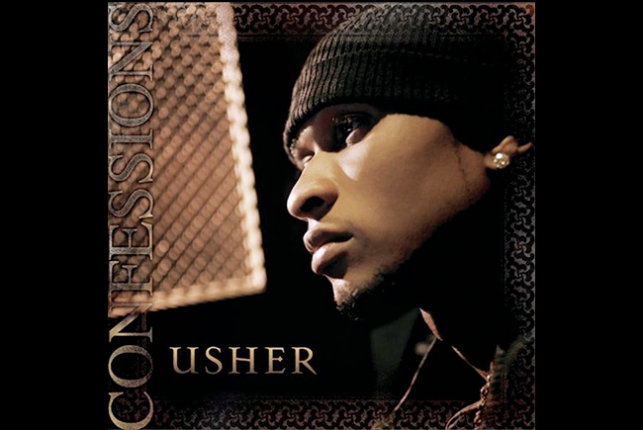
Usher’s ‘Confessions’ at 10: An Oral History with Lil Jon, Jermaine Dupri & More ARTICLESCOLUMNSTHE JUICE By Erika Ramirez
Usher’s “Confessions” In celebration of the 10th anniversary of “Confessions,” an elite group of contributors who were involved in its creation share the story of making the album. There aren’t many albums that make you feel as if your life is being recited back to you or as if you have your very own role in the storyline. Usher’s “Confessions” — which was released 10 years ago on March 23, 2004 — had me, a 19-year-old girl who had not yet had a boyfriend, believing that I had been cheated on or had been witness to a steamy and lingering act of infidelity. Usher: The Billboard Cover Story I wasn’t the only one who fell victim to the mystery nested in Usher’s third studio album. His girlfriend at the time, TLC’s Rozanda ‘Chilli’ Thomas, took the album’s single of the same title and cradled it as her own. A team of incredible writers and producers – Jimmy Jam and Terry Lewis, Jermaine Dupri, Bryan-Michael Cox, Dre & Vida and more – created a bed for Usher to not only lay in, but tussle in. “Confessions” started as secrets and struggles being shared among close friends, and ultimately became a collection of stories that set ablaze a man’s fight with love. Usher’s ‘Confessions’ Album Hits 10 Million in U.S. Sales “Confessions” introduced the becoming of a man. The singer-songwriter took his artistry to a higher level when showcasing his vocal prowess at its fullest potential through engaging, relatable storytelling; all at a time when R&B was dominating countless charts and hearts. Kanye West’s ‘The College Dropout’: An Oral History In celebration of the 10th anniversary of Usher’s “Confessions,” an elite group of contributors who were involved in its creation and imperative to its plaitnum success share the story of making the album. THE PLAYERS Andre “Dre” Harris (from Dre & Vidal): “Confessions” producer Bryan-Michael Cox: “Confessions” producer and songwriter Jermaine Dupri: “Confessions” producer and songwriter; founder of So So Def Records Jimmy Jam: “Confessions” producer Lil Jon: rapper and “Confessions” producer; performs on “Yeah!” Terry Lewis: “Confessions” songwriter Conversations Pre-“Confessions” Jermaine Dupri: “We have just come off ‘U Got It Bad,’ one of the biggest songs off ‘8701.’ We were coming off the success of ‘U Got It Bad’ and ‘U Remind Me.’ The conversation with L.A. [Reid, then the head of Arista Records] and Usher was about where we he was heading with this album. The topic of interest of people not being interested in Usher the person was the main subject matter at that point. The media wasn’t completely sold on Usher and Usher’s interest inside and outside of the music. ‘How do we make him interesting?’ was the conversation. This was his prior getting married, getting divorced, having kids, prior than his canvas having many colors. It’s about showing interest in the person who was singing. When we write about a song, try to make it a little more interest through the story. ‘U Make Me Wanna’ was a story, a story of him leaving who he was with to be with someone else. It just wasn’t a song; It was a story. I took that concept and applied towards ‘All Bad’ (Confessions Part I). [Note: The song was first called ‘All Bad.’] This is the song that defined the title of the album and the mind state of the rest of the record.” “‘Confessions’ was the best of A&R, the best of production, and the best executive [expertise]. It was made with a bunch of hits and feel good records. Usually those are the main ingredients to make a great album. It was the perfect selection of both. I think that if people wouldn’t have had the chance to hear feel good records, and it would have been hit after hit, then it wouldn’t have been the great album that it is or sold as much as it did. Five records on this that were on the radio, but there are also five records that weren’t on the radio that are fan favorites. I look at that as a blessing.” Terry Lewis: “While confessing is a great thing, I think that from a male perspective, men don’t want to hear you confess, because that just prompts issues with their relationships. What people want to hear in a confession is what you did to get yourself in trouble and the fun you had and how you went about that, ’cause those are the things people live every day. We went out and produced songs that portrayed that; what makes the picture a well-rounded story.” “Sometimes it gets overlooked what a great vocalist he is.” – producer Jimmy Jam on Usher. Tweet this Jimmy Jam: “Terry and Usher have a whole other type of relationship. I think Terry is more of a father figure and mentor to Usher. They talk a lot even when we’re not working on a project; about life. They had many conversations on personal things, and how much to reveal. My goal with Usher is to create music and production that show off how good of a singer he is. I think sometimes it gets overlooked what a great vocalist he is. He’s one of the greatest vocalists. So since ‘8701,’ we’ve tried to give Usher songs that’ make you say, ‘Oh Usher can sing!’ Since he’s a naturalist vocalist he can get away with singing and it sounding good but Usher won’t let him get away with just singing good. He can’t fool Terry and say, ‘This is the best I can sing it.'” The ‘Confessions’ Sessions “YEAH!” (featuring Lil Jon and Ludacris) Lil Jon: “We were in L.A. and went into the studio. Usher recorded his vocals and then I recorded mine. I knew we had somethin’, but honestly never would have known the record was gonna blow up the way it did! As a producer and DJ, I just like makin’ great music and hot records for the club.” “I’m still in awe of the fact that the record was as big as it is. I mean, it’s still gettin’ played every night in the clubs 10 years later. I just feel blessed to be a part of a record that made history.” “I’m still in awe of the fact that the record was as big as it is.” – Lil Jon on Usher hit ‘Yeah!,’ on which he performs. Tweet this Jermaine Dupri: “We always talk about visuals while making a record. We talked about what he’s going to look like and how. What’s going to be his thing. What is he going to do that’s going to make other people want to do it too. With ‘Yeah!” it was important that he made sure people knew he was a part of Atlanta. People didn’t know. He’s from Tennessee but lives in Atlanta. When he put the ‘A’ hat on and did the dances that came with being from Atlanta, that was the perfect stamp for him that he’s from Atlanta. ‘I’m a part of what you see when you see Atlanta.’ So when you say Atlanta, you say Usher as well.” Terry Lewis: “This was his big movement song. It was accepted worldwide. In addition to that he had an album to back it up.” “THROWBACK” Bryan-Michael Cox: “That was one of Rico Love’s first songs. He wrote it and gave it to J.Que and J.Que flipped it around. Before he was a singer, he was a rapper writing songs. Now he’s touring the world cause he’s got hit records.” “CONFESSIONS (PART I)” Dupri: “When we write a song, we try to make it a little more interesting through a story. ‘U Make Me Wanna’ was a story, a story of him leaving who he was with to be with someone else. It just wasn’t a song; It was a story. I took that concept and applied it towards ‘All Bad’ [‘Confessions (Part I)’]. It was first called ‘All Bad.’ This is the song that defined the title of the album and the mind state of the rest of the record.” “I had flown to L.A.. On my way to the studio, I was writing. I was using the scenery of my ride in my lyrics. ‘Every time I was in L.A., I was in Miami with my girlfriend.’ Everything that was going on in my passing to get to the studio, that’s what I was thinking and that’s what I wrote down. I thought people would think that it he was talking about Chilli; It was written for suspicion and mystery. We finished it in L.A.” Cox: “The day we recorded it [‘Confessions Part I’] I went to go get your teeth pulled. I never got my teeth pulled [before]. I’m like, ‘Okay. I’ll make my dentist appointment at 10 o’clock in the morning and have the session at 5 [pm]. I didn’t realize how much pain I was going to be. I got two teeth pulled. When the pain hit I was like, I got a session at 5. He’s like, ‘You’re not going to make that.’ I said, ‘You have to give me the highest dose of Vicodin you could give.’ We usually had a pattern on how we wrote songs; We took turns. But this time, we went line-for-line and I attribute that to the Vicodin. Right when Usher heard it, he got in the booth and sung it.” Dupri: “We came back and played it for L.A. [Reid] and people at Arista [Records]. Everyone went crazy. Usher said, ‘We need part two.'” “CONFESSIONS (PART II)” Dupri: “With ‘Part II,’ I personally had just gone through that situation in my life, where I had a baby with somebody and I had a girlfriend and I had to tell ‘em. That was my personal story. It was like picking up a book of mine. Me and Usher were writing the song together, and I’d throw words at him. He’d say, ‘Yeah, yeah. We got to say that!’ At this point, he didn’t have a child. He had no baby on the way so for him it was fun; We were creating a story that was almost like a movie. He didn’t cheat or have a baby on the side.” Cox: “We’re back in Atlanta and Jermaine suggests we record a part two and ‘make it into a soap opera.’ After he tells me his story, I ask him, ‘This is something you went through personally, huh?’ He said, ‘Yeah! This is my story and I’ve been looking for the right artist to tell this story.’ That’s when he came up with the title, ‘Confessions.’ We went back and forth on the hook idea and then came up with the verses. Usher came in, tweaked it a little to so he can relate to it, and ‘Part II’ was done.” Dupri: “I was lost as to if y’all would catch on to what was going on. You guys heard it from ‘Part II’ but hadn’t heard ‘Part I.’ We thought that these songs were going to get overlooked because y’all connected without knowing what was going on. I never felt like ‘Part II’ was going to create the excitement that it did. It was written for suspicion and mystery so it can make you think: ‘Who is he talking about? How did this happen?’ I felt like we hit all of those notes but I didn’t think it was going to turn into what it did.” “She [Chilli] really made the power of that song come to life. She started believing that it was really her… She was doing interviews where she believed that the songs were written about her. That was the greatest part of my life at that particular point in time because that’s when I really felt like I nailed the nail into the coffin. [When] you can write something well enough to make a person believe that you’re talking about them and you’re not… You have done an amazing job. What that does [is] it makes me know that I pulled off what we were trying to do. We were trying to get into the minds of people to make this relationship story interesting. We pulled it off.” Cox: “She validated the song. She went around and said, ‘He did the unthinkable.’ She never said what the unthinkable was but Confessions’ was out so people assumed he had a baby. She must have thought that was going on or felt something cause she was on a media tirade. But like, ‘What are you thinking? Usher ain’t got a baby.’ It was wild. I remember hearing the interviews and thinking, ‘Chilli is bugging.’ She fueling the fire.” “BURN” Dupri: “‘Burn’ was the first song that we did. It was my attempt to create more records that sounded like ‘U Got It Bad.’ ‘Nice & Slow’ was the beginning of ‘U Got It Bad.’ ‘U Got It Bad’ was the beginning of ‘Let It Burn.’ The title of it came from Usher saying that he was in a relationship and it felt like it was burning him on the inside. But, the only way to get it out of his system was to let it burn. We usually try to block that burning out or ignore it; That’s how we end up lying. I had to figure out how it make sense of what he was saying. I took it further than what it was. When you have that feeling in your body you have let it burn through even though it hurts. Once it burns you up, it should be over. It’s the feeling of ignoring what you know is over. It’s the feeling of ignoring what you know is done. It’s when there’s something that’s burning [and it] doesn’t feel right. Many ask, ‘Why am I still in this relationship? I know it’s not right.’ It’s that type of feeling. You let it burn all the way through.'” Cox: Jermaine said something about letting a feeling burn. I said, ‘That’s a great song title.’ He said, ‘Then let’s go write it.’ We went back to the back and wrote it. We wrote the song in 15 minutes. In the hook, we referenced a little bit of Babyface with the falsetto part. Lyrically, ‘Burn’ was what I was doing to at the time. Usher came in and made it his. It a little bit more of my story. Going through the struggles of becoming successful, having a girlfriend, but the outside life is crazy. You’re fighting not to get pulled in but your relationship is completely deteriorating. You have to let things go and if they come back, it’s real.” “CAUGHT UP” Andre Harris (from Dre & Vidal): “For this album… We’d start out talking before we worked on anything, about life, love… We’d come up with concepts then start the music. The point was to make a real good R&B album and Usher was the perfect candidate. We started ‘Caught Up’ by talking in the studio. He said, ‘I want to do something real uptempo.’ After we had a 30-minute conversation we’re like, ‘Let’s do uptempo. Go!’ The track was done in an hour. It came together fast. Ryan Good and Jason ‘Pooh-Bear’ [Floyd] started writing and we came up with the hook. I remember after we laid it down we went out that night [and] listened to it in [on the way to] the club. We came back the next day and Usher didn’t like it. So, we went back to Philly without him cutting that record. We played it back and thought, ‘This is a dope record.’ At the time I had an artist named Glenn Lewis. I said, ‘If Usher doesn’t take this record I’m sending it to Glenn.’ I remember telling Usher, ‘We got to cut this. We came back the second time and we played the record and invited girls to the studio. They partied and jammed to the record all night that he ended up saying, ‘Yeah we got to cut this.’ When women are saying it’s good… That’s who we’re making music for, for women. That album was meant to cater to women because it was real life situations. It also let men be vulnerable.” “SUPERSTAR (INTERLUDE)” / “SUPERSTAR” Dre: “His brother actually produced the interlude. ‘Superstar’ didn’t sound like a normal ballad. It had cool sh*t to it. The record, also like the one Just Blaze did (‘Throwback’), had different beats. They all felt good but [were] still eclectic. And still there was a consistency. I made ‘Superstar’ in my apartment with Ryan Good and Pooh-Bear. It was the first song L.A. Reid heard and [made him] decide to get us in with Usher. [When] recording that song I knew it’d be for Usher; It sounds just like him.” “Faith Evans sings the background vocals on ‘Superstar’ but they forgot to credit her. No one knows its her. She sings on the bridge of ‘Superstar.’ She’s like, ‘Dang you forgot my record.’ It wasn’t my fault though. She laid extra vocals especially for him [Usher].” “TRUTH HURTS” Terry Lewis: “‘Truth Hurts’ is one of the first songs we recorded. We recorded that before we went back in and recorded the other things. When everyone turned in their songs, they heard ‘Truth Hurts’ and said, ‘We have to send them back to you.’ Usher then came back and we had a conversation of the overall concept. It needed some color. We then created ‘That’s What’s Made For,’ ‘Simple Things,’ ‘Seduction’… while none of them ended up being singles, they added color to the overall picture of what he was trying to get across in his confession. If you don’t get in trouble, you have nothing to confess about. [Laughs] If you don’t have a lesson that you learned in your reflection, you don’t realize the importance of the simple things. We went in for a three week span or so, jammed and conceptualized what getting in trouble is all about.” Jam: “‘Truth Hurts’ ended up setting a tone. Terry, once again as being a really great lyricist, isn’t writing anything that Usher hasn’t said to him or an idea Usher hash’t generated. But it’s the conversations that they had that were intimate, That’s where this ideas and inspirations come from. You’re going to make records from your experiences because those make for the best records.” “SIMPLE THINGS” Jam: “We were at a studio at the Village. We were all sitting around and at that point in time I had gotten a new keyboard. We were messing around with different sounds, and there was this real nice rose, electric piano sound. I was playing chords. Avila [Bobby Ross Avila, producer, drums and keyboards on “Confessions”] was in the room, and he had a drum machine and started this real simple beat. Then Terry and Usher walked in and we soon had a room full of people saying, ‘This is real cool.'” “BAD GIRL” Jam: “‘Bad Girl’ initially came from another writing team. It was a song that Usher had and struggled with finishing it up. It was a thing where they were like, ‘Man this is a good idea but we can’t quiet finish it and bring it home.’ Terry and the Avila brothers worked their asses off to get that song where it is, from where it began which was a basically guitar lick idea to a fully realized song.” ‘Bad Girl’ was a song where you’d go to any club at any time and it was played as if it was a single. That happens cause of the strength of a really great album.” “THAT’S WHAT IT’S MADE FOR” Lewis: “That’s a scenario that happens. You make a mistake ’cause you forget. My grandma used to always tell me, ‘You think you’re getting it but you’re getting got. You’re so worried what you’re getting out of it that you forget what you’re putting into it.’ In this case, there is a baby possibly and you think, ‘What did I do?’ Those are real situations: no cap, no cut.” “The production is very Usher but very original to Usher. I can’t even tell you how many artists came back after that album and asked for records like that. I point to Usher when I think of a contemporary R&B ballad. Usher is [at] the altar of that whole style, the very rhythmic, almost rap type delivery of lyrics. Usher was the guy that started that.” Jam: “We were trying to create a sexy mood. We were also, at the same time, working on some stuff for Janet [Jackson]. I remember with that track, either Terry or Usher came in the room when we were working on it and were like, ‘Oh, that’s ours.’ I don’t think we had anyone in mind when we produced it. I remember Terry saying, ‘I had a concept for this. Oh, this is done.'” “DO IT TO ME” Dupri: “I personally believe that Jermaine Dupri can’t make a lot of feel good records. Jermaine Dupri makes hit records or makes records that don’t need to be heard. ‘Do It To Me’ was my attempt to make a feel good song for Usher; nasty but a feel good. It was the beginning of what you hear Usher doing now. It was the beginning of his falsetto. ‘Climax’ reminds me of ‘Do It To Me,’ ‘cause of his singing. The lyrics were incredible but the way he sang the record was us being experimental. It’s one of my favorites but one I don’t hear many talk about.” Cox: “People know me as a person who makes ballads. ‘Do It Me’ was completely inspired by appreciation for Prince. We were trying to do something that was sexy and slow, with those rare drum sounds. I was trying to channel Prince. The song came out better than we thought.” “FOLLOW ME” Dre: “It has a two-step lock to it. It was a fun record. He wanted to have fun on it so he sung it that way. We talked about being on the road. It was a record to let people know about the situations of artists’ being on the road. Artists get vulnerable and miss people; they have normalities in their life. Ryan Good, Jason ‘Pooh-Bear’ and him wrote it. We recorded that in New York. After we had put in some time with him we knew the direction he was going in. That was a record that was done at the last minute after talking to him. The minute we played it for him he said, ‘That’s perfect. That’s my life.'” “CONFESSIONS (PART II) Remix” (featuring Shyne, Usher and Twista) Dupri: “I approach my remixes with the intention of making them harder and much more bounce-able than the original. I already had the template of how to make it crazier, and different than ‘All Bad.’ I created something that you didn’t hear till later. In my mind, I was piecing the two songs together. I believe ‘Confessions Part II’ could have been the remix if we had made it as a song to just make.” “It was a conversation with Mark Pitts to get Shyne. We thought it’d be cool to get him from jail. Me and Usher talked about Kanye [West] ‘cause it was the beginning of Kanye being on R&B records. He was also on tour with Usher so it made perfect sense. Twista was our first choice ‘cause of how he was going to rock it.” “MY BOO” Cox: “The song came together really fast. Jermaine and I worked on an idea and then he’d sing Usher the melody. He is one of the fastest writers I know. He can internalize an idea and 15-20 minutes later it’s a whole song. The label didn’t like that record. We were confused. Jive took over the project and we went to go meet with Peter Diaz was like, ‘We’re going to put this song on the re-issue.’ I was like, ‘You have no idea what that’s going to do with this album. The album is already huge but it’s going to be Mona Lisa, it’s going to be crazy.’ The label made a mistake of not putting it out on the album, but it got out and it was also the start of the re-issue.” “SEDUCTION” Lewis: “You see someone that’s sexy and cool and it’s all wonderful. She’s trying to get you just as much as you’re trying to get her. In this particular case we painted a person who was more the aggressor than not. You think that you got to get her; send her a note and a drink. But she sends him a drink and says let’s hang out later and do whatever. That was it; That’s how you get in trouble.”

colette Paris Robbed for $850.000 USD
WOW!!!!! Armed with a pump-action shotgun and an axe, the two robbers got away with €600000 EUR (about $850.000 USD) worth of watches and other goods. Just before opening the doors at 10AM this morning, the two robbers apparently asked the six staff members setting up to lie down on the floor, before grabbing all the expensive items that they could get their hands on. Thankfully the store announced later on that nobody got hurt.
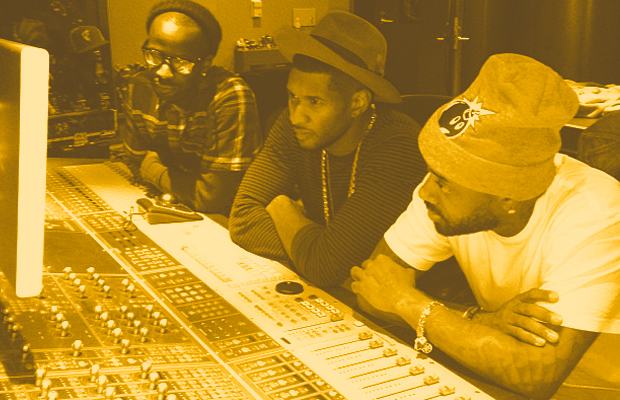
Jermaine Dupri Has a Confession to Make About Usher’s “Confessions” BY DAMIEN SCOTT
Photo courtesy of Usher’s Instagram. Ten years later, the truth finally comes out. When our favorite albums hit milestone anniversaries, the hyperbole comes out when describing theart, as well as the impact the project had on its genre. The words “classic,” “watershed,” and “most influential” are tossed around without care or clear aim. That’s not the case here. To say Usher’sConfessions was the most important album of the aughts is neither hyperbole nor unfounded fanboy-ism. It’s just the truth. Numbers don’t lie: The album sold over 20 million records worldwide. It was the second best-selling album of the 2000s. It held the No. 1 spot on the Billboard 200 for nine consecutive weeks. The success of the album can be attributed to a great number of factors: The first single, the Lil Jon–produced “Yeah!” was the No. 1 song in the country for twelve consecutive weeks and sold over 4 million copies in the United States. The second single from the album, “Burn,” a somber guitar-backed meditation on ending a bad relationship, replaced “Yeah!” at the top of the charts and remained there for another eight consecutive weeks. It’s also worth mentioning that Confessionswas the hotly anticipated follow-up to 8701, the album that birthed the No. 1 hit “U Got It Bad” and moved more than 8 million units worldwide. Hits aside, the true hallmark of the album was its titular theme, as reflected in the title track. Like most R&B records, Confessions is about love and love lost. It boils down to a man taking ownership of the wrongs he’s committed in a relationship; one who’s done so much dirt he can’t pull himself out of his grave. When taken by itself, it’s an unremarkable story arc. But at the time, with Usher in a very public relationship with Rozonda “Chilli” Thomas of TLC fame, the album became pop culture catnip. Questions arose: Was Usher planning on breaking up with Chilli? Did Usher really get his sidepiece pregnant? Songs like “Burn” and “Confessions Part II,” both written and produced by Jermaine Durpri and Bryan-Michael Cox, fanned the flames. Both were the cornerstones of the Diamond-selling album. On the eve of the 10th anniversary of Confessions Complex spoke to Jermaine Dupri about how the titular song came to be, the genesis of the album’s theme, and why, if he had his way, “Yeah!” wouldn’t have happened. On the origin of “Confessions” Jermaine Dupri: “‘Part I’ was basically the beginning of how we even got to Confessions. The name of the song was ‘All Bad,’ with ‘Confessions’ in parentheses. When we first started making this album, Usher was considered a clean artist. He had hit records but he wasn’t really in the media. The media only cares about those that are doing dirt, doing crazy shit. Those are the guys that garner these [magazine] covers. “When we were talking about Usher’s new album, the PR people at Arista were saying they’re not getting a lot of bites for Usher to shoot covers. I couldn’t believe this, because we just came off “U Got It Bad,” and a bunch of big records and we felt like it was his time to turn into that superstar. But we was getting a lot of resistance and even L.A. [Reid] was saying to him, “Usher, all people talk about with you are your songs now. People talk about your songs but they don’t really know Usher the artist.’” “So, that conversation was the beginning of my head wrapping around, ‘How do I create a whirlwind around Usher and make Usher something to talk about? Make people want to go deeper into the person. That was my quest. And from that point on I started watching Usher’s life closely. “My whole thing was to create a ruckus. He had a girlfriend, Chilli. [I wanted to] create what girls think happens when we go to the studio. Women think it’s a party in there. They don’t think we working. I wanted everybody to start wondering: Who’s he talking about? What’s going on? Where’s this coming from? That was the goal. All that basically sums up ‘Confessions.’ ‘Part II’ was all me, my whole life story, basically. I just had gone through ‘Part II’ in real life. “Once we got done with that song, we thought, ‘How cool was it that he confesses bad things, as opposed to lying about it?’ That’s the opposite of what males do. We felt like we had tapped into something. He already had ‘Caught Up,’ he already had a couple other songs that went along with this. It felt like the man was confessing. So it was like [the name] ‘Confessions’ just stuck—this is what it is. ‘Part I’ was a story that you got caught up in, so it was like we gotta have a “Part II.” “Once again, ‘Part II’ was supposed to be fantasy: Usher didn’t have kids; none of these things were going on. ‘Part II’ was all me, my whole life story, basically. I just had gone through ‘Part II’ in real life, so it was like as soon as he said he wanted ‘Part II,’ the chorus was already on the edge of my lips. [I told him] OK, well, this is very right now; I can tell you exactly what ‘Part II’ is. So it [took me] like 30 minutes to write ‘Part II.’ I didn’t know that L.A. wasn’t going to put ‘Part I’ on the album. I’m thinking we gotta make a remix, so I try to make the beat harder than the first version because the first version was like piano-ish and super R&B. I wanted to make ‘Part II’ a little bit harder, [that’s] what I do when I do my remixes. “‘Part II’ became a monster, a track better than ‘Part I’ in the eyes of just picking songs. So then that song, ‘Part II,’ just took off. I think the mystique of you not knowing about ‘Part I’ was what L.A. liked, because the album is Confessions. I can’t speak for L.A., but I’m thinking that somewhere in his mind, when he gave people ‘Part II’ instead of ‘Part I’ it was kind of like the Star Wars mentality. ‘Part I’ to me is a song that actually sums up the entire album. It set the tone for the title and it connected the rest of the songs on the album to make us feel like we had a full product. “I think [Usher] loved it because it was mysterious. And even though ‘Part II’ was my story, it still was mysterious for him because if you got a girlfriend and you tell her you got a girl on the side who’s got a baby, it creates this mystique. It was so mysterious that Chilli actually started believing it. She started believing that these songs were about her. I heard her do an interview one day and she was talking about it like we wrote about her. No, no way. [Laughs] On the making of “Burn” Jermaine Dupri: “I did ‘Burn’ before I even did ‘Confessions.’ ‘Burn’ was me trying to make an extension of what I already did with ‘U Got It Bad.’ I was like, ‘OK I got to make another record like “U Got It Bad” because the obsession with “U Got It Bad” was crazy.’ “I did ‘Burn’ with the mentality of trying to recreate what people felt in ‘U Got It Bad.’ So we did that first and “Burn,” with the guitars at the end, it was very much R&B but it was really pop. It was like, ‘What do I do to take his sound up?’ So it wasn’t really anything about making the beat harder. I was trying to not water down the entire project. “I felt like ‘Burn’ was the most melodic and almost sappy-sounding record you could possibly have. It was jumping and it was dope, but it sounded like pure R&B music. It doesn’t have no essence or hardness to it. It’s almost like ‘She’s Out Of My Life’ to me, the Michael Jackson record. That’s what it feels like to me when I listen to the song, like somebody’s crying. “I was trying to get away from that angle, and give him something a little more bounce-ish, but at the same time, like I said, Usher still was uninteresting to people on a bunch of different levels. I was trying to do as much as I could to make people interested in him, from a standpoint of rappers wanting to be around him—just anything. I wanted everybody to listen to this project and want to be a part of it. So I took it to a place where we’d make this a ballad that’s going to be harder than what we’ve done before. On not wanting “Yeah!” to be on the album Jermaine Dupri: “When they came out with ‘Yeah!,’ I was nervous because I was thinking, ‘Here we are with this guy’s career, having great R&B songs, and now he’s about to do something that could potentially damage what we already created.’ I was in love with Lil Jon because that stuff started in my office. I knew what it was, but I didn’t know if that went with what we was doing musically. “When we first put Usher out, we was chasing Bobby Brown, like with My Way. And that’s what I’m saying all of this was one long story because we all came from the same place. [When] we did My Way we were out to try to do a better album than [Bobby Brown’s] Don’t Be Cruel. In the midst of that, the hardest thing on that album was ‘My Way.’ It was crazy because, when we first started this, I put Lil’ Kim on My Way and Usher’s mom was concerned about the language. This journey came from a whole different place, for us to get him on a record with Lil Jon just felt like, ‘Oh man, we might be doing something crazy.’ The song was incredible but it didn’t have anything to do withConfessions. I was scared of the ratchetness [of “Yeah!”] “As the executive producer and producer, I’m locked into the theme of what we’re trying to make. But at the same time, I recognized it as a hit record. But I didn’t know that that record should be first. [That’s what] I tell people about Confessions all the time—that album was the best case of A&R, producer, and executives doing all their jobs. Because L.A. did a great job picking that song and they did a great job by saying, Yes, give this to Usher, put this against all this other music that we have, and we should have a monstrous album. I have to take my hat off to them for doing their executive job, but I was nervous as hell for ‘Yeah!’ [Laughs]. I was 100% nervous as hell. It could have changed the whole scope, because now people hear Usher make records, people have so much shit to say about it. Straight from the people who don’t like it, they’re like, Yo, what the fuck is he doing? When is he going to start making R&B music again? “With that being said, I felt like this could’ve happened with ‘Yeah!’ I felt like they could have been like, What the fuck is wrong with y’all? By the way, at that time, crunk wasn’t cool yet. Being turnt-up and crunk, it was cool for Lil Jon, it was cool for the YoungBloodZ, it was cool for Dem Franchize Boyz, and those people that do it. But to be ratchet wasn’t the coolest thing in the world at that point yet. “I was scared of the ratchetness. And I didn’t want people to feel like we were chasing that because Usher, once again, wasn’t an artist that had to follow the trends of what was going on. So I didn’t want that to come off like that’s what he was doing. I went along with it. I felt like if DJs love it then we’ll make money—and that’s what happened. “We still have a left off piece of this story to finish. Me and him started this journey and we talked about trying to become big music and make an album bigger than Thriller. I believe we still have an opportunity to do that. He just has to want it inside himself.”