

Author: JD


Underwhelming Start to iTunes Radio Lights Fire Under Apple
The failure of iTunes Radio to halt the decline of music downloads has prompted Apple Inc. to consider the most dramatic overhaul of its iTunes music store in more than a decade, according to executives familiar with Apple’s internal deliberations. iTunes Radio, which launched in September with much fanfare, so far only sees about 1%-2% of listeners clicking the buy button, while overall music downloads have been declining upwards of 15%, according to several label executives. At the same time, Apple is finding that its influence over labels is slipping as YouTube, Spotify, Pandora and other streaming services gather momentum. One independent label said that iTunes’s share of the label’s revenue has eroded from more than 70% in 2012 to about 50% today. As a result, Apple is being forced to consider options that would have been out of the question a few years earlier – an on-demand streaming service, an iTunes store for Google’s Android devices and negotiating download sales windows that favor Apple as first reported by Billboard. Related Articles Business Matters: The Butterfly Effect and Why iTunes Radio Hasn’t Increased Track Sales Business Matters: Study Shows Why iTunes Radio Lacks Big Impact on Download Sales Business Matters: Track Sales on Downward Trend in 2013. Did iTunes Radio Play a Part? How Apple transforms iTunes, however, remains hotly debated, both within the company and among Apple’s content partners, sources say. Apple’s desire for a smooth transition is complicated by an urgency that iTunes must move quickly as people move away from downloads, where Apple controls 90% of download music sales in the U.S., towards streaming, where Apple is overshadowed. Apple declined to comment. Apple’s problem is two-fold – a shift in consumer behavior toward streaming and the rise in Google’s Android operating system, which runs 38% of all devices shipped worldwide in 2013, compared to 10.4% for iOS, according to Gartner Inc. In September 2011, Apple took a tentative step towards streaming, launching its Match service, which charges $25 a year to store music from CDs and music bought from iTunes in the cloud, but so far only has about 1 million subscribers, according to label sources. Last September, Apple took a bigger step into streaming with iTunes Radio. The idea was to execute a smooth transition to streaming, while preserving sales via referrals to its download store. While it’s estimated to have become the third-largest pure music streaming service after Pandora and iHeartRadio, according to Edison Research, iTunes Radio has yet to live up to its promise of shoring up sales, said sources familiar with the conversion rates. Even the leading U.S. streaming radio Pandora with over 70 million users each month only generates just $3 million in download sales a month according to executives familiar with the data. “iTunes Radio hasn’t solved the problem of refreshing the iTunes store,” said a senior label executive. “While listeners are clicking the buy buttons, the traffic it is driving is in the low single digits of listeners.” iTunes Radio’s “lack of success,” another executive said, “is driving the types of conversations they are having. They know iTunes has to change radically, but they still don’t know which way it will go. But it will be completely different in three to five years. They are committed to making that happen.” While iTunes Radio has been a disappointment so far in the U.S., label executives say it could still play an important role in other countries around the world like Russia and Brazil, where passive streaming services still haven’t taken hold like Pandora has in the U.S. Meanwhile, in the U.S., Apple is losing its most valuable customers. “Two-thirds of its high-value customers are now in subscription services,” said one source. “That has been an eye-opener for them.” Apple’s second big threat is Google. Through Android, Google has excelled where it matters most – mobile. Sales of smartphones equipped with Android accounted for 69.5% across 12 key countries in the fourth quarter of 2013, compared to 23.7% for Apple’s iOS, according to Kantar World panel. More worrisome for Apple is that its share declined while Android gained across all those markets, including the U.S., China, Latin America and Europe. This places Apple in a familiar conundrum – open up its iTunes store to rival Android devices or risk being losing out on more than half of the mobile market. Apple faced a similar juncture in 2003, when Steve Jobs agonized over whether to make iTunes compatible with Windows PCs. When he finally relented, Jobs announced iTunes for Windows by saying, “Hell froze over.” The decision facing iTunes today regarding Android weighs no less heavily on Jobs’ corporate heirs. The questions of whether to introduce iTunes for Android and launch an on-demand music service are part of a bigger imperative at Apple as it considers how to position iTunes to capture more of the fast-growing digital entertainment market that it used to own outright. Though iTunes sales grew 25% its 2013 fiscal year to $16.1 billion, making up 9.4% of Apple’s overall revenue, iTunes’ music sales has declined both as a proportion of overall iTunes revenue and in absolute dollars as consumers spend their money elsewhere, according to estimates from Asymco. “The a-la-carte consumption model is 11 years old and at this point the decline in the U.S. download sales seems unstoppable; it doesn’t seem like the store is refreshable,” says one label executive, who went on to suggest Apple has no choice but to embrace the subscription model.” But that executives believes that while digital sales will continue to deteriorate over the next 9 months, he says that some consumers will still prefer to stick with the download model, leaving Apple to service three channels–the download store, iTunes Radio and a premium subscription model–to reach music fans. But how Apple approaches the later avenue is critical. It can’t afford another botched launch. With music as the canary in the coalmine, Apple knows it must weigh its strategy carefully. “When sales are going up, it’s all offensive moves,” said one executive. “Now that sales are going down, they have to make defensive moves. But whatever they decide to do, I wouldn’t bet against them still being No. 1 with the customer. I would bet they will always be.”

DMS TESTIMONIAL: Jermaine Dupri
GO CHECK IT OUT !!!!! www.directmusicservice.com
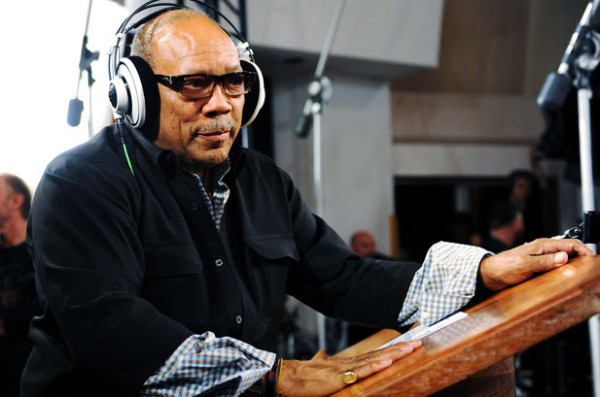
Quincy Jones Bashes EDM in Recent Interview, ‘That’s just noise.’
MY MASTER HAS SPOKEN Quincy Jones Jr. is an American record producer, conductor, composer, television producer and film producer who is not too keen on electronic dance music. Recently Quincy Jones sat down with The National to talk about an award he just won in the United Arab Emerites. The National and Quincy Jones discussed a wide variety of topics from his music career to what the current state of music looks like. When Quincy was asked what type of music he feels like is all about the money, he responds with “I don’t like techno at all. That’s just noise. I can try it because there is nothing to it but I just don’t think there is anything to learn from it. Now all these DJs are making more money than rock groups. They don’t even need bands anymore. People such as Skrillex and those guys get half a million to a million dollars a show all over the world from Las Vegas to Brazil. As a musician it is extremely frustrating. Because that’s just music to sell products.”

Bentley Home Collection Unveiled At Salon del Mobile 2014
Bentley Home Collection debuted at Salon del Mobile 2014. The attendees at the Milan fair were treated to the complete range of furniture pieces from Bentley Motors. Designed and manufactured in collaboration with Luxury Living Group, the collection has been inspired by the renowned craftsmanship and exquisite materials that characterize the interiors of all Bentley models. Three words describe the whole collection very well – elegant, sophisticated and glamorous.

‘Star Wars’ Creator George Lucas Discusses the Concept and Creation of the Lightsaber
George Lucas recalls that Star Wars was influenced by pirate and swashbuckling films of the 1940s, which showcased the romantic side of fighting. The director needed a weapon that would match the Jedi’s ideals. In a clip from Star Wars Episode IV: A New Hope, the lightsaber is introduced by Obi-Wan Kenobi, who describes it to be “not as clumsy or random as a blaster. An elegant weapon for a more civilized age.” Originally, Lucas says, Jedi were meant to fight with just swords. But to give the weapon a technological edge, they became “laser swords.”

Forbes Takes a Look at Sneakernomics: When Will the “Sneaker Cycle” End?
As a Sneakerologist, the question I get asked most often is “Where are we in the Sneaker Cycle? When is this sneaker cycle going to end?” And my answer is, “It’s not going to end. We are in a permanent state of Sneaker-ness”. Let examine several factors that support my thesis: Sales History I’ve been archiving data fromwww.sportsonesource.com since 2004. This is the topline growth for the sneaker industry for each year since 2003. 2004 2005 2006 2007 2008 2009 2010 2011 2013 ALL 1% 10% 0% 3% 0% 3% 9% 1% 5% The industry has been running at a mid-single digit CAGR since 2004. The best year was +10% and the worst, flat. While categories have ebbed and flowed, this chart really illustrates that we’ve been on a long run of growth for athletic footwear. I do not expect this trend to reverse any time soon. When you look below the top line, there has been tremendous volatility by category but the topline rate has not faltered. We’ve had Basketball down and then up, Casual up and down and of course the Toning run up and meltdown. But through it all, consumers have continued to buy more and more athletic shoes every year. So while I expect turmoil on the category level (Basketball up, Running cresting, Casual recovering, and Walking taking off) I don’t believe the general trajectory of the business changes. The success of brands and retailers will depend on their ability to navigate the changes below the topline. Segmentation The last time the sneaker industry had a meltdown was in the mid 90’s. The Gap ran an ad campaign that said “Everybody in Khakis!” and the sneaker business cratered. (Yes—the Gap had that kind of authority then. No retailer has that mind share today). But the real culprit in the mid 90’s was lack of segmentation. Brands essentially made the same shoes for every retailer. Every retailer wanted to look like Footlocker back then, creating far too much duplication of products and brands. When the soft patch occurred, the cars in the freight train piled up behind. Today, brands (and retailers) understand their roles. Channels and markets are clearly defined, avoiding duplication and redundancy. If the industry were to hit a soft patch or lull, there are guard rails in place to avoid catastrophe. Denim My recent visit to the Las Vegas trade shows confirmed (again) that denim rules as fashion choice for bottoms. While we certainly have seen some turmoil around which denim brands are most popular, the look has remained important. Sneakers are the perfect accompaniment to jeans. As long as we are in a strong denim period, sneakers will remain strong as well. Demographics We now have at least three generations of kids who grew up wearing nothing but sneakers (at least until they reached the workforce). It will be very difficult to convince millennials to give up light weight and comfortable athletic footwear for heavy and stiff conventional shoes. Casualization Most companies moved very quickly from “Casual Friday” to “Casual Every Day”. Across the workplace landscape, the rules about appropriate business attire have relaxed. When I first started my business, client meetings required a necktie; 5 years ago, I wore dress shirt and slacks; now I take my meetings in jeans. Athletic fashion There is no doubt that right now the fashion spinner is focused on athletic apparel. We are seeing more athletic apparel worn as streetwear. According to SportsOneSource, the Capri/Tights business is off the chart, as is the Hoodie business. The popularity of Athletic apparel has had a profound negative effect on the rest of teen retail. As long as athletic apparel as street wear remains popular, the sneaker business will remain strong. Product Pipeline Retailers report to me that the product pipeline for new sneaker styles and technologies remains robust. New Styles, new silhouettes, new materials, as well as new manufacturing techniques abound, all of which will contribute to the sneaker business growing rapidly. Internet Today’s sneaker aficionado has remarkable access to what’s new and next in sneaker fashion. My 11,000 Twitter followers are constantly asking me about new releases, some of which I’ve never heard of. The Internet will continue to fuel high levels of interest in new products. This will keep interest and energy around the sneaker business. Unrequited demand The brands (particularly the Jordan brand) have done a great job of making sure the most desirable shoes are kept in limited supply, often selling out in hours, if not minutes. This unrequited demand keeps the interest and desire for the next product high, perpetuating strong growth. Conclusion I believe all these factors taken together show that the strong demand for sneakers will not abate. We can expect this “cycle” to continue for some time to come.