

Author: JD
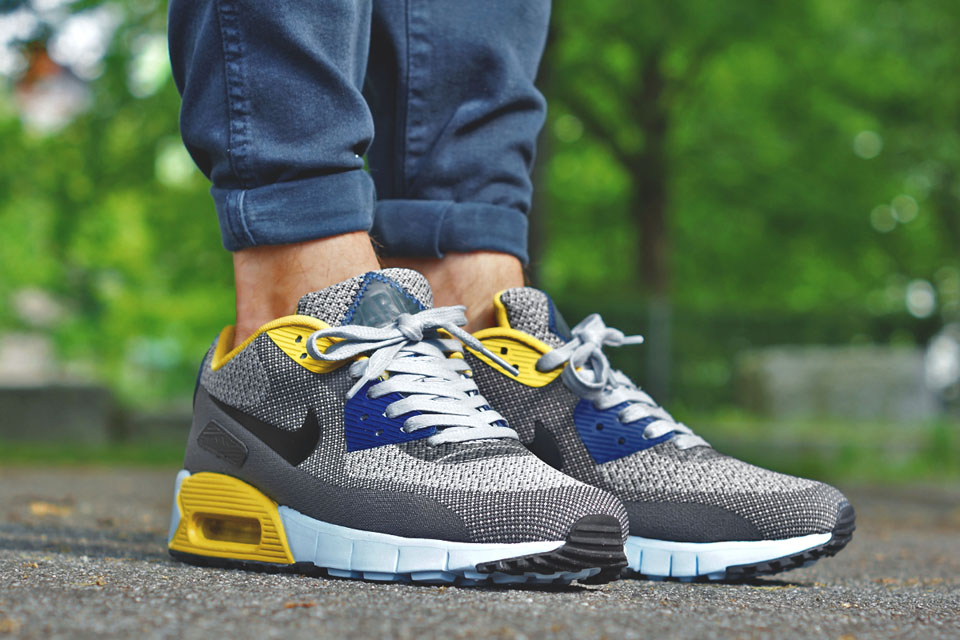
Nike Air Max 90 “Paris” QS
HARD!!! The Beaverton Behemoth pays tribute to the City of Love with a jacquard upper, hits of blue and yellow, and a custom tongue labeled “Paris, France.” The Air Max 90 “Paris” drops May 23, alongside the previously featured Roshe Run “NYC,” at select retailers worldwide including Overkill.


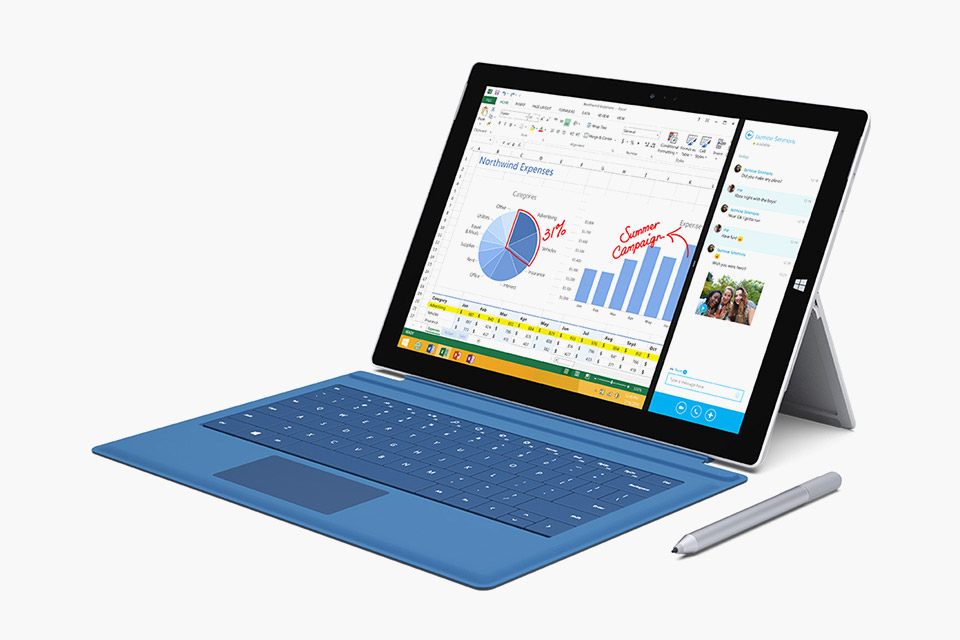
Microsoft Unveils Surface Pro 3 Tablet
Microsoft’s new toy, the Surface Pro 3, claims to have all the processing power of a laptop, with a 4th generation Intel Core processor, up to 512 GB hard drive and up to 8 GB RAM, all encased in a light tablet frame with a 12″ HD screen. It can handle popular software like the full MS Office and Adobe CC Suites. But, most importantly, it features an optional super slimline keyboard along with a friction-hinged kickstand for a viewing angle up to 150º, and responds to a stylus with personal handwriting recognition. All of which makes it sound like a strong contender for most versatile tab on the market. Preorders are being taken from today, with the actual units shipping June 20. Click here for more info.

Lamborghini Aventador “Galaxy” by DXSC
The galaxy print has been seen in the fashion world on sneakers, tees and accessories, so it’s hardly surprising to see it draped over a luxury sportscar –
Spotify Now Has 10 Million Paid Subscribers, 3 Million In U.S. (Exclusive)
New numbers are important both to the industry and the music streaming company. The number of paying Spotify subscribers has grown to ten million globally driven by mobile usage — noting a major landmark number for the music industry as it looks to monthly streaming services as the future of the business. Yet it is the rate of growth in the music business’ No. 1 market in the United States that is most pleasing to industry insiders. According to sources familiar with the company’s data, Spotify has grown to more than 3 million paying subscribers in less than three years since launching here in July 2011. Related Articles Spotify To Launch in Brazil This Year (Updated) How Spotify’s Daniel Ek, Sprint’s Dan Hesse Pulled a Deal Together in a Month Spotify Obtains $200 Million Credit Line In Advance of Possible IPO (Report) The last time Spotify revealed user numbers in March 2013, it had 6 million paying subscribers globally. A key part of Spotify’s strategy is to offer free access to various levels of its service. It now has more than 40 million monthly active users including the 10 million paying subs – one in four. “This shows that our conversion rate is working,” says chief executive Daniel Ek. “We’re proving the more people play, the more they’ll pay.” Spotify is revealing these numbers as talk around the possibility of an initial public offering heats up – potentially for later this year at valuations well north of the $4 billion mark it passed with its last private funding round in November. For public investors in the consumer Internet space, the strongest interest is with digital media companies that are growing users at a rapid tick. While it is not the pace or scale of a Facebook, Spotify is easily the biggest and likely fastest growing of similar music subscription service rivals including Rhapsody, Deezer, Rdio and Beats Music – currently the subject of Apple’s $3.2 billion bid for parent Beats Electronics. Muve Music, a bundled service with Cricket Wireless is estimated to have around 2 million U.S. subscribers. Rhapsody revealed last month it now has 1.7 million subscribers globally. It is estimated just over half are in the U.S. Deezer has reported it has 5 million subscribers with the majority in its home country France – it is not yet in the U.S. Rdio is believed to have under 500,000 in the U.S. while newcomer Beats Music had around 200,000 subs in its first three months according to sources. Ek said the recent rapid growth with Spotify was fueled by the roll-out of its free mobile service in December. He said more than 80% of all subscribers that sign up now do so through mobile phones. “We’ve really become a mobile-first company,” he said. Based on Spotify’s current rate of the growth and people familiar with its internal data, Billboard estimates it will pay up to $1 billion to the labels and publishers this year alone. As of last December, the company had paid out up to a total of $1 billion in licensing fees to the music business since its October 2008 launch. Overall US paid subscription revenues rose 57% to $628 million last year and the number of subscribers rose 81% to 6.1 million, according to the RIAA. The news of Spotify’s growth comes as speculation mounts about the company going public later this year. The anticipation has grown as Spotify has advertised for SEC regulatory staff, agreed a $200 million credit line with several Wall Street banks, inked a partnership with Sprint wireless partnership, expanded in Latin America and acquired EchoNest, a data service. The growing licensing fees, which rise with fans’ usage, has meant that Spotify has yet to turn a profit as it ramps up. This could be a red flag for some investors but it is also likely that most will focus on the subscriber growth. “Growth is paramount, because if you’re not growing there’s no chance of improving profitability,” said Eric Jackson, a seasoned technology investor and founder of Ironfire Capital. The news of Spotify’s subscriber growth is potentially very good news for the music business. After more than 15 years of year-on-year declines as CD sales shrunk and several false dawns of bounce-backs, it is understandable executives are privately positive but also remain cautious. For one thing it is not yet certain streaming subscriber numbers will grow fast enough to make up for the slowdown of song downloads, which are down some 13% so far this year compared with a year ago. US paid subscription revenues, however, rose 57% to $628 million last year and the number of subscribers rose 81% to 6.1 million, according to the RIAA. The world’s largest music company Universal Music Group said in its first quarter financials that its sales had dipped by 2% because despite streaming’s services strong growth it was unable to offset downloads’ decline. But there is also plenty of reason for optimism given Spotify is just one player and others like Apple are still keen on entering the market.
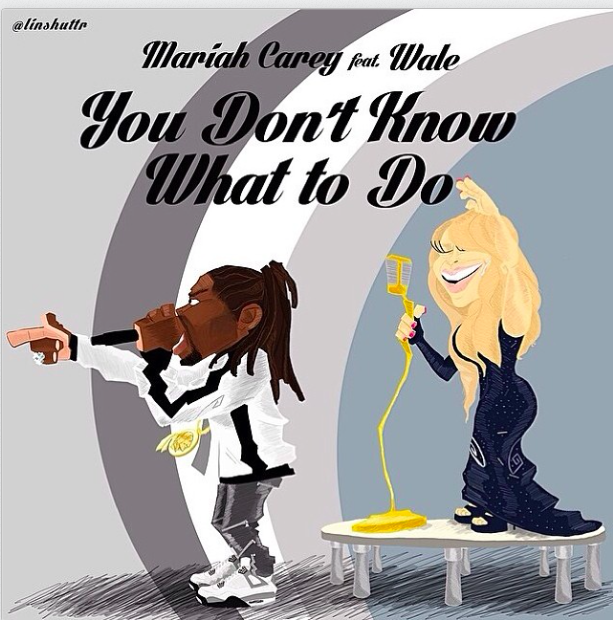
Mariah sings to her strengths on ‘Chanteuse’
Elysa Gardner, USA TODAY For a woman who has one of the most technically astonishing voices in pop music, Mariah Carey has at times seemed oddly inclined to try too hard. And who could blame her, really, given the gleeful snark that she has inspired in detractors — first for sounding (and looking) too perfect, then for her forays into hip-hop and attempts to sustain her viability as younger acolytes crowded the field. So what’s most striking about Carey’s new album — titled, rather insistently, Me. I Am Mariah …The Elusive Chanteuse (***½ out of four) and now streaming on iTunes Radioahead of its May 27 release — is how relaxed and confident she sounds. Gone is the self-consciousness that marred her last studio album, 2009’s Memoirs of an Imperfect Angel. Instead, Carey — whose delays of Chanteuse‘s release date inspired predictable hand-wringing (as did the less-than-spectacular performance of the lead singles) — gives the impression that her only concerns are meeting her own standards, and those of the fans who have stuck with her through everything. The tender, aching ballads and joyful pop-soul numbers here both mark a return to form and reveal increased nuance, particularly in the singing. The artful melisma, robust belting and decorative high notes are still there, but Carey spends a great deal of time using her supple middle and lower registers to convey feeling simply and directly. Tunes such as the pensive, piano-driven Cry and the dreamier Supernatural, an account of maternal love featuring Carey and husband Nick Cannon’s young twins, showcase the creamy and husky textures of her voice while keeping the focus on sentiment, not ornamentation. The spine-tingling Camouflage, co-written and produced by Carey and Big Jim Wright (other collaborators include longtime colleagues Jermaine Dupri and Rodney Jerkins), finds her pining performance embellished with gospel-tinged backing vocals. There’s also a poignant cover of George Michael’s One More Try, and the snappy, twinkling Meteorite, which begins with Andy Warhol’s observation that everyone will be famous for 15 minutes — which seems truer today than it did when he made it, or when Carey’s career launched 25 years ago, for that matter. Elusive or not, this chanteuse is a survivor, and that’s a rare thing in today’s fickle, polarized pop landscape.