

Author: JD

JAGGED EDGE TO RELEASE SEQUEL TO MULTI-PLATINUM ‘J.E. HEARTBREAK’ THIS FALL
New Single “Hope” to Premiere on VIBE.com May 30 (ATLANTA) – May 28, 2014 – So So Def Recordings and Hard Case Records has announced a new deal with BMG Primary Wave Artists Services to release the multi-platinum-selling groupJagged Edge‘s eighth studio album, J.E. Heartbreak Too, this fall 2014. The album’s lead single, “Hope,” will premiere on VIBE.com on Friday, May 30 – just in time for June’s Black Music Month. Written and produced by the group’s twin brothers Brian and Brandon Casey along with Grammy- winning songwriter/producer Bryan Michael Cox, “Hope” is a classic R&B throwback to the signature sound on the initial J.E. Heartbreak, which sold over 2 million records in 2000 and spawned the hits “Let’s Get Married” and “Promise.” “Making a sequel to a classic album is difficult,” says So So Def CEO Jermaine Dupri, who serves as executive producer on the upcoming LP. “We don’t want to stray from the blueprint of the first album. It’s definitely a challenge, but the fans won’t be disappointed.” Jagged Edge has reunited with Dupri and their original management team – Mauldin Brand Agency – for J.E. Heartbreak Too, which is a joint venture with their own Hard Case Records and So So Def, and is being released by BMG Primary Wave Artists Services. With over 8 million records sold across 7 studio albums (5 of them gold or multi-platinum), Jagged Edge is one of the most successful R&B groups in music. For nearly two decades, J.E. has issued numerous Top 10 singles under So So Def, including “Let’s Get Married,” “He Can’t Love You,” “Promise,” “Where the Party At” and “Walked Outta Heaven.” The group has won three Billboard Awards, two Soul Train Awards, a Lifetime Achievement Award from the World Music & Dance Awards and has earned various Grammy, BET, and American Music Award nominations. Performing since 1996, Jagged Edge has remained together as a unit and is one of the longest-lasting platinum-selling music groups with original members Brian and Brandon Casey, Kyle Norman and Richard Wingo. “We are so excited about our realignment with Jermaine Dupri, So So Def and the Mauldin Brand Agency,” said Brandon Casey. “Jermaine has given us the opportunity to launch our own HARD CASE Records with this venture. We are dedicating our first official single ‘Hope’ to single mothers all across the world.” For more information, follow Jagged Edge www.JEHeartbreak.com Follow us on Facebook www.facebook.com/135stAgency And Twitter: www.twitter.com/135StreetAgency Shante Bacon Founder/CEO [email protected] Twitter: @ShanteBacon Saptosa Foster Managing Partner [email protected] Twitter: @Saptosa135th

Why is Fur Hip Hop but Not Streetwear? By Alexander Gwilliam
On the big list of bad topics around the fashion dinner party table, nothing gets food flying like dropping the F-bomb (that’s “fur,” not the other one). For some, fur is the epitome of elegance: luxurious, timeless and remarkably practical in the cold. For others, it’s like wearing a crime scene. With such ironclad opinions on both sides of the debate, this is one area of controversy that just won’t die (unlike the animals involved). Yet the question of whether fur is morally acceptable in a society that eats meat, wears leather and generally asserts its dominance in all areas of the natural world is a relatively recent one. Go back as little as 60 years and the only outrage you’d find was how much it cost. Nowadays the wearing of fur is increasingly confined to niche markets. Of these, two stand out: high fashion and hip hop. While these are both areas with a great deal of influence on contemporary street style, their broad acceptance of fur has never made that jump. Even in a time when cruelty-free faux fur can be produced to a standard some would consider comparable to the real deal, the connotations of wearing it have lead to a rejection in most mainstream streetwear culture where other animal-derived products have flourished. Why the double standard? To understand that, you need to open up the history books… Mankind has worn fur for centuries; that much goes without saying. In the early years this was a matter of survival, but it didn’t take long for an element of exclusivity to creep in. With their incredibly high cost, the softest pelts like ermine, sable and mink were originally reserved for the very richest nobility. Then, as the phenomenon of the wealthy merchant classes grew in the 14th and 15th centuries, there came an explosion in the number of people with hard cash to drop on such luxuries. Faced with an invasion of aspirational common folk encroaching on their style, the upper classes panicked and brought in a series of “sumptuary laws,” specifically banning anyone not a part of their noble clique from wearing the furs they prized the most. As a result, owning such garments conferred not only financial worth but elite status, and those that did so gained a whole new level of outward superiority. In the time that followed, fur faded in and out of fashion. The surge in supply that came from the colonization of North America brought about a 250-year boom for the trade, but by 1850 European tastes had changed and the Native American tribes crucial for trapping the animals had been largely decimated by war, disease and genocide. In the 1920s and ’30s, a fur coat was the height of femininity, yet under the specter of two World Wars such extravagance was frowned upon and it wasn’t until the post-War period of the 1950s that it really returned as the decadent dress of choice – a look made infamous by icons like Audrey Hepburn, Marilyn Monroe and Raquel Welch. By the ’60s, wild fur trapping had all but dried up, leaving intensive, purpose-built farms to take over as the predominant supplier to the world. This led to the birth of the Animal Rights Movement shortly after, throwing a negative spotlight on the practice for the first time. But, as the capitalist nirvana of the ’80s rolled around, fur fashion moved back on top as the ultimate combination of carefree wealth and excess. It was towards the end of this period that hip hop – following on from the carnivalesque “pimp culture” of the ’70s – began to take an interest… What resulted was a situation remarkably similar to that of Middle Age Europe. All of a sudden this icon of rich, white success had become the trophy of young, black youth, and while the two groups shared different means of making that purchase, the reason behind it was largely the same. Here was a tangible, glaringly obvious display of wealth to flaunt in front of your peers and potential detractors. Yet for the hip-hop community, it became an act of defiance – a statement that the private world occupied by the rich was being torn open from underneath, and this time there weren’t any laws to prevent the new blood from dressing the same way. Today this trend continues unabated. Kanye, Jay Z, Pharrell, Outkast, even Macklemore – almost without exception, hip-hop’s major (and minor) players choose to be photographed in fur, draped in decadent skins like the kings and queens of old. They want you to know they’ve arrived at the top table and that they worked hard enough to get there that animal rights aren’t exactly high on their list of priorities. It’s that underlying sense of urgency that keeps fur of all kinds out of mainstream street fashion. Authenticity is everything, and that’s built on a cocktail of material cost and “fuck you” attitude, not feel or looks. In fact, so powerful are the connotations of fur that even the suggestion is too much for many to bear. Aside from the odd trimmed hood on a winter coat, faux fur is largely seen as a cheap imitation rather than a viable alternative. When A$AP Rocky stepped out on 106 & Park in a Balmain racoon jacket or when Wiz Khalifa kitted up with Cam’Ron in the video for “The Bluff,” there were no clothing designers rushing to produce a more palatable, affordable, death-free alternative for the masses. Waka Flocka Flame posed nude for PETA, calling on the world to abandon animal slaughter for fashion, yet you won’t find many brands using synthetic mink for their winter collection or artificial chinchilla in their lookbook. The reason? Ultimately, fur isn’t so much a material to make clothes from as a means to get a message across, and no amount of technical innovation or imitation can change that. In modern streetwear, “fur” is either so ridiculous that it could never be believable (think Jeremy Scott or the new LeBron), or it’s something designers won’t touch with a 50-foot pole. While almost all other aspects of hip-hop culture find their way into street fashion in one way or other, fur is still a bridge too far, and without the means to separate the politics from the product it will always be a costume of sorts, and never simply clothing.


Moncler W Fall/Winter 2014 Collection
I LOVE MONCLER Moncler has released a preview of its Moncler WFall/Winter 2014 collection. This sub-line is the result of a collaboration with Japanese brandWhite Mountaineering, fusing the two labels’ styles. This season’s lineup is no different from previous ones in terms of the investment of quality, while the finish is distinctly contemporary. It features quilted down feather coats and jackets in a refined selection of colors, with a smattering of interesting patterns. Also included are trousers; some in matching materials and a range of accessories.
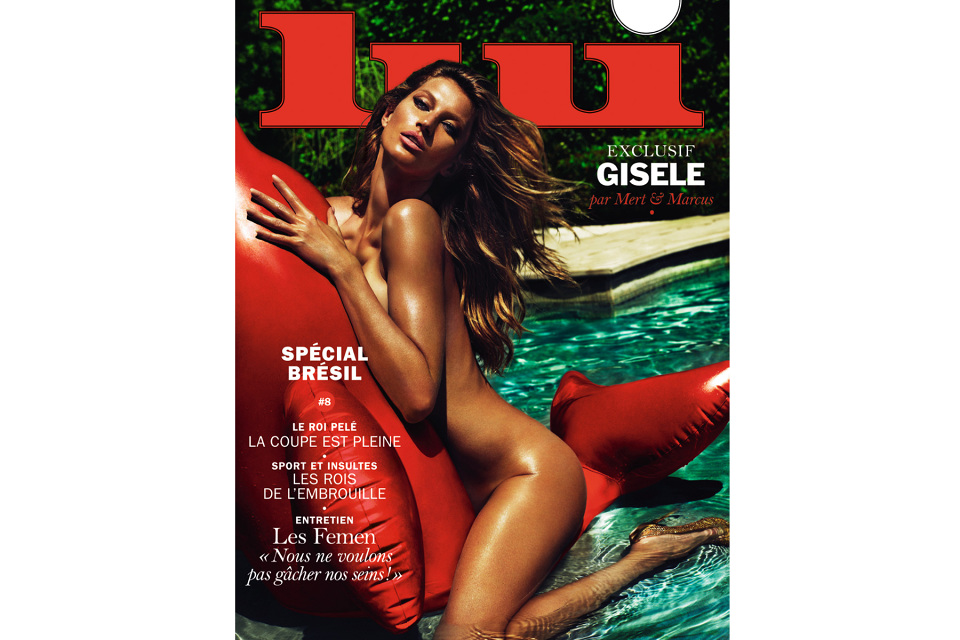
Gisele Bundchen by Mert Alas & Marcus Piggott for ‘Lui’ Magazine June 2014
Following covers featuring Kate Moss and Rihanna, the latest issue of the French monthly hits stands Today and includes a 12-page editorial on the world’s highest paid model. Subscribe to the magazine in both print and digital versions here.


Migos ft. Rich Homie Quan, Young Thug & Jermaine Dupri – New Atlanta
Migos will be releasing their ‘No Label 2′ mixtape on iTunes come June 3rd and with that will come their anticipated ‘New Atlanta’ collaboration with Rich Homie Quan, Young Thug, and Jermaine Dupri.
MARQUEE, LAS VEGAS
http://marqueelasvegas.com corporate event