

Author: JD

Sony Music to Exit Old CAA Building
Sony Music is moving onto the Sony Pictures Studios lot in Culver City during the next two years, sources tell The Hollywood Reporter. Sony Entertainment CEO Michael Lynton aspires to synergize the company’s properties within one complex, a la Disney’s Burbank headquarters. Currently, Sony Music is based in CAA’s former home at 9830 Wilshire Blvd. in Beverly Hills. The 75,000-square-foot, three-story space, designed by I.M. Pei and featuring a wall-sized Roy Lichtenstein painting, has been the L.A. home to Sony labels Columbia, RCA and Epic Records as well as Simon Cowell‘s Syco since 2008, when the company signed a 10-year lease at $4 a foot plus annual operating expenses of nearly $1 million. Bringing music to the 45-acre Sony lot would further Lynton’s cost-cutting mandate. In New York, Sony Music is scheduled to move downtown from its offices at 550 Madison in January. A Sony rep declined comment other than to confirm that plans to relocate to 11 Madison Ave. were on schedule. This article was originally published by The Hollywood Reporter.

The North Face Purple Label Spring 2015 Luggage Collection
Today we take a closer look at the new Spring 2015 luggage collection from The North Face Purple Label. The quality Japanese diffusion line of the outdoor brand continues to deliver solid products season after season. For Spring/Summer 2015,

INAN Spring/Summer 2015 Lookbook
Head over to the label’s website for further info, and from more upcoming labels check out our latest Under The Radar piece spotlighting promising newcomers in the Highsnob universe. You can shop the full collection now here.

Apple spending £1.25 billion on new green data centres in Europe
Apple is to build two huge data centres, powered by renewable energy, as part of its biggest ever European project. It will spend £1.25 billion on the facilities, which will be in Ireland and Denmark. The two centres will power iTunes and the App Store, as well as Apple’s other online services. The two new facilities are expected to be operational by 2017, and will each measure 166,000 square metres. “This significant new investment represents Apple’s biggest project in Europe to date,” said Tim Cook, Apple’s CEO. The news comes as Apple highlights its contributions in Europe. It has paid out €6.6 billion to European developers since the App Store began, it said, and it claims that nearly 530,000 jobs have been created by iOS development. There are 61,800 registered Apple developers in the UK, the biggest number of any European country. Apple itself employs 18,300 people in Europe and is expanding further. While all Apple data centres run on renewable energy, the new facilities will have “the lowest environmental impact yet”, the company said. The company didn’t say what form of green power they will run on, but said that it would work with local partners to develop “additional renewable energy projects”.

Congratulations To Patricia Arquette
This Is A Big win going into CSI CYBER, premiering March 4th

Chris Brown’s Art Sells for $60K at Miami Auction
Chris Brown has artistic talent that can see him making a name for himself in the art world long after his time on the mic is over. The singer’s paintings recently brought in over $60,000 at a South Florida auction, reports Page 6. Along with street artist KAI, Brown put together several pieces for Fine Art Auctions Miami’s Urban Art Week. The duo’s pieces were on display alongside famed painters like KAWS, Shepard Fairey and Keith Haring. Two of Brown’s canvasses sold for $25,000 each, while another brought in $12,000. Half of the proceeds for the event are slated to go to charity. Check out more personal art from Brown’s collection, here.

Oscar’s First Black Winner Accepted Her Honor in a Segregated ‘No Blacks’ Hotel in L.A.
By Seth Abramovitch This story first appeared in the Feb. 27 issue of The Hollywood Reporter magazine. On a February afternoon in 1940, Hattie McDaniel — then one of the biggest African-American movie stars in the world — marched into the Culver City offices of producer David O. Selznick and placed a stack of Gone With the Wind reviews on his desk. The Civil War epic, released two months earlier, had become an instant cultural sensation, and McDaniel’s portrayal of Mammy — the head slave at Tara, the film’s fictional Southern plantation — was being singled out by both white and African-American critics as extraordinary. The Los Angeles Times even praised her work as “worthy of Academy supporting awards.” Selznick took the hint and submitted the 44-year-old for a nomination in the best supporting actress category, along with her co-star, Olivia de Havilland, contributing to the film’s record-setting 13 noms. READ MORE: Mo’Nique: I Was “Blackballed” After Winning My Oscar The 12th Academy Awards were held at the famed Cocoanut Grove nightclub in The Ambassador Hotel. McDaniel arrived in a rhinestone-studded turquoise gown with white gardenias in her hair. (Seventy years later in 2010, a blue-gown– and white-gardenia–clad Mo’Nique, one of 11 black actors to win Academy Awards since, was the only one to pay homage to McDaniel while accepting her best supporting actress Oscar for Lee Daniels‘ Precious.) McDaniel then was escorted, not to the Gone With the Wind table — where Selznick sat with de Havilland and his two Oscar-nominated leads, Vivien Leigh and Clark Gable — but to a small table set against a far wall, where she took a seat with her escort, F.P. Yober, and her white agent, William Meiklejohn. With the hotel’s strict no-blacks policy, Selznick had to call in a special favor just to have McDaniel allowed into the building (it was officially integrated by 1959, when the Unruh Civil Rights Act outlawed racial discrimination in California). “Every picture and every line, it belonged to Hattie. She knew she was supposed to be subservient, but she never delivered a subservient line,” says MaBel Collins (center), 77, partner of Edgar Goff, McDaniel’s grandnephew. McDaniel’s descendants were photographed Feb. 13 at The Culver Studios in Culver City, a few yards from Gone With the Wind producer David O. Selznick’s former offices and where most of the movie was filmed. READ MORE: Hattie McDaniel Defies Critics in 1947 THR Essay: “I Have Never Apologized” A list of winners had leaked before the show, so McDaniel’s win came as no shock. Even so, when she was presented with the embossed plaque given to supporting winners at the time, the room was rife with emotion, wrote syndicated gossip columnist Louella Parsons: “You would have had the choke in your voice that all of us had.” The daughter of two former slaves gave a gracious speech about her win: “I shall always hold it as a beacon for anything I may be able to do in the future. I sincerely hope that I shall always be a credit to my race and the motion picture industry.” But Hollywood’s highest honor couldn’t stave off the indignities that greeted McDaniel at every turn. White Hollywood pigeonholed her as the sassy Mammy archetype, with 74 confirmable domestic roles out of the IMDb list of 94 (“I’d rather play a maid than be a maid,” was her go-to response). The NAACP disowned her for perpetuating negative stereotypes. Even after death, her Oscar, which she left to Howard University, was deemed valueless by appraisers and later went missing from the school — and has remained so for more than 40 years. Her final wish — to be buried in Hollywood Cemetery — was denied because of the color of her skin. McDaniel’s career was defined by contradictions, from performing in “whiteface” early on to accounts that her refusal to utter the N-word meant it never made it onscreen in Gone With the Wind. “We all grew up with this image of her, the Mammy character, kind of cringing,” says Jill Watts, author of Hattie McDaniel: Black Ambition, White Hollywood. “But she saw herself in the old-fashioned sense as a ‘race woman’ — someone advancing the race.” Adds Mo’Nique: “That woman had to endure questions from the white community and the black community. But she said, ‘I’m an actress — and when you say, “Cut,” I’m no longer that.’ If anybody knew who this woman really was, they would say, ‘Let me shut my mouth.’” A staging for a 1939 Oscars newsreel had McDaniel standing by a table laden with awards; her best supporting actress plaque is up front. ••• Said McDaniel in 1944 about her disappointing prospects following her Oscar win, “It was as if I had done something wrong.” Selznick’s first move had been to dispatch her on a live, movie-palace tour as Mammy, which played to half-filled houses. But he saw less and less use for his typecast star, and Warner Bros. eventually bought out her contract. Even after World War II, she continued to play underwritten maid parts in such films as 1946’sSong of the South, Walt Disney’s adaptation of the Uncle Remus stories, now considered a rare racist blot on the studio’s legacy. In her final years, McDaniel found success on the radio, taking over in 1947 from Bob Corley — a white voice actor who mimicked an African-American woman — as the title character in Beulah, a hit comedy series about a live-in maid. It was the first time an African-American woman starred in a radio show, earning McDaniel $1,000 a week. She was cast in the TV version of Beulah in 1951 but shot only six episodes before falling ill. She died Oct. 26, 1952, of breast cancer. She was 57. See more Oscars: 10 Record-Holding Winners and Nominees (Photos) McDaniel with Leigh as Scarlett O’Hara in a scene from the 1939 film, which won best picture. Though she had been married four times — losing her first husband to pneumonia, the others to divorce — McDaniel never had children of her own. The McDaniel bloodline lives on through her sister, Etta. Etta’s grandson Edgar Goff, who devoted much of his life to keeping Hattie’s memory alive, died in 2012. “He was an urban engineer by profession, but his passion was black Hollywood, and the Hattie McDaniel story in particular,” says Edgar’s daughter Kimberly Goff-Crews, secretary and vice president for student life at Yale University. Edgar would regale his kids with stories of their great-great-aunt Hattie, who had hoped her descendants might choose a different path. “My father said that Hattie was pretty clear that she didn’t want the family to be in Hollywood,” says Goff-Crews. “She wanted them to have ‘good, normal’ jobs, so to speak — doctors and lawyers. She was no stage mom.” In her last days, McDaniel threw a deathbed party, coincidentally attended by her grandnephew’s future life partner MaBel Collins, then 15, who recalls “people milling around, drinking, laughing. Guests would go in one or two at a time and visit with her. I had no idea who that dying movie star was until a couple years later, I saw Gone With the Wind> — and realized that was Hattie in the bed.” In her last will and testament, McDaniel left detailed instructions for her funeral. “I desire a white casket and a white shroud; white gardenias in my hair and in my hands, together with a white gardenia blanket and a pillow of red roses,” she wrote. “I also wish to be buried in the Hollywood Cemetery,” today known as Hollywood Forever Cemetery. But the resting place of numerous showbiz types — including GWTW director Victor Fleming — had a whites-only policy. Hattie was buried at Angelus-Rosedale Cemetery, the first L.A. cemetery open to all races. In 1999, Edgar successfully lobbied to get a marble memorial to McDaniel placed at Hollywood Forever. READ MORE: L.A.’s Ugly Jim Crow History: Nat King Cole’s Dog Poisoned in Hancock Park McDaniel also specified what was to become of her Oscar, which an appraiser dismissed as having “no value” in an accounting of her estate. Despite working steadily until her death, McDaniel left the world in debt: Her belongings were valued at $10,336.47 (about $95,000 today), $1,000 less than what she was deemed to owe the IRS. The Oscar, she wrote, was to be left to Howard University, but the award went missing from the Washington, D.C., school during the early 1970s. In 2011, inspired in part by Mo’Nique’s Oscar-night tribute, W. Burlette Carter, a professor at George Washington Law School, undertook a yearlong investigation of the missing Oscar. Though the school was eventually cooperative, it never gave her permission to search its stacks. Carter, who says the Oscar would today be worth half a million dollars, dismisses one theory that it was tossed into the Potomac River by “angry protesting students” after Martin Luther King Jr.‘s 1968 assassination. She discovered that the Oscar never came to the school from McDaniel’s estate, but was gifted in the early 1960s by actor Leigh Whipper, a friend of Hattie’s from when she ran the Hollywood Victory Committee division that entertained black troops during World War II. The last time anyone remembers seeing the Oscar was 1972, when it was removed from a glass case in the school’s drama department, which has since been gutted. (Howard declined comment.) “It’s a sad story,” says Carter, “but this Oscar represents a triumph for blacks — because we can look back and see that things really are so much better now than they were at that time.” McDaniel (center), in front of her house on South Harvard Boulevard in L.A.’s West Adams, with World War II volunteers in 1942. McDaniel was instrumental in a 1948 U.S. Supreme Court decision striking down restrictions against African-Americans moving into the area, which is southwest of downtown. ••• One of 13 children, McDaniel was born June 10, 1893, into extreme poverty in Wichita, Kan. Following the family’s move to Denver, she observed her brothers, Otis and Sam, who dubbed themselves the “Cakewalk Kids” after a dance fad that doubled as a sly caricature of white cotillions. Hattie, determined to avoid her mother’s and sisters’ fates as maids, joined the show, doing impressions in “whiteface” for African-American audiences. “She was in many ways radical,” says Watts. “Her impressions in whiteface, well, people — certainly women — didn’t do that then.” READ MORE: First Black Oscar Winner’s Speech: Hattie McDaniel Thanks Academy for Its “Kindness” In 1929, McDaniel landed a gig in a road tour of the hit musical Show Boat. But the stock market crash led to layoffs by producer Florence Ziegfeld Jr., stranding a penniless Hattie in Milwaukee. Undaunted, she took a job as a bathroom attendant at Sam Picks Suburban Inn and stepped in when the venue had no headliner. Her showstopping singing and dancing earned her $90 in tips and a job on the spot. In 1931, McDaniel moved to Los Angeles, joining acting siblings Etta and Sam. Opportunities were limited to pleasant and abiding servant roles: The moral-code-enforcing Hays Office prohibited mixed-race romances or anything considered to be “threatening behavior” by African-American characters. For an actor who was light-skinned or couldn’t capture the faux “Black English” dialect conceived by white screenwriters, it was difficult to find work. Hattie, with her dark skin and ample figure, started booking parts immediately, including an uncredited speaking role in 1932’s Blonde Venus as Marlene Dietrich‘s servant. In 1999, McDaniel received a cenotaph at Hollywood Forever Cemetery. Her family decided to keep her remains at the original burial site in Angelus-Rosedale Cemetery. READ MORE: Oscars: U.S. Congressman Expresses “Shock at the Lack of Diversity” In 1934, she landed her first studio contract, earning $300 for 11 days of work in Fox’s Judge Priest, a racist comedy that starred controversial African-American performer Stepin Fetchit, who became a millionaire off his “laziest man in the world” character. According to historian Watts, Fetchit gave McDaniel a chilly reception on the set, threatened by her reputation as a rising comedy star. But the film’s director, John Ford, loved Hattie and expanded her role. At 41, with hundreds of uncredited films under her belt, McDaniel finally saw her name on the silver screen, misspelled as “McDaniels.” By 1935, McDaniel was being touted as “one of the most prominent performers of her race” to promote the Clark Gable comedy China Seas. She and Gable forged a close friendship during filming. (When Gable, who loved pranking her, learned his co-star wasn’t welcome at GWTW’s 1939 Atlanta premiere — Georgia law prohibited blacks in white theaters — he refused to go. Only at McDaniel’s urging did he relent. Also: Among the teen choir members costumed as slaves at the event was a young Martin Luther King Jr.) It was Bing Crosby, a good friend of Hattie’s brother Sam (the only African-American ever to appear on I Love Lucy), who suggested that Selznick cast “that Queenie from [1936’s] Show Boat” for her defining role. Selznick, married to the daughter of the most powerful man in Hollywood — MGM head Louis B. Mayer — had paid a staggering $50,000 for the rights to Margaret Mitchell‘s 1936 novel. The NAACP made no secret of its disdain for the book’s frequent utterance of the N-word (by then banned by the Hays Code), its sympathetic Ku Klux Klan portrayal and its depiction of slaves as participants in their own subjugation. A shrewd Hollywood player, Selznick used his status as a Jewish-American bearing witness to the Nazis’ rise when he wrote to Walter White, NAACP executive secretary: “I hasten to assure you that as a member of a race that is suffering very keenly from persecution these days, I am most sensitive to the feelings of minority peoples.” Selznick pledged to omit offending material, though he fought to keep the N-word in the script for historic accuracy. The word, which would have been spoken by Mammy, never appears in the movie, leading some historians to theorize that McDaniel refused to utter it. McDaniel — who later wrote in the Sept. 29, 1947, edition of The Hollywood Reporter, “I have never apologized for the roles I play” — coveted the part but suspected she’d lose it to Louise Beavers of 1934’s Imitation of Life. As Selznick mounted his “nationwide search,” the hunt for Mammy reached a fever pitch. Even first lady Eleanor Roosevelt suggested her own maid. On Jan. 27, 1939, with Selznick having secured the final funding from his father-in-law, McDaniel got the call she’d been waiting for. Her contract paid $450 a week for 15 weeks of shooting. Mammy was hers. And so, too, would be the Oscar.
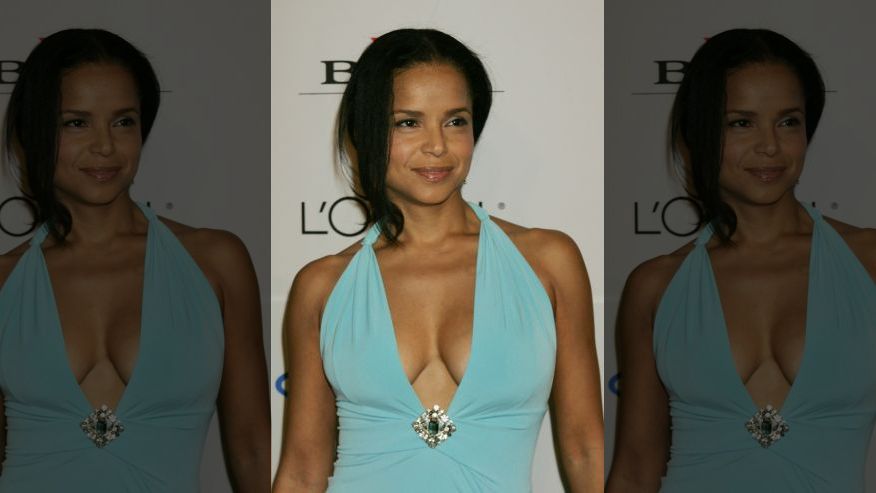
Young & the Restless’ actress sues CBS over racism claims
This award-winning black actress feels like she starred on a show that should’ve be called “The Young & the Racists.” Victoria Rowell socked CBS, co-producers Sony Pictures and Bell-Phillip Television Production Inc. and other parties with a lawsuit Wednesday alleging she’s been repeatedly snubbed trying to reprise her once-popular role on The Young & the Restless – because she’s been a longtime advocate for more black characters on daytime soap operas. The 55-year-old actress in the Manhattan federal court suit accuses her ex-producers and other execs of retaliating against her by not welcoming her back –despite numerous requests since 2010 – because of critical comments she’s made both on and off camera about lack of diversity in the soap industry. Rowell — who was nominated for three Daytime Emmy Awards and earned 11 NAACP Image Awards while starring as feisty ballerina-turned-model Drucilla Winters from 1990 to 2007 — even alleges on-set racism went on for years with any repercussions. She claims that even though “black characters” such as herself “became important” in helping keep The Young & The Restless remain the top-ranked soap over the past 25 years, the actors and actresses playing them were treated as “second-class citizens.” For instance, white actress and soap star icon Melody Thomas Scott, who plays Nikki Newman, once ran onto the set “dancing wildly and wearing an oversized Afro wig to mock” Rowell’s “Afro-styled hair that day,” the suit alleges. Another white actress, Michelle Strafford, once allegedly “collaborated” with a white producer and a white director before spitting on Rowell, calling her a “freak” and saying “no one likes you.” The suit also paints Rowell an an “advocate for Y&R’s black actors and actresses” whose “attempts to effect change were often rejected or ignored,” including pleas for them to be more prominently featured in press photos for the show. It claims she successfully fought hard for a on-set hairstylist specifically for black actors and actresses – only to learn later the hairstylist was “banned from the Y&R hair and makeup room.” The suit says: ‘“Ms. Rowell had to lobby and win the stylist’s admission to that room. But then white actors and actresses taunted Ms. Rowell and the stylist with impunity, and told Ms. Rowell that her hair ‘smelled.’”’ The suit also claims that Rowell has even been blacklisted from reprising her same role on the sister CBS soap “The Bold and the Beautiful” and can’t get another job on daytime TV because of her outspokenness. The suit even takes issue with Y&R failing to notify her before developing a storyline where Rowell’s character went insane in 2007 and was “placed in a straight jacket and dragged to an asylum.” Her character was written off the show later that year at her request when she fell off a cliff and apparently died. But loyal fans have long wondered if she was really dead — and have lobbied for “Drucilla’s” return. Show execs have previously claimed Rowell wasn’t brought back due to creative reasons that had nothing to with race. CBS issued a statement saying it’s “disappointed to learn that, after leaving the” soap “on her own initiative, Ms. Rowell has attempted to rewrite that history through lawyers’ letters and a lawsuit that has no merit.” “We harbor no ill will toward Ms. Rowell, but we will vigorously defend this case.” Sony declined comment and Bell-Phillip did not immediately return messages. This article originally appeared on the New York Post.