

Author: JD

Boko Haram kills 50 women & children in Nigerian town, captures up to 500 – report
DAMN!!! Boko Haram extremists have reportedly kidnapped more than 400 women and children from the Nigerian town of Damasak, which was freed earlier this month by Niger and Chad troops. The mass kidnapping took place in northeast Nigeria, on the country’s border with Niger. The Niger commander of the Niger-Chad forces in Damasak, Lieutenant Colonel Toumba Mohamed, has confirmed that residents had reported between 400 and 500 women and children were kidnapped. According to Reuters, witnesses suggested that the number of kidnapped could be around 500 people. “They took 506 young women and children [in Damasak]. They killed about 50 of them before leaving. We don’t know if they killed others after leaving, but they took the rest with them,” Souleymane Ali, a trader, told Reuters. The figures have not been officially verified. On March 17, Nigeria’s army managed to regain control over large swathes of the northeast of the country, but the extremists are still in control of three regions. Last week, troops from Niger and Chad found the bodies of about 100 people buried in a mass grave under a bridge leading out of Damasak. Read moreNew Boko Haram victims: Mass grave of almost 100 bodies found in Nigeria In the beginning of the year, Boko Haram controlled 20 regions of the country. But after an offensive by the Nigerian army, with its allies from Chad and Niger, the militants lost a number of battles and had to withdraw from most of the territories they were controlling. Over the last six years, Boko Haram has killed more than 13,000 people in an effort to establish an Islamic caliphate in northeast Nigeria. Boko Haram started its insurgency after an uprising in 2009, when they began carrying out massacres, kidnappings and raids. Nearly 300 schoolgirls were abducted by Boko Haram in the town of Chibok last April. This caused international outrage and attracted global attention to their six-year insurgency. The group has recently pledged allegiance to the Islamic State jihadist group in Syria and Iraq. Elections planned for last month in Nigeria, Africa’s most populous country, were delayed due to a sharp increase in violence.

How Dr. Dre’s Headphones Company Became a Billion-Dollar Business
L-R: Beats Co-Founders Jimmy Iovine and Dr. Dre, and Beats President Luke Wood IMAGE: In six years, Interscope records mogul Jimmy Iovine and hip-hop icon Dr. Dre have turned Beats By Dr. Dre headphones into a $1 billion-plus business. Now, together with new president and former Interscope executive Luke Wood, they’re faced with a new challenge: taking a hot brand and making it, you might say, even hotter. To that end, Beats Electronics has introduced portable and wireless speakers, co-branded smartphones–and in January it even launched a new streaming music service, Beats Music, to compete with the likes of Spotify. Beats Electronics, despite some ferocious competition, still controls almost 70 percent of the market for premium headphones. For that it can thank lightning-fast marketing and an unbeatable grasp of pop culture. Iovine and Wood explain how they and Dr. Dre pulled it off–and what they have to do to stay on top. Find the Golden Niche “You’ve got to be lucky enough to identify a problem where you think you can help,” says Iovine. Back in 2006, Iovine felt the music industry had two problems: first, the degradation of record sales because of piracy. Second: the degradation of audio quality because of Apple’s plastic earbuds. “Apple,” he says, “was selling $400 iPods with $1 earbuds. Dre told me, ‘Man, it’s one thing that people steal my music. It’s another thing to destroy the feeling of what I’ve worked on.’ ” But the Cupertino, California, tech giant was both their bane and their inspiration. “Steve Jobs was the first to marry technology directly with popular culture,” says Iovine. “I thought, Wow, technology is the new artist.” He and Dre settled on a plan. “They’re making a beautiful white object with all the music in the world in it,” Iovine says. “I’m going to make a beautiful black object that will play it back. Dre and I decided to market this product just like it was Tupac or U2 or Guns N’ Roses.” Ignore the Critics “We got dumped on by audiophiles on Day One,” says Iovine. Beats headphones weren’t tuned evenly, like the usual high-end headphones. They were tuned to make the music sound more dramatic. Iovine adds: “We wanted to recreate that excitement of being in the studio. That’s why people listen.” But skeptics also wondered why anybody would pay $200 for headphones when you got the earbuds for nothing. “I was like, ‘Bad audio is free,’ ” Iovine says. “When you believe in something, the last thing you say to yourself is, Well, no one’s doing this, so there must be no good reason to do it.” Assemble an All-Star Focus Group NBA Star LeBron James When developing the first Beats headphones, Iovine would lay out various prototypes in his Interscope offices and then poll everyone who came to see him. “It was this incredible parade of the world’s great artists,” says Wood. “M.I.A. or Pharrell Williams or Gwen Stefani or Will.i.am would come around, and I’d ask them, ‘What do you think of this one? What about this? What about that?’ ” says Iovine. “It’s not a numbers thing. I go to people with great taste.” As he and Dre prepared to launch the final version of Beats, Iovine sent a pair to another world-famous guy: LeBron James. Iovine had been hanging out in the editing room with James’s friend and business partner Maverick Carter during the development of a documentary on the basketball star. “Mav called me back and says, ‘LeBron wants 15.’ ” Iovine sent them, and they turned up on the ears of every member of the 2008 U.S. Olympic basketball team when they arrived in Shanghai. “Now that’s marketing,” says Iovine. What Are Consumers Thinking About? Make That “When we look at marketing for our year ahead, we don’t look at what products have the best margin or which ones sell best–that’s detrimental to progress and innovation,” says Wood. “We ask, ‘What do we think the consumer should learn about?’ ” This year, they’re talking a lot about wireless speakers and headphones–“We want to teach people that Bluetooth can sound good,” says Wood. Trust Your Gut and Double Down “I always go back to my experience in the music business,” says Wood. Today, as then, Wood looks for the “tug”–the little sign that he has a hit. Then he trusts his gut, and doubles down. Back in the day, a tug could be an album that gets sudden critical acclaim or a band that suddenly sells a lot of merchandise at its gigs. Now, he says, he gets the same sense from how fans–and Iovine and Dre’s music-industry buddies–respond to Beats’s ads and products. When an ad featuring Brooklyn Nets star Kevin Garnett with the slogan “Hear What You Want” got a big response on Twitter–and Iovine got complimentary emails from none other than Will.i.am and rapper P. Diddy–“we knew we had something,” says Wood. Beats rolled out more ads, including one featuring a press conference with outspoken Seattle Seahawks cornerback Richard Sherman, that did even better. It ran in the third quarter of the playoff game against San Francisco. When Sherman talked trash about his opponents in the postgame commentary, the Beats ad also got attention. Move Pop-Star Fast Robin Thicke When Iovine heard Robin Thicke’s “Blurred Lines,” he smelled a hit–for Beats Electronics. Iovine and Wood got the rights to use the song in an ad and then got Thicke to reshoot the music video–within five days of the original shoot. Then Wood phoned up the CEO of RadioShack and offered to make the ad a dual promotion; RadioShack partly footed the bill. Beats has moved even faster. The Sunday before Black Friday 2012, Will.i.am phoned Iovine: He had just recorded a single with Britney Spears–would it make a good Beats ad? Within 72 hours, Beats filmed Will.i.am and cut a new Black Friday commercial with the song; it aired during Thanksgiving football games. “We got to break a new song, and Will.i.am got millions of dollars in broadcast advertising exposure,” says Wood. Stand on the Shoulders of Giants Co-marketing deals with big brands are a big part of the Beats playbook. Since the beginning, they have put Beats audio in products ranging from HP laptops to Chrysler 300s to HTC cell phones–and Beats has enjoyed plenty of the big guys’ marketing muscle along the way. “We sold half a billion worth of product before we paid for one ad,” says Iovine. Hide the Gold Records in the Basement “I’m always thinking about what Beats is not, about what’s missing,” says Iovine. “When you succeed, don’t think you’ve done this incredible thing. Stay focused on the product. I never collected the gold records of the albums I engineered.” (Iovine has worked for U2 and Tom Petty.) “My father asked me why I never put them up. I said, ‘Dad, they haunt me. I can’t think about anything yesterday.’ ”

2 Chainz – New Hawks CEO (Part 1)
The Atlanta Hawks are changing things up a bit and have brought hip-hop artist 2 Chainz on as the team’s new CEO before his performance at the March 27 game against Miami.

MARTY BANDIER ON STREAMING: THE LIMITS OF FREE
The King of Music Publishing on Freemium and Fair Compensation Sony/ATV chief and King of Music Publishing Marty Bandier has been a fierce advocate for songwriters’ rights throughout his career, and with the growth of streaming services has focused his energies on ensuring that creators are properly compensated. When we asked him to weigh in with us, he sparked up a Cohiba and got to business. Do you share the positions recently expressed by Doug Morris and other major-label leaders that the industry should move to end the “freemium” tier of unlimited, ad-supported, on-demand streaming? Yes. There is little to differentiate at present between the free tier offered by on-demand streaming services and the paid-for tier. The free service is simply too good and provides little incentive for consumers to upgrade by paying for a subscription service every month. The unlimited part is the big problem. It is not a trial offer and there is no cut-off point. It is simply a free service with no time limit. What would be the ideal streaming outcome for songwriters? With cover versions and user-generated content, do they derive significantly greater benefit from ad-supported streaming than recording artists who don’t write? We all love Spotify. We love any service that provides opportunities for our writers, but only if they can earn a fair living from it. In the U.S. we are subject to a compulsory license, which results in unacceptably low royalty rates for our songwriters, whereas in other territories, including Europe, we can negotiate directly with services to agree on royalty rates. We would like to be able to do the same in the U.S. so we can achieve fair market rates for our songwriters. At present songwriters are not deriving significantly greater benefit from ad-supported streaming compared to recording artists. Although YouTube offers opportunities for songwriters for cover versions and user-generated content, YouTube is an even bigger problem. While YouTube is the biggest music service out there, it continues to have issues identifying the videos posted up and then matching them to the right content owners. That’s our biggest problem. There are millions and millions of plays that are not credited properly, and the money is therefore not flowing to the right people. How do you respond to the argument that freemium remains valuable as a way of “on-boarding” consumers to the streaming model, and that Spotify is proving successful in moving its users from free to paid? What role, if any, might there be for some kind of free streaming tier? It can have a role, but not as an unlimited free tier. If you buy a new car you sometimes get a limited, free trial of SiriusXM. Then one morning, when you suddenly find it’s no longer there, your first instinct is to accuse your wife of interfering with the radio, before you realize your free trial has come to an end—and if you want to continue with the service you have to start paying for it. It should be the same with Spotify and any of the other services with free tiers. It should be for 90 days or less and come with certain conditions, like you have to supply your credit card information. What do you see as the primary challenges of transitioning consumers to the subscription streaming model? What do you anticipate from the forthcoming Beats/iTunes service? Again, it comes down to there not being enough incentives for someone to upgrade from free to subscription. On Spotify, all the tracks that are available on the paid-for service are available on the free service as well, so why would you want to pay out $9.99 for exactly the same songs? We love any service that provides opportunities for our writers, but only if they can earn a fair living from it. Anything Apple ever does is always worth paying attention to, given their incredible track record, so we are anticipating something interesting from them in this space. We expect their streaming service will be strong on curation and we hope for the sake of our songwriters it doesn’t have an unlimited free tier. How, if at all, do you think the “Blurred Lines” decision is affecting the narrative today? The case has obviously generated a lot of press coverage, but it needs to be put into some context. It is a one-off decision by a jury, and the verdict has not changed the copyright laws in any way. You still cannot copyright a genre, feel or groove of a song. People have always been influenced by their musical heroes, and it would be wrong if that couldn’t continue. But all the publicity surrounding this case may mean the number of similar cases could increase.
Swedish Producer iSHi on Pusha T, Swedish Fashion and the Shifting Role of Producers
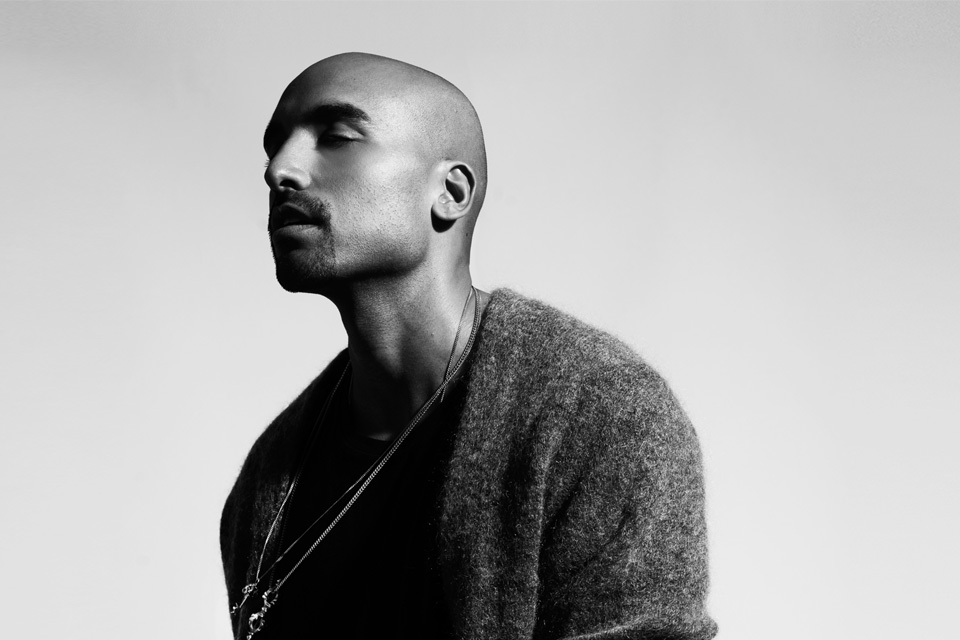
February 27 marked the release of a track that was arguably iSHi’s highest-profile venture to date – “Push It” alongside famed Clipse member and emcee Pusha T. The song’s thunderous production brought in a crisp, old-school drumline paired with reverberating synth harmonies for a rampant marriage of musical elements. Pusha’s unrestrained stanzas and trademark street hustle bravado open the track with “Push it to the limit, if you wanna win it / Harbor no room for the weak, nor the timid.” There’s no doubt about it, this tune claps. Things are looking promising for Swedish producer iSHi – real name Eshraque Mughal – who is plotting the drop of several more singles throughout 2015, all leading up to the release of a full-length project that calls upon some seriously prominent collaborators, the likes of whom can certainly hold their own in the ring with Pusha T. As the stage is set for some big steps to be made this year, iSHi seems exceptionally comfortable surrounded by his circle of Stockholm creatives, especially director and friend Alex Wessley, as the pair share a powerful vision for the future of iSHi’s sound. We sat down with both iSHi and Alex in Stockholm at the At Night Management headquarters – home of Avicii – to hear about what is slated for 2015. What are the origins of the name “iSHi?” The name actually comes from my mother. She called me iSHi. How did you first get in touch with Pusha T? I’ve been listening to Pusha for a long time now, and I’m a big fan. He’s one of my personal favorites. I was fortunate to be in the studio with his management, recording with one of his label mates, and I asked them whether Pusha would be interested in the track “Push It.” It took a lot of work and effort from all parties but when Pusha heard it, he liked the idea, he thought it was fresh. So he got on the track. It came out great. Was the process any different when working with Pusha versus working with previous collaborators such as Usher or Tinie Tempah? It’s a bit different. When I started working with Tinie he hadn’t even been signed yet, but we were the best of friends – spent time with each others’ families and everything. “Pass Out“ hadn’t been released then. He came to Sweden to work with me and it was freezing. Snow everywhere. He was in shock. We spent a week in the studio recording “Written In the Stars.” At the time he showed us his new video, which was for “Pass Out,” and it had 5,000 views. Two months later he was number one in the UK. We ended up spending a lot of time together because Eric Turner sings the hook, and he’s one of my artists. I put him on the hook. After “Written In the Stars” came out we three toured together for a while. So with Tinie it was more on a friendship level? Definitely. I think we got in touch through Usher, originally, because he was on a track with him. They got my info through Usher, and it all happened very naturally. With Pusha it was me chasing him because I wanted him on my stuff. How involved were you with the video for Push It? I got in touch with Alex Wessely because I needed someone to take my crazy ideas and add visuals. He was best-suited to working with me on this, and we did everything together. We spend a lot of time together. Actually, since last March we’ve probably seen each other almost every day. My whole output is based around visuals. Who are you inspired by in terms of music videos? You know, artists like Katy Perry or Ariana Grande have their own way of doing it, and I feel like we just want to do something different. Mix the fashion and the music and the art. Like you said, we are trying to keep it minimal and clean. Every time we make a track I can see the visuals straight away. What do you have in mind for your next video? I’m actually working on a short film now. It’s five or six songs strung together. It goes 12 minutes long, and I see a beautiful girl in a high-end fashion piece drowning in a pool. I see wolves coming out of the woods, I see black horses, I see snow. Just crazy things. So I wanted to put it all together so people can see what I hear. Producer seems to be a more high-profile title now than it’s ever been. What does the job mean to you? There are so many people out there who call themselves producers. Making music today is much easier than it was before. You get all these groups who sample other music but when I talk about producers I mean people who really make music. People who are involved in the whole musical process. Giving the track its structure from the beginning. I mix stuff, I write songs, come up with visuals. You have to be more hands-on with everything now. How do you feel about hip-hop today? Is it still as relevant as 20 years ago? Favorite rappers in the game right now? I would say yes, definitely. In fact I’d say it was bigger than it’s ever been. With the move towards fashion, more people embrace it now than ever before. My favorites are Pusha, Kanye, A$AP Rocky, Jay-Z, Lil Wayne, Drake. I also love R&B. It’s what I grew up with. What type of rituals get you in the best zone for creating music? Doing stuff that has nothing to do with music. It’s the everyday things that put the creative process into perspective. That being said, when I do get in the studio I need to be 100% in the zone. Things have gotten so busy recently that I really savor the time I do get to just get these ideas out of my head and into a record. What are listening habits like in Sweden? Are people generally aware of what’s going on internationally, or do they mostly prefer local music? We have many internationally successful producers. Stockholm has a huge number for a city of its size. House, rock, hip-hop. Not just pop music. I wouldn’t consider myself a pop musician because I’ve always wanted to do my own twist on hip-hop. I want people to listen to my music and hear a new sound. For me it’s about having identity in everything you do. I’m not saying it’s the only sound, but it’s the one I want people to be able to pick an iSHi track out of the crowd for. Have you always had a support base in Sweden, or did you have to wait until international acclaim started coming in for them to support you? It’s hard to say. I have my close circle. Beyond that, I don’t care enough to say one way or the other. There is a popular stereotype of Sweden being a stylish, very fashion-oriented country. Do you feel like you’re pre-disposed to fashion, being Swedish? You know, I think so. It’s all around me, and it’s not something I really think about. Foreigners come here and embrace our fashion. It’s really a way of dressing. Big artists, like Kanye, have embraced the way Scandinavians dress. Do you think it’s accurate to call Swedish fashion minimalist? Definitely. We call it that. We like a clean look. Talk about your relationship with Clothsurgeon. Yeah, he’s a British designer. He’s amazing. I actually came across his Instagram through some British rappers I was working with. Anyway, I got in touch with him about working on some clothing that I’m doing, and it just clicked. I really like him. He helped me with some jackets I wanted. You also have some plans for iSHi merch? There is going to be two versions of this series. The first is going to be on a day-to-day streetwear tip. I like the idea of everybody being able to get into this. The other side will lean towards a more high-end fashion tip. I’m working with a really talented guy called Erik Bjerkesjö on this vision. This will be everything from stage clothes to very exclusive pieces. Every time I see a new design I get more and more excited. Is there anything you can tell us about your upcoming album? The only thing I can say is that there will be some cool collaborations. The Pusha song will be the first single. And I’m dropping an EP called Spring Pieces soon. Probably May. It’s going to set the tone for the sound of the album. You can expect it to drop later this year.