

Author: JD
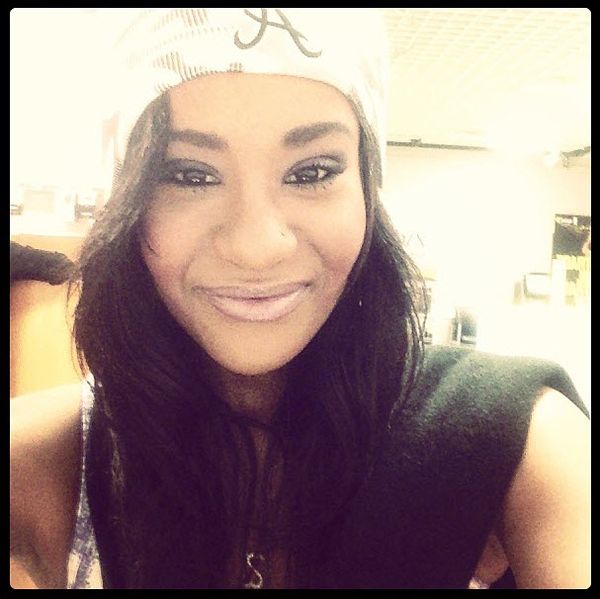
Bobby Brown’s lawyer: Bobbi Kristina Brown has opened eyes
ATLANTA — Bobby Brown’s lawyer issued a statement Monday saying the singer’s daughter has “opened her eyes” nearly three months after being found unresponsive in a bathtub in her Georgia home. Attorney Christopher Brown said he issued the statement to clarify comments the singer made during a concert over the weekend about his daughter’s condition. The statement goes on to say that “there has been improvement” in her condition. However, it also adds that Bobbi Kristina Brown is just now beginning rehabilitation “and the quality of her life will not be known for years to come.” Courtesy WetPaint.com Bobbi Kristina Brown is the only child of Bobby Brown and the late Whitney Houston. Houston was found face-down and unresponsive in about a foot of water in a bathtub in a Beverly Hills hotel room Feb. 11, 2012, just before the Grammys. She later died, and authorities concluded she had accidentally drowned. Investigators found a dozen prescription-drug bottles in the suite and listed heart disease and cocaine use as contributors to her death. On Saturday night, an emotional Bobby Brown told concertgoers that Bobbi Kristina was “awake” and “she is watching me.” Bobby Brown’s wife, Alicia Etheredge-Brown, added in the statement that during the concert, Brown “made an attempt to correct the negative comments he must endure on a daily basis from both family and the public regarding his daughter’s medical condition.” “He is encouraged by the steps that Bobbi Kristina has made since her hospitalization on January 31, 2015,” Etheredge-Brown said. “She has made it out of ICU, opened her eyes, and started a rehabilitation that will be long and hard.”

Björk recently said “sound is the n***er of the world.” She should know better, but what comes next is important, too.
By RAWIYA KAMEIR When Björk told Vanessa Grigoriadis in the Spring 2015 issue of The Gentlewoman that “sound is the nigger of the world,” it wasn’t the first time she had used either the word or the piss-poor analogy. About 14 years ago, she used a similar turn of phrase in a Spin profile: “audio is the nigger of the world,” she said then, too, in an idiotic attempt at explaining that visuals are more readily valued than sound. The phrase is a reference to John Lennon and Yoko Ono’s “Woman Is The Nigger Of The World,” but it was wrong when they said it in 1972, and it’s even more wrong now. For all of its faults, the internet has made it so that geography is hardly an excuse for not knowing what is and is not deeply wounding language. Forty years later, Björk should be well aware of the insidious, sustained effects of casual racism. I first saw the most recent offense on a friend’s Instagram, and was both surprised and disappointed—in Björk for her remark and in the publication for not challenging, or at least interrogating, her on it. But mostly I wanted to know where the reaction was; in an age in which a random communications executive could be fired for a tone-deaf joke, why was no one upset at Björk, our heretofore liberal Icelandic angel? A couple of weeks ago, Trevor Noah was named new host of The Daily Show, and old tweets of his were dug up, some of them with punchlines interpreted as sexist, transphobic, and anti-semitic. Language leads to a bit more of a protracted debate in comedy, but the backlash was swift and deep. Comedy Central stood by him in the face of calls that he be dropped, but the objections were loud. Similarly, in December, DIIV’s bassist, Devin Reuben Perez, was discovered to have posted misogynistic, racist, homophobic, and otherwise offensive comments on 4chan. In response, de facto band leader Zachary Cole Smith blasted Perez pretty unequivocally on Twitter, and the band released an official apologydescribing Perez’s language as unacceptable regardless of context. There are dozens of similar instances, all with different contexts and resolutions. But as the social web continues to be the dominant form through which culture is filtered, it feels inevitable that everyone you admire will eventually disappoint you with a hurtful tweet or an offensive comment in an interview. Things that you might have missed in previous eras, like Björk’s 2001 interview, are now impossible to ignore, thanks to the speed and intensity with which the public and the press seize upon them. Strangely, though, the kinds of publications that otherwise report on the Björk’s every move didn’t cover this latest incident; instead, it was gossip blogs like Perez Hilton and ONTD that acknowledged it at all. After a couple of days of being generally confused by her choice of words and the attendant silence, I posted a picture of the quote in question on Twitter. Since then, I’ve received a few dozen replies. I’ve also, perhaps foolishly, read through a 4chan thread about it. Reactions have been mixed: some fans tried to either justify or deny Björk’s use of the phrase, while others were upset, some of them vowing not to attend her ongoing MoMA retrospective or support Vulnicura, the album she’s currently promoting. In general, though, it’s been quiet. No one really cares, it feels like. Perhaps it’s because these kinds of things happen every day or maybe because we don’t want to confront the reality that yet another of our faves is problematic. We tend to hold the people of whom we are fans to the same moral standards we hold friends, often expecting them to echo our politics or sensibilities in the same way that their art, whatever it may be, speaks to us. By definition, fame requires those on the outside looking in to rely on imagination to prop up celebrity narratives; the public’s glimpses into the lives and personalities of the famous are so mediated that though we think we know, we have no idea. Fame encourages us to fill in the blank spaces around these people with what we want to see, with what reaffirms our pre-existing assumptions. It’s no surprise, then, that when it comes to art we like, and to the artists who make it, we expect to see reflections of ourselves in them, even on the simplest of levels. Ultimately, I’m fairly that confident Björk is not a hateful person. But, as a longtime fan, it’s the privilege that empowers her to prioritize her commentary about sound over the lives of black people, past and present, that stings most. By resorting to racist language for the sake of making a point, she, intentionally or not, reinforces the kind of structures that centuries of racism have been predicated on. Similarly, when Pharrell described himself as a “new black” and effectively blamed black people for state racism, it felt like a betrayal of the implicit transactional relationship that exists between artist and fandom. So what’s a fan to do when you discover that someone you’re into has disappointed you? The mods of Your Fave Is Problematic, a Tumblr that has been consistently cataloguing “problematic shit your favorite celebrities have done,” reach a reasonable conclusion: “You can like and consume their work without liking them as a person. You can even like them as a person, so long as you recognize that they do have problematic issues,” they write. Because it’s instinct to not want to support people whose words or actions are objectionable, there’s space for genuine apologies and admissions of wrongdoing to wind up being more impactful than the original offense. I’m not ready to give up entirely on Björk or Pharrell or Trevor Noah or any number of people whose cultural value I appreciate, but I am ready for my problematic faves to finally begin owning up to their offenses. If to err is human and to forgive, divine, then to apologize is essential.
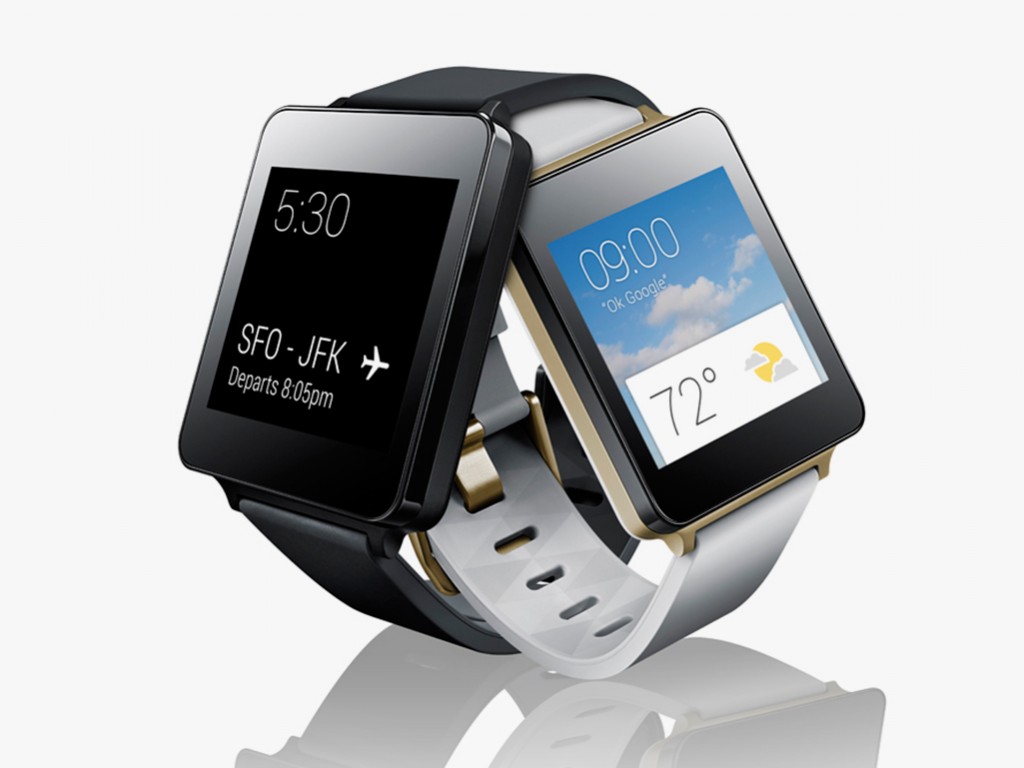
Google’s Smartwatches Now Let You Leave Your Phone at Home
AS HE SPEAKS, Jeff Chang surveys his kingdom. Android Wear’s product manager, the man most directly responsible for the progress of Google’s wearable platform, is seated at a large conference-room table in Google’s San Francisco office that is fully half-filled with Android Wear devices. No two are alike: seven different models, countless colors and bands. Every color of Sony Smartwatch 3 here, a dozen Moto 360s there. He’s wearing an LG Watch Urbane, and there are two others on the table. There’s a particularly gaudy Huawei Watch, which I can’t stop touching during our meeting. And all this, he says, gesturing around, is just the beginning. It’s been a year since Google launched Android Wear to the public, and as hardware partners have jumped on board, Chang and his team have been working steadily to improve the platform. Today, they’re announcing some of its biggest changes yet. The biggest by far, the one that will quickly change how people use their smartwatches, is the watch’s ability to work even when it’s far away from your phone. Chang says people hated that as soon as they walked outside, or even three rooms away, their watch stopped working. Google’s solution is a clever hack: Your watch can now connect to your phone via Wi-Fi (many models already have a Wi-Fi chip, it’s just been dormant until now, and the watch copies passwords and logins from your phone). As long as your phone is on and online, and your watch is connected to a Wi-Fi network, they can communicate from anywhere. Your phone’s still in charge of most processing and information, though. Chang says connecting a watch directly to the internet, convenient and obvious as it may be, would require re-architecting everything about Android Wear. But he smiles as he says it, and I start wondering where the team already working on it sits. Either way, the upshot is powerful: your phone can be across the room or across the world, and your watch will still work. Apps come front and center There’s lots more, but let’s talk about the most fun part first. With the new Android Wear update, you can send emoji to your friends by drawing them with your finger on your watch. Pick a contact and select “draw emoji,” then scribble your best thumbs-up, sushi, poop, or smiley face with a winky eye and tongue out, and your watch will guess which emoji you want to send. You’re essentially playing Emoji Pictionary with your watch at all times, which is incredibly strange and fun. It’s a clever, cross-app and cross-platform way of making it easy to communicate from a watch, but doesn’t require the other person to have one too. You can always dictate longer messages, but if a picture says a thousand words, an emoji says at least like 17. Click to Open Overlay GalleryYou can draw an emoji on your watch, and then send it via any app. GOOGLE A few of the other new Android Wear features feel like Google’s guesses as to how people might use their watches differently when their phone’s not just in their pocket. And, just as much, to give you more stuff to do: Chang is intent on proving that Android Wear isn’t “just about notifications.” Apps can now access Android Wear’s “ambient mode,” for one thing. They’ll run in a reduced-power state, but force the app to stay open and the screen to stay on. That way, you don’t have to go find your shopping list or directions every time you look at your wrist. If your hands are full, a quick flick of your wrist will flip through the column of cards. Or swipe in from the right side of the screen, and you’ll see a list of your apps, the ones you used most recently at the top. Swipe over again, and you get a list of contacts. Both were buried deep in Android Wear’s menus before—you were just supposed to use your voice to launch apps or message someone. Google apparently learned that people like tapping and swiping, though, so now there’s more to tap and swipe. A more powerful smartwatch It’s a big shift for Android Wear, which has a head start on the Apple Watch simply by virtue of coming out first, but still hasn’t found a lot of user traction. Chang and his team seem to be developing a vision as they go, sussing out what people want and delivering it. The plan seems to run directly counter to Apple’s vision for the Watch, which is meant to be used quickly to do one thing, and then reset every time you put your wrist down. The Apple Watch wants to be quick, simple, and unobtrusive; Google wants Android Wear to be powerful, useful, and self-sufficient. You still need a phone, technically, but you don’t need it nearby anymore. Google I/O is coming up at the end next month, and there will almost certainly be more watches and more apps at the company’s annual developer extravaganza. Apps are more present and more accessible than ever on Android Wear, which Google hopes will get more developers to build apps for wearable devices. Oh, and I’m pretty sure Chang’s itching to fill the other half of that table with smartwatches.

Migos Drug Bust And Then There Was One … Held Without Bail
Migos’ latest performance was in front of a judge Monday morning — and while 2 members of the rap trio can now be sprung … another will stay behind bars after their weekend drug bust. Quavo, Takeoff, and Offset were in a Georgia courtroom for their bail hearing. The judge set Quavo and Takeoff’s bond at $10,000 each … although neither has posted the amount yet. Offset is a convicted felon, and the judge denied his release due to his prior issues. TMZ broke the story … cops yanked Migos off stage during their performance at Georgia Southern University Saturday night. All 3 were booked for felony drug possesion, felony possession of loaded guns, and misdemeanor marijuana possession. Read more: http://www.tmz.com/2015/04/20/migos-court-bond-hearing-drug-bust-concert-georgia/#ixzz3XtRiCIZ8
QUOTE OF THE DAY
ASIDE FROM DEATH, THERE IS ABSOLUTELY NOTHING THAT CAN STOP YOU FROM ACHIEVING YOUR GREATNESS!!!! Dream Big! Aim High! And Make All Your Dreams Reality!!! Today is your Day!!! Make it Great!!! -Ash’Cash (@IamAshCash)


Atlanta Hawks first round playoff ticket prices don’t reflect record
Even though the Atlanta Hawks are the No. 1 in the National Basketball Association’sEastern Conference, tickets to the team’s first round playoff game remain relatively cheap. The San Francisco-based personal finance site NerdWallet took a look at NBA ticket prices on the secondary market based on data from TiqIQ and found the average price of a first round home ticket to see the Hawks is $187.20, the fifth lowest of the 16-playoff-bound teams. However, the Hawks did see the largest ticket increase during the course of the season – rising by 70.6 percent. To ensure ticket validity, the Hawks recommend fans use official, verified ticket outlets: Hawks.com, Ticketmaster and the Philips Arena box office. Doors at Philips Arena are scheduled to open two hours prior to tip-off. The Hawks will play the Brooklyn Nets in the first round of the playoffs April 19 at 5:30 p.m.
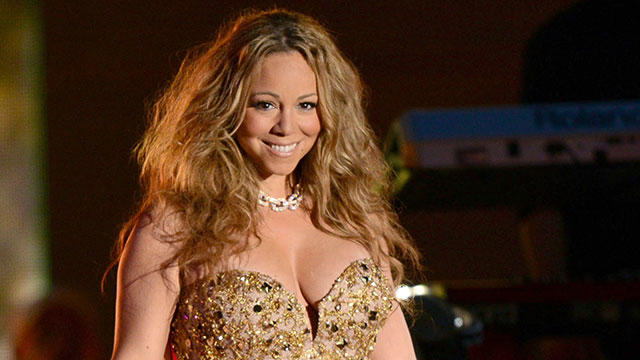
Entertainment Tonights,Mariah Carey’s No. 1s Ranked from the Best to the Very Best
Twenty-five years ago, Mariah Carey claimed her seat atop the pop pantheon, scoring her first No. 1 single on the Billboard Hot 100. Another would follow, and then another, and then another until she had eighteen in all — more than Elvis, and just three shy of beating The Beatles’ long-standing record. NEWS: Mariah Carey and James Corden Perform a ‘Carpool Karaoke’ of Her Biggest Hits Those hits — featured on the upcoming compilation, #1 to Infinity — will always be our babies. Before the superstar belts out those songs during a Vegas residency at the Colosseum at Caesars Palace, we look back on the very best of Mariah. 18. “Thank God I Found You” (1 week, 2000) With a handsome entourage that included R&B crooner Joe and 98 Degrees, there was not a feel that wasn’t felt when they all collectively let their voices coalesce into the prettiest (and most banal) of musical paradises. 17. “Touch My Body” (2 weeks, 2008) Turning up the heat for this slinky, sassy jam from 2008’s E=MC², it was hard to know what or who was hotter: the sexed-up song or Mariah, the object of Jack McBrayer’s nerd affection in the sultry music video. 16. “Don’t Forget About Us” (2 weeks, 2005) Mariah’s smoldering comeback was in full bloom when “Don’t Forget About Us” was released as a bonus track on the reissue of 2005’s momentous The Emancipation of Mimi. Sure, it capitalized on the massive success of “We Belong Together,” but considering that single’s divinity, can you blame her? 15. “Someday” (2 weeks, 1991) Bringing the badassery while dressed in some serious mom jeans (hey, it was the early ’90s) Carey was the dumpee on her third consecutive No. 1 — a departure from the songstress’ previous slow jams. She was done, moving on, “not pretending.” And to get her point across, she hit an insane whistle note at the end. Take that, ex-lover. Also, take this. 14. “I Don’t Wanna Cry” (2 weeks, 1991) Mariah knows real-life heartbreak, and here she vents the best way she knows how — via song. Her voice is full and forceful, working up to a soulful chorus that scales her incomparable range. 13. “Hero” (4 weeks, 1993) How do we know Mariah appreciates her beloved fans, the “lambs”? She keeps giving them this wonderfully schmaltzy ballad about inner beauty and all things Hallmark, despite loathing it herself. 12. “I’ll Be There” (2 weeks, 1992) The Jackson 5 made it a hit in 1970, and then Mariah — preserving the magic during this tribute performed at her MTV Unplugged special — did it again 22 years later. 11. “One Sweet Day” (16 weeks, 1995-1996) It was more than one sweet day for Mariah and Boyz II Men — it spent a whopping 16 weeks at No. 1. They owned that chart like they owned this bittersweet send-off to the dearly departed. 10. “Vision of Love” (4 weeks, 1990) While the Long Island up-and-comer was having a vision of love, the rest of us — being wooed by her powerhouse chops — were having visions of a long, successful career. It all started with this glorious, gospel-tinged slow burner, the then-20-year-old singer’s first chart-topper. 9. “Heartbreaker” (2 weeks, 1999) The lead single off 1999’s Rainbow bounced about with infectious gusto and a candy-colored chorus. Jay-Z stopped by mid-song for a rap cameo, and the Voice — alternating between breathy and belt-y — found its sweet spot. 8. “Love Takes Time” (3 weeks, 1990) Her second stop at the top was with “Love Takes Time,” firmly establishing Carey as the new balladeer on the block. “I can’t escape the pain inside,” she confessed on this forgotten gem. The world couldn’t escape either — from this song. 7. “Dreamlover” (8 weeks, 1993) Mariah’s career certainly didn’t need any rescuing in 1993, but her heart did. The singer’s personal ad set to music — “I need somebody uplifting to take me away” — was as enchanting as her frolicking through a field wearing Daisy Dukes. 6. “Emotions” (3 weeks, 1991) High note after high note after high note. You’re welcome. 5. “Honey” (3 weeks, 1997) Stripped of her squeaky-clean image (and most of her clothes), Carey — with the magical touch of Puff Daddy and Bad Boy’s production team — completed her metamorphosis into a hip-hop heroine. The intoxicating summertime single stormed the charts, igniting one of the most memorable rebirths in music history. 4. “My All” (1 week, 1998) When it comes to bummed-out ballads, this lover’s heavy-hearted plea from the Butterfly era — her first emancipation, in 1997 — is sublimely and unexpectedly understated. Sad, too. Even the Latin-inspired guitar strings can’t suppress the sniffles. 3. “We Belong Together” (14 weeks, 2005) After a rough patch at the onset of the new millennium, Carey made the comeback of all comebacks — 14 weeks in that top spot! — with this R&B-inspired power ballad, which was a throwback to classic Carey. 2. “Fantasy” (8 weeks, 1995) Merging her pop roots with her rap influences, Mariah made her initial foray into hip-hop with the late Ol’ Dirty Bastard for the radio remix of “Fantasy.” The Tom Tom Club-sampled confection was more than a “sweet, sweet fantasy” — the songbird made it a dizzying, dazzling reality. https://www.youtube.com/watch?v=D6v_AiUK5mk 1. “Always Be My Baby” (2 weeks, 1996) That opening coo. Those head-swirling “do do doop dums.” THAT KEY CHANGE. Like the timeless love Carey writes about, this sweetly swaying sing-along just doesn’t grow old. It’s part of us, indefinitely.